
Wikimedia Commons / CC BY-SA 3.0, via Wikimedia Commons
Carex umbrosa: complete guide
Carex umbrosa
Want to see Carex umbrosa: complete guide in your garden?
1 minute, no credit card
Overview
Carex umbrosa, commonly known as shaded sedge, is a quietly resilient ornamental grass that thrives where many others struggle. Native to forested regions across Central and Eastern Europe - from the Baltics to the Alps - this perennial in the Cyperaceae family brings understated elegance to shaded corners of the garden. Unlike sun-loving grasses, it excels in partial to full shade, making it a go-to for gardens under tree canopies or north-facing areas.
At gardenworld.app, you can design a shaded planting scheme that integrates Carex umbrosa seamlessly with other shade-loving perennials.
Appearance & bloom cycle
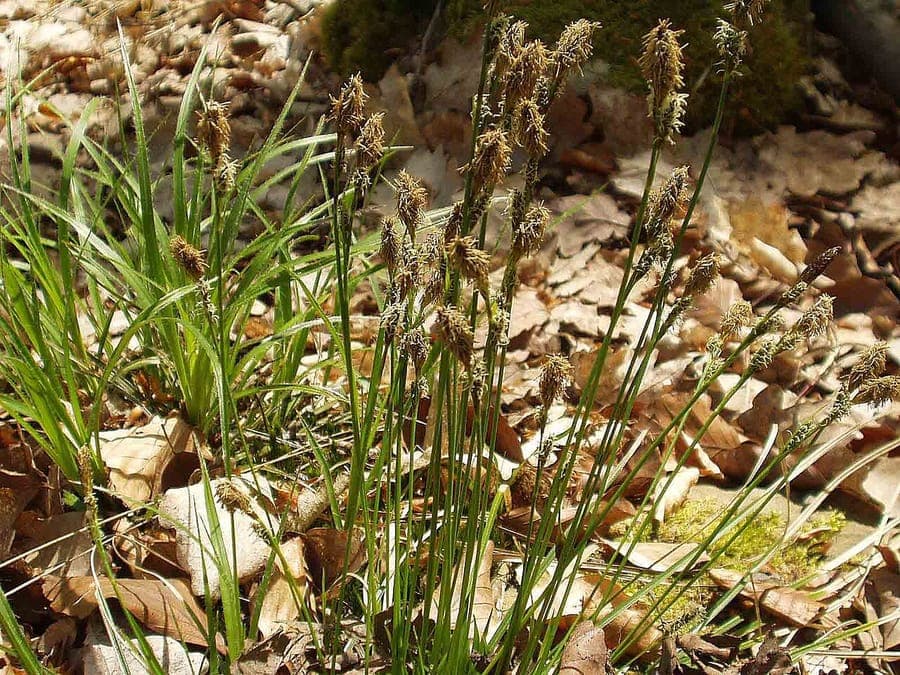
This sedge forms dense clumps of arching, dark green foliage that reaches 40–60 cm in height, spreading 30–40 cm wide. The narrow, glossy leaves create a lush, carpet-like effect, ideal for softening pathways or filling gaps beneath shrubs. From April through July, slender brown flower spikes rise slightly above the foliage. While not showy, these blooms add subtle texture and visual interest during early summer.
Carex umbrosa spreads slowly via creeping rhizomes, forming a stable ground cover without becoming invasive. It's perfect for stabilising moist slopes or filling in underplanting zones where mulch alone won't suffice.
Ideal location
Plant Carex umbrosa in areas with light to medium shade - think under deciduous trees, along north-facing walls, or in woodland gardens. It handles light dappled shade best, thriving at light level 5 on a 1–10 scale. Full sun is possible only if the soil remains consistently moist, but in hot, dry spells, foliage may scorch.
Avoid deep, dry shade - like under dense evergreens - where little light and minimal moisture make establishment difficult. Use the sun mapping tool on gardenworld.app to pinpoint the best spot before planting.
Soil requirements
This sedge prefers moist, humus-rich soils with a slightly acidic pH between 5.0 and 5.5. It grows well in clay-loam mixes enriched with compost or leaf mould. Good drainage is essential; while it likes moisture, it won't tolerate waterlogged conditions.
Sandy soils can work if amended with organic matter to improve water retention. A 5 cm mulch layer of shredded bark or compost in spring helps conserve moisture and feeds the soil gradually. Avoid liming the soil - this plant dislikes alkaline conditions.
Free design
Want to see Carex umbrosa: complete guide in your garden? Make a free design now.
Watering
Keep the soil consistently moist, especially during the first growing season and in dry springs or summers. Water 1–2 times per week when rainfall is below 25 mm, focusing on the root zone. Use rainwater when possible, as tap water with high lime content can alter soil pH over time.
Once established, Carex umbrosa is moderately drought-tolerant for short periods, but prolonged dryness leads to browning leaf tips. Winter watering is rarely needed unless the season is unusually warm and dry.
Pruning
Pruning is minimal. In early spring (March), cut back old, damaged, or tattered foliage to make way for fresh growth. Use sharp shears and trim to about 10–15 cm above ground. Avoid cutting into the crown, as this can damage emerging shoots.
If the plant stays semi-evergreen in milder climates, simply rake through the clump to remove debris. This keeps the plant tidy and prevents fungal issues in damp conditions.
Maintenance calendar
- January–February: Dormant period. Check for vole damage or snow compaction.
- March: Cut back old foliage. Apply a thin layer of compost.
- April–July: Active growth and blooming. Water regularly. Watch for slugs in wet weather.
- August–September: No pruning. Maintain moisture during dry spells.
- October–December: Gradual dieback in colder zones. Leave seed heads for winter texture. Mulch lightly in zone 5 for extra protection.
Winter hardiness
Carex umbrosa is hardy in USDA zones 5–9. It withstands winter lows down to -20°C when planted in well-drained soil. In zone 5, a light mulch of straw or shredded leaves can protect young plants during harsh winters.
In zones 6–9, the foliage often remains green or semi-evergreen, adding structure to the winter garden. Frost heave can be an issue in poorly drained soils - ensure planting areas are well-prepared to prevent root exposure.
Companion plants
Pair Carex umbrosa with hostas, heucheras, ferns like Dryopteris filix-mas, or woodland phlox (Phlox divaricata). The fine texture of the sedge contrasts beautifully with broad-leaved hostas or the colorful foliage of coral bells.
For naturalistic plantings, group in drifts of 5–7 with Epimedium or barrenwort. Avoid aggressive spreaders like mint or goutweed, which can overwhelm the sedge over time.
Closing
Carex umbrosa is a dependable, low-fuss plant for shaded, moist areas. It doesn't demand attention, yet delivers year-round interest with minimal input. No flashy flowers, no high maintenance - just quiet resilience.
Find it at local garden centres like Wyevale or Dobbies, or independent nurseries with native plant selections. And remember: at gardenworld.app, you can visualise how Carex umbrosa fits into your shaded borders long before you plant.
Want to see Carex umbrosa: complete guide in your garden? Make a free design now.
Upload a photo, pick a style, and get a photorealistic design with plant list in under a minute.
No credit card required


Similar plants
Flat-stemmed club-rush: complete guide
Bolboschoenus planiculmis
Everything about Bolboschoenus planiculmis: growing conditions, watering, care, and use as a pond margin or wetland plant in garden design.
Great Plains flatsedge: complete guide
Cyperus lupulinus
Everything about Great Plains flatsedge (Cyperus lupulinus): growing conditions, care, garden uses, and ecological value. Tips for pond margins and dry sandy soils.
Golden beak sedge: complete guide
Rhynchospora corymbosa
Everything about golden beak sedge (Rhynchospora corymbosa): a dramatic tropical marginal for pond edges, bog gardens, and wet habitats.