
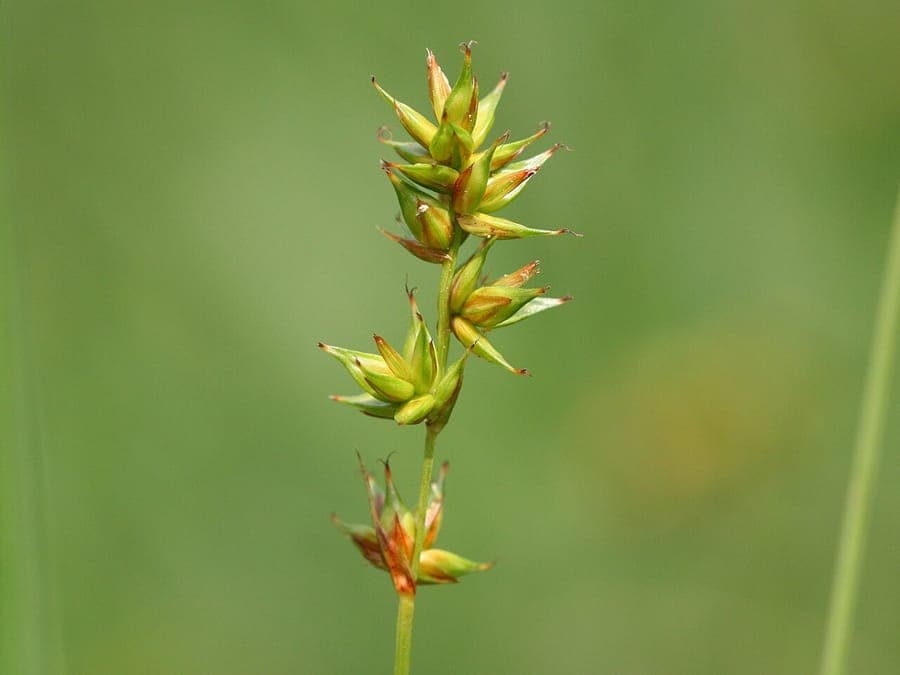
Kristian Peters -- Fabelfroh 06:33, 2 July 2007 (UTC) / CC BY-SA 3.0, via Wikimedia Commons
Prickly sedge: complete guide
Carex spicata
Want to see Prickly sedge: complete guide in your garden?
1 minute, no credit card
Overview
Prickly sedge (Carex spicata) is a resilient, clump-forming perennial that thrives in damp, shady spots across central and eastern Europe. Belonging to the Cyperaceae family, it's a tough, evergreen grass-like plant that works well as a ground cover in challenging areas where other plants struggle. It grows 30–60 cm tall and spreads about 40 cm wide, forming dense mounds that stay green through most of the year. This makes it a valuable structural plant in gardens needing year-round interest.
On gardenworld.app, you can design a planting scheme that integrates Carex spicata perfectly into damp, shaded borders or woodland gardens.
Appearance & bloom cycle
The narrow, dark green leaves of Prickly sedge are about 2–4 mm wide, arching slightly at the tips. They grow in a fountain-like clump from the base, giving a soft yet defined texture. From May to June, upright, spiky flower spikes emerge, distinctly taller than the foliage. These are not showy in colour-typically greenish-brown-but add great textural contrast. The fruiting spikes, which resemble small nutlets, persist into winter, offering visual interest and habitat for overwintering insects.
The plant is monoecious, with male and female flowers on separate spikes, often on the same plant. It self-seeds occasionally, but not invasively, usually establishing in the second year after seed drop.
Ideal location
This sedge loves partial to full shade, especially under deciduous trees or along streambanks. It tolerates up to 4 hours of morning sun in cooler climates, but full afternoon sun in hotter regions will cause leaf scorch and drying. It's ideal for wet areas, low-lying spots, or near ponds where soil stays moist. In dry, sandy, or exposed sites, it will struggle. Pair it with moisture-loving companions like Astilbe, Ligularia, or rodgersia for a lush, naturalistic look.
In the UK and northern US (USDA zones 5–8), it performs best in woodland-style gardens or shady borders.
Soil requirements
Prickly sedge prefers consistently moist, humus-rich soil. It grows well in heavy clay if drainage isn't completely blocked, but avoids waterlogged, anaerobic conditions. A pH between 5.5 and 7.0 is ideal-slightly acidic to neutral. Incorporate well-rotted leaf mould or garden compost in spring to boost moisture retention and fertility. Avoid liming the soil unless a test shows extreme acidity.
If your soil drains too quickly, add organic matter or apply a mulch of leaf litter or wood chips to maintain consistent moisture.
Free design
Want to see Prickly sedge: complete guide in your garden? Make a free design now.
Watering
Keep the soil evenly moist, especially in the first two growing seasons. Once established, it's more resilient but still needs supplemental watering during dry spells. In summer droughts, water deeply once a week-or more if temperatures exceed 25°C. Use rainwater when possible, as this sedge can show leaf tip burn with prolonged exposure to hard tap water.
Avoid light sprinklings; instead, water slowly at the base to encourage deep rooting.
Pruning
Pruning is minimal. In late winter or early spring (February–March), cut back old, damaged, or browned foliage to about 10–15 cm from the ground. This clears space for new growth and keeps the plant looking tidy. Use sharp, clean shears to prevent tearing. Leave the seed heads over winter for visual interest and wildlife value-remove them during the spring tidy-up.
Do not cut too early, as the old foliage offers some frost protection.
Maintenance calendar
- January: inspect for damage, leave old foliage
- February: prepare for pruning
- March: cut back old leaves, apply compost mulch
- April: monitor for new growth, check moisture
- May: flowering begins, maintain damp soil
- June: peak bloom, watch for drying
- July: water weekly if no rain
- August: continue monitoring soil moisture
- September: reduce watering, allow natural shedding
- October: leave foliage intact for winter
- November: check for root rot in poorly drained areas
- December: minimal care, observe plant condition
Winter hardiness
Prickly sedge is hardy in USDA zones 5 to 8 (-23°C to -12°C). It remains semi-evergreen in milder climates, with leaves turning bronze or brown but staying upright. In colder zones, foliage may collapse under snow, but the crown survives. No winter protection is needed in the ground. For container-grown plants, insulate the pot or move to a sheltered spot to prevent root freeze-thaw cycles.
Companion plants
Combine with shade and moisture lovers: Hosta, ferns (like Dryopteris or Matteuccia), Astilbe, Tellima, or Heuchera. Other sedges like Carex elata 'Aurea' or Carex remota work well too. Avoid pairing with drought-tolerant plants like lavender or sedum.
Use the plant pairing tool on gardenworld.app to find the best combinations based on height, colour, and water needs.
Closing
Prickly sedge isn't flashy, but it's dependable. It handles tough garden conditions with grace, especially damp, shady corners. With little maintenance, it provides texture, structure, and ecological value. Buy from reputable garden centres in 1- or 2-litre pots-look for fresh green foliage and no signs of drying or disease. Avoid plants with sparse or yellowing leaves.
Once settled, Carex spicata will form a long-lasting clump, slowly expanding over the years. It's a quiet achiever in the garden-perfect for those who value resilience over drama.
Want to see Prickly sedge: complete guide in your garden? Make a free design now.
Upload a photo, pick a style, and get a photorealistic design with plant list in under a minute.
No credit card required


Similar plants
Flat-stemmed club-rush: complete guide
Bolboschoenus planiculmis
Everything about Bolboschoenus planiculmis: growing conditions, watering, care, and use as a pond margin or wetland plant in garden design.
Great Plains flatsedge: complete guide
Cyperus lupulinus
Everything about Great Plains flatsedge (Cyperus lupulinus): growing conditions, care, garden uses, and ecological value. Tips for pond margins and dry sandy soils.
Golden beak sedge: complete guide
Rhynchospora corymbosa
Everything about golden beak sedge (Rhynchospora corymbosa): a dramatic tropical marginal for pond edges, bog gardens, and wet habitats.