
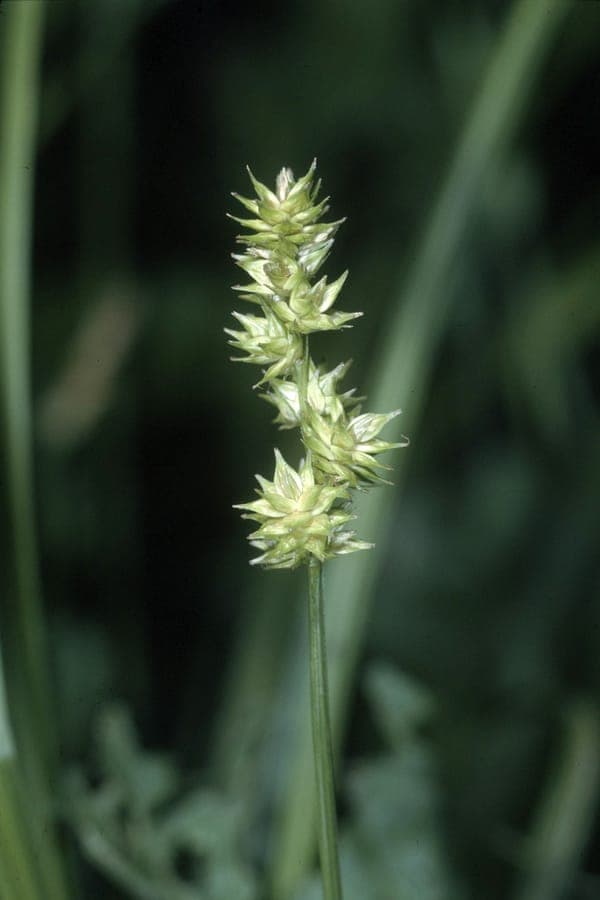
Robert H. Mohlenbrock. USDA NRCS. 1995. Northeast wetland flora: Field office guide to plant species. Northeast National Technical Center, Chester. Courtesy of USDA NRCS Wetland Science Institute. / Public domain, via Wikimedia Commons
Bur-reed Sedge: complete guide
Carex sparganioides
Want to see Bur-reed Sedge: complete guide in your garden?
1 minute, no credit card
Overview
Bur-reed Sedge (Carex sparganioides) is a highly moisture-loving North American sedge. The plant is named for its resemblance to bur-reed, a water plant with round seed heads. Carex sparganioides grows exclusively in very wet, marsh-like conditions and is an excellent choice for water edges, marsh gardens, and wet depressions where water regularly stands.
Appearance and Bloom
Carex sparganioides grows in loose, widely-spreading tufts approximately 30-40 cm tall with coarse, pale green foliage that appears dull. The characteristic feature is the very round, loosely-arranged seed heads (clusters) that appear June-August. These seed heads indeed resemble bur-reed fruits and give the plant its unique name. The fruit structures remain attractive and brown-colored through October.
Ideal Location
Carex sparganioides is exclusively suitable for very moist to marsh-like locations. This is a true water margin plant that thrives optimally at pond edges, in shallow ponds, along wet streams, and in permanent marsh sections. Full sun to dappled shade, as long as water is available. Ideal for creating natural, understocked banks.
Soil
This plant demands exclusively moist to wet clay or peat soil conditions. pH of 5.0 to 6.5 is ideal. Underwater or swamp soil is acceptable. Add peat moss or marsh soil during planting operations. In normal garden soils it grows very slowly or not at all. This is essentially a plant for wetland habitat recreation.
Watering
Carex sparganioides requires constantly very wet soil year-round. In marsh areas or deep water edges where water stands permanently, supplemental watering is not needed. In less moist gardens, it is practically impossible to cultivate this plant long-term without artificial water retention. The plant dries out very quickly and does not recover easily.
Free design
Want to see Bur-reed Sedge: complete guide in your garden? Make a free design now.
Pruning
Minimal maintenance required. In March, remove dead foliage using hands. Leave the round seed heads standing through October-November - they are highly decorative. No division needed; the plant forms large mats by itself in ideal marsh soils. In very established mats, careful raking can be done to reduce disease susceptibility.
Maintenance Calendar
March: Remove dead foliage from last year; April-May: Growth activity under very moist conditions; June-August: Seed heads appear, maintain full water absorption; September-October: Seed ripening, brown seed readiness; November-February: Rest period, water must remain permanent.
Winter Hardiness
Carex sparganioides is hardy to USDA zone 4a (-25 to -30C), suitable for southern UK, Ireland, and northern France. The plant remains evergreen in very wet waters. Freezing of marshes is not problematic as long as water remains beneath ice.
Companion Plants
Combine Bur-reed Sedge exclusively with other marsh and water plants: Iris laevigata (smooth iris), Iris versicolor (blue swamp iris), Acorus gramineus (grasslike), Pontederia cordata (pickerel rush), Typha latifolia (broad cattail), Scirpus species (bog rush). For deeper waters: Nymphaea (water lilies).
Closing
Carex sparganioides is a highly specialized plant for those with true marsh sections or water edges. The round seed heads are truly unique and decorative. This plant cannot grow in normal gardens. For online ordering, seek wetland plant specialists or aquatic plant suppliers. Gardenworld.app helps you design authentic marsh gardens where this plant can thrive.
Want to see Bur-reed Sedge: complete guide in your garden? Make a free design now.
Upload a photo, pick a style, and get a photorealistic design with plant list in under a minute.
10,000+ gardens designed already
No credit card required


Similar plants
Flat-stemmed club-rush: complete guide
Bolboschoenus planiculmis
Everything about Bolboschoenus planiculmis: growing conditions, watering, care, and use as a pond margin or wetland plant in garden design.
Great Plains flatsedge: complete guide
Cyperus lupulinus
Everything about Great Plains flatsedge (Cyperus lupulinus): growing conditions, care, garden uses, and ecological value. Tips for pond margins and dry sandy soils.
Golden beak sedge: complete guide
Rhynchospora corymbosa
Everything about golden beak sedge (Rhynchospora corymbosa): a dramatic tropical marginal for pond edges, bog gardens, and wet habitats.