
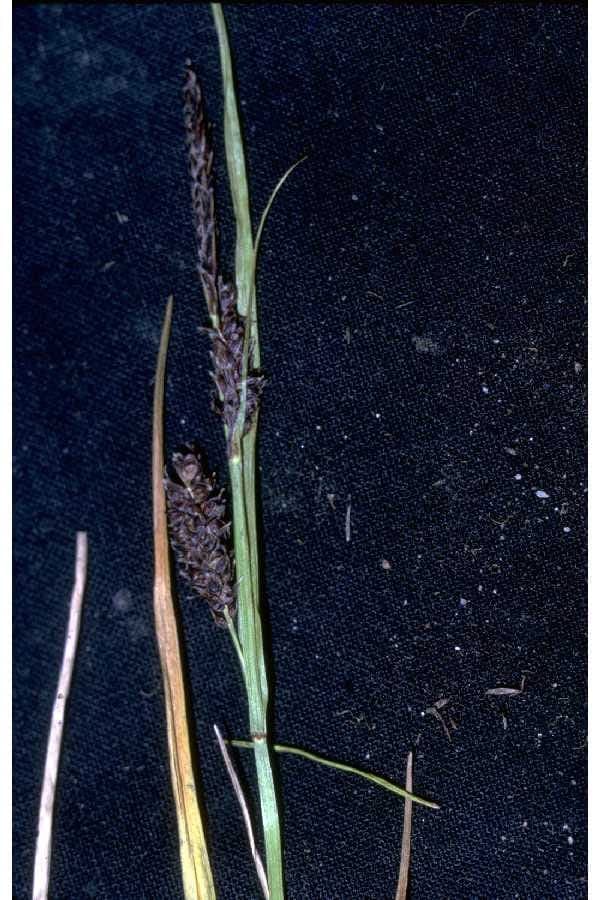
Robert H. Mohlenbrock. USDA NRCS. / Public domain, via Wikimedia Commons
Russet sedge: complete guide
Carex saxatilis
Want to see Russet sedge: complete guide in your garden?
1 minute, no credit card
Overview
Carex saxatilis, commonly known as Russet sedge, isn't the flashy type. It won't stop you in your tracks with bold flowers or dramatic height. But if you're after a tough, understated sedge that brings year-round texture and subtle seasonal shifts, this is your plant. Native to cold northern regions-think Finland, Greenland, Iceland, Labrador, and parts of the UK-this species knows how to handle exposure, poor soil, and long winters. It's not picky, but it does have one non-negotiable: consistent moisture.
I've seen it thrive in rocky crevices and damp slopes where other plants give up. On gardenworld.app, you can design a rock garden or wet border layout that highlights its natural strengths. Think mossy stones, shallow water features, or low-lying spots that collect runoff. That's where this sedge comes alive.
Appearance & bloom cycle
Russet sedge forms dense clumps 30 to 50 cm tall, with arching leaves reaching up to 60 cm long. The foliage is narrow, grass-like, and starts off bright green in spring. By late summer and into autumn, it shifts into warm russet, copper, and amber tones-especially when caught in low light. That's where it earns its name.
It blooms from May to July. The flowers are modest and brownish-purple, clustered in tight spikes that rise just above the foliage. You won't find petals here, but the seed heads add fine-textured interest through late summer. Even in winter, dried stems and evergreen bases keep the plant visually present.
This isn't a plant that shouts. It whispers through texture, form, and quiet color shifts. That's why it works so well in naturalistic schemes.
Ideal location
Half-sun to full sun works best, but full sun demands consistent moisture. In hotter regions-say, southern parts of the UK or inland zones-partial shade keeps it from drying out too fast. Avoid deep, dry shade. This sedge needs light to develop its best colors.
Plant it where water lingers: along stream banks, in shallow depressions, or in rocky alpine beds with moisture-retaining cracks. It's also excellent in bog gardens, rain gardens, or at the edge of ponds. Avoid dry, sandy borders-this isn't a drought-tolerant plant.
If your garden has a low-lying area that stays damp, that's golden real estate for Carex saxatilis. Check gardenworld.app for inspiration on how to turn that soggy patch into a feature, not a flaw.
Soil requirements
It's not fussy about pH, but it won't tolerate dryness. Aim for moist, humus-rich soil with good drainage. Clay-loam or silty soils work well. If your soil is sandy, amend it with compost or well-rotted manure to boost moisture retention. A slightly acidic to neutral pH (5.5–7.0) is ideal.
In rock gardens, mix in some organic matter and fine gravel to mimic its natural crevice habitat. The goal is a substrate that holds water but doesn't become waterlogged. Standing water is a no-go-roots will rot.
Free design
Want to see Russet sedge: complete guide in your garden? Make a free design now.
Watering
Keep the soil evenly moist at all times, especially in the first two growing seasons. During dry spells, water deeply twice a week. A slow soak is better than a quick sprinkle. If planted near a water feature, runoff from nearby slopes or seepage can cover most of its needs.
Avoid overhead watering in winter. Cold, wet foliage invites fungal issues. Water at the base instead.
Pruning
Minimal pruning required. In late winter or early spring (February to March), remove dead or damaged leaves by hand or with clean shears. Don't cut it back hard-this sedge grows from a central crown, and aggressive pruning can set it back.
If the clump starts to look thin or patchy, gently comb through with your fingers to remove old growth. This encourages fresh shoots without stress.
Maintenance calendar
- January: Check for frost damage; avoid walking on frozen clumps
- February: Start clearing dead leaves
- March: Finish cleanup; watch for new shoots
- April: Monitor for weeds around the base
- May: Blooming begins; increase watering if dry
- June: Watch soil moisture during warm days
- July: Seed heads form; foliage still lush
- August: Maintain moisture; no fertilizing
- September: Color shift begins
- October: Leave standing for winter interest
- November: Stop pruning; let plant settle
- December: Light check for water pooling
Winter hardiness
This sedge is rock-solid in USDA zones 3 to 7. In the UK and Ireland (zone 8), it's perfectly hardy. Foliage may turn brown in harsh winters, but the plant rebounds in spring. In colder areas, a light mulch of pine needles or leaf litter helps, but it's rarely needed.
Its natural range includes Iceland and Labrador-places that see deep freezes and long snow cover. So if you're gardening in zone 6 or above, you're golden.
Companion plants
Pair it with other moisture-lovers: Carex vulpinoidea, Eriophorum angustifolium, Molinia caerulea, or ferns like Matteuccia struthiopteris. In alpine settings, try it with Saxifraga oppositifolia or Alchemilla mollis.
Avoid xeric plants like Sedum or Thymus-they'll dry out the microclimate. Stick to companions that appreciate damp feet.
Closing
Carex saxatilis earns its place through resilience, not flash. It's not the plant you buy for instant impact. It's the one you grow for quiet beauty and long-term reliability. With minimal effort, it adds structure, movement, and seasonal depth to challenging spots.
You won't find it at every garden centre, but specialist nurseries and online growers often stock it. Try garden centres with a focus on native or ornamental grasses. And when planning, visit gardenworld.app to sketch a layout that plays to its strengths-wet corners, rocky slopes, or naturalistic plantings.
Want to see Russet sedge: complete guide in your garden? Make a free design now.
Upload a photo, pick a style, and get a photorealistic design with plant list in under a minute.
No credit card required


Similar plants
Flat-stemmed club-rush: complete guide
Bolboschoenus planiculmis
Everything about Bolboschoenus planiculmis: growing conditions, watering, care, and use as a pond margin or wetland plant in garden design.
Great Plains flatsedge: complete guide
Cyperus lupulinus
Everything about Great Plains flatsedge (Cyperus lupulinus): growing conditions, care, garden uses, and ecological value. Tips for pond margins and dry sandy soils.
Golden beak sedge: complete guide
Rhynchospora corymbosa
Everything about golden beak sedge (Rhynchospora corymbosa): a dramatic tropical marginal for pond edges, bog gardens, and wet habitats.