
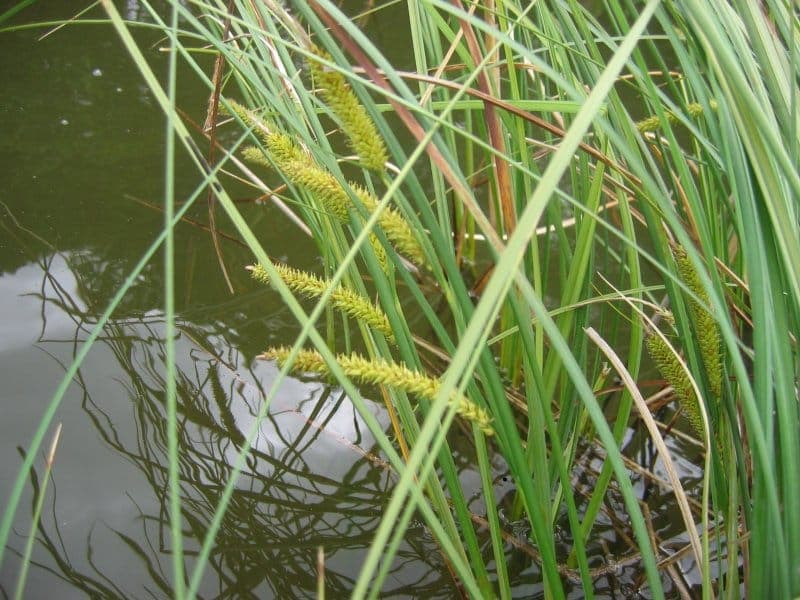
Kristian Peters -- Fabelfroh 16:01, 13 July 2006 (UTC) / CC BY-SA 3.0, via Wikimedia Commons
Bottle sedge: complete guide
Carex rostrata
Want to see Bottle sedge: complete guide in your garden?
1 minute, no credit card
Overview
Bottle sedge (Carex rostrata) is a striking, moisture-loving sedge that thrives in wetlands, pond margins, and boggy garden spots. Native across northern Europe and parts of North America, this perennial from the Cyperaceae family forms dense, fountain-like clumps with upright stems reaching 50–80 cm in height. It's not a flashy bloomer, but its architectural form and unique seed heads add year-round texture to damp areas. If you've got soggy ground that other plants avoid, Bottle sedge is your answer.
This plant stands out in ecological gardens, rain gardens, and naturalized landscapes. It's especially valuable for stabilizing wet soil and providing habitat for insects and birds. On gardenworld.app, you can design a rain garden layout that integrates Bottle sedge with complementary moisture-tolerant species for a low-maintenance, wildlife-friendly space.
Appearance & bloom cycle
Bottle sedge has narrow, bright green leaves that emerge from a central base, forming a graceful, arching mound. The foliage stays green through most of the year, turning bronze or straw-colored in late autumn. What really sets it apart is the flowering structure: from May to June, triangular stems rise above the leaves, topped with dark green, beak-shaped spikelets. These 'bottles' or 'beaks' are the origin of both its common and botanical names.
Each flower spike is 2–4 cm long, densely packed, and slightly curved, resembling a small pitcher. After pollination, the utricles swell and take on a pale green to brownish hue by late summer. While not showy like a flower border, the texture remains visually engaging well into winter, especially when backlit by low sun.
Ideal location
Bottle sedge does best in full sun to partial shade. For the densest growth and most abundant flowering, aim for at least 5–6 hours of direct sunlight per day. It tolerates light shade, but in deep shade, the stems become leggy and may flop over. Ideal spots include pond margins (zone 2, up to 10 cm of water), damp meadow areas, or low-lying parts of the garden that collect rainwater.
Avoid hot, dry, south-facing beds - this plant will quickly decline without consistent moisture. It's perfect for naturalized plantings, stream banks, or wet bioswales. On gardenworld.app, you can map out a water-tolerant planting scheme that includes Bottle sedge alongside rushes and irises for a cohesive look.
Soil requirements
This sedge demands constantly moist to wet soil. It prefers humus-rich, peaty, or clay-loam soils with a slightly acidic to neutral pH (5.5–7.0). Avoid sandy or chalky soils that drain too quickly - Bottle sedge can't survive prolonged dry spells. If your soil is too free-draining, amend it with well-rotted compost, leaf mold, or peat-free moss to improve water retention.
A mulch of straw or wood chips in spring helps keep roots cool and moist. Don't use lime - alkaline conditions stunt growth and may cause yellowing.
Free design
Want to see Bottle sedge: complete guide in your garden? Make a free design now.
Watering
Keep the soil consistently damp, especially during the growing season (April to September). In dry summers, water deeply 2–3 times per week if rainfall is insufficient. Established clumps can handle brief flooding, but don't plant them where they'll be submerged year-round - they need oxygen around their roots.
Use rainwater if possible, especially in areas with hard tap water. Chlorine and high calcium levels can build up and affect soil pH over time.
Pruning
Pruning is minimal. In late winter or early spring (February to March), cut back old, tatty foliage to about 10 cm above ground level. This encourages fresh, upright growth and prevents the clump from looking messy. Leave winter foliage intact as long as possible - it provides winter interest and protects the crown from frost.
Use sharp secateurs or pruning shears for clean cuts. Avoid hedge trimmers, which can crush the stems and invite disease.
Maintenance calendar
- Jan: Check for frost damage, leave foliage standing
- Feb: Begin light pruning if weather permits
- Mar: Cut back old growth, divide clumps if overcrowded
- Apr: Monitor soil moisture, start active growth
- May: Flower spikes emerge, ensure consistent water
- Jun: Peak bloom, watch for slugs on new shoots
- Jul: Maintain moisture, no feeding required
- Aug: Check for drought stress in dry spells
- Sep: Growth slows, reduce watering gradually
- Oct: Allow plant to die back naturally
- Nov: Leave standing for winter structure
- Dec: Dormant; no action needed
Winter hardiness
Bottle sedge is fully hardy in USDA zones 4–8. It survives temperatures down to -30°C without protection. In the UK, Ireland, and most of the US Northeast, it overwinters reliably. Foliage may turn brown, but the plant remains alive at the base. No winter mulch is needed unless you're in an exposed, windy site.
Companion plants
Pair Bottle sedge with other moisture-loving species: Soft Rush (Juncus effusus), Yellow Flag Iris (Iris pseudacorus), Marsh Marigold (Caltha palustris), or Meadowsweet (Filipendula ulmaria). For texture contrast, add Bottlebrush Rush (Schoenoplectus tabernaemontani) or Tufted Sedge (Carex elata 'Aurea').
Avoid pairing with drought-tolerant plants like lavender or sedum - they'll struggle in the same conditions. Stick to wetland species for a harmonious, low-maintenance planting.
Closing
Bottle sedge is a workhorse for wet areas - reliable, low-maintenance, and ecologically valuable. It won't win a beauty contest, but it excels where other plants fail. Plant in groups of 3–5 for impact, and give it space to form dense clumps. You'll find Bottle sedge at garden centres across the UK and US, especially those specializing in water plants. Look for healthy, moist root balls - avoid any with dried-out soil. With the right spot and minimal care, this sedge will thrive for years, quietly improving your damp corners. On gardenworld.app, you can preview how Bottle sedge fits into your overall garden design before you buy.
Want to see Bottle sedge: complete guide in your garden? Make a free design now.
Upload a photo, pick a style, and get a photorealistic design with plant list in under a minute.
No credit card required


Similar plants
Flat-stemmed club-rush: complete guide
Bolboschoenus planiculmis
Everything about Bolboschoenus planiculmis: growing conditions, watering, care, and use as a pond margin or wetland plant in garden design.
Great Plains flatsedge: complete guide
Cyperus lupulinus
Everything about Great Plains flatsedge (Cyperus lupulinus): growing conditions, care, garden uses, and ecological value. Tips for pond margins and dry sandy soils.
Golden beak sedge: complete guide
Rhynchospora corymbosa
Everything about golden beak sedge (Rhynchospora corymbosa): a dramatic tropical marginal for pond edges, bog gardens, and wet habitats.