
Christian Fischer / CC BY-SA 3.0, via Wikimedia Commons
Greater pond sedge: complete guide
Carex riparia
Want to see Greater pond sedge: complete guide in your garden?
1 minute, no credit card
Overview
Carex riparia, commonly known as Greater pond sedge, is a vigorous, moisture-loving perennial sedge native to wetlands, stream banks, and marshy areas across Europe. Belonging to the Cyperaceae family, this hardy grass-like plant thrives in consistently damp to flooded soils, making it an excellent choice for pond margins, rain gardens, and boggy spots in the garden. It forms dense clumps up to 120 cm tall and spreads via underground rhizomes, helping stabilise soil and prevent erosion along water edges.
Gardeners value Greater pond sedge not just for its resilience but also for its natural, wild aesthetic. It's evergreen in milder climates and provides year-round structure. Whether you're restoring a natural water feature or designing a low-maintenance wet area, Carex riparia is a functional and attractive option. You can use gardenworld.app to design a planting scheme that highlights this sedge's natural spread and texture.
Appearance & bloom cycle
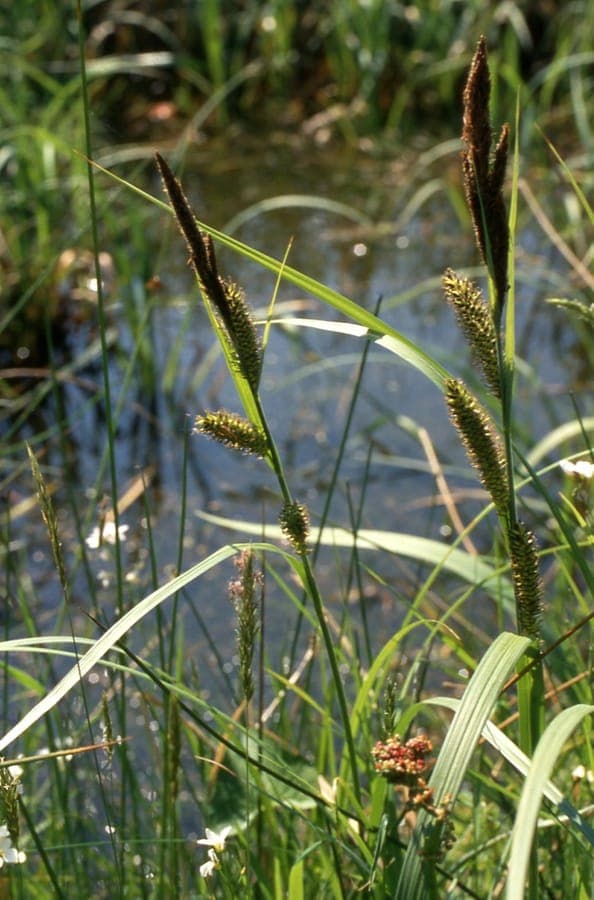
This sedge has upright, stiff stems with narrow, blue-green leaves that arch slightly at the tips. The foliage grows in dense tussocks, reaching 80–120 cm in height and 30–40 cm in spread. In late spring, from May onwards, dark green flower spikes emerge, maturing into brown, fuzzy seed heads by June and July. These inconspicuous flowers add subtle texture rather than bold colour, appealing to pollinators and seed-eating birds like finches.
The plant remains largely evergreen through winter, with leaves turning a soft tan in colder months. This persistent foliage offers visual interest when many other plants have died back. It doesn't produce showy blooms, but its architectural form makes it a valuable textural plant in naturalistic planting schemes.
Ideal location
Plant Carex riparia in full sun to partial shade. It performs best in full sun but tolerates light shade, especially if soil moisture is consistently high. Avoid dry, sandy areas - this sedge demands wet feet. It's perfect for pond edges, stream banks, or low-lying garden areas prone to waterlogging.
In garden design, use it to create soft boundaries around water features or as a structural backbone in rain gardens. It can even grow in standing water up to 10 cm deep, making it ideal for shallow pond zones. For inspiration on placement and groupings, gardenworld.app offers visual tools to map out ideal sedge placement in your garden layout.
Soil requirements
Greater pond sedge isn't fussy about soil fertility but requires consistently moist to wet soil. It thrives in heavy clay, loam, or silty soils with high organic content. Ideal pH ranges from slightly acidic to neutral (5.5–7.0). Avoid fast-draining, sandy soils unless amended with compost or well-rotted manure to improve water retention.
This sedge can tolerate temporary flooding and even permanent shallow water, making it suitable for marginal planting. If your soil dries out frequently, consider mulching heavily with leaf mould or installing a drip line to maintain moisture.
Free design
Want to see Greater pond sedge: complete guide in your garden? Make a free design now.
Watering
Once established, Carex riparia needs little supplemental watering in naturally damp areas. However, in the first year or during prolonged dry spells, regular irrigation is essential. Drooping or browning leaf tips are clear signs of drought stress. Aim to keep the soil constantly moist - never let it dry out completely.
Use rainwater when possible, as tap water with high lime content can affect long-term health in sensitive soils. In containers or raised bog gardens, monitor moisture daily during summer.
Pruning
Minimal pruning is needed. A single hard cutback in late winter or early spring (February to March) keeps the plant looking tidy and encourages fresh growth. Cut old foliage down to 15–20 cm above ground level before new shoots emerge. Avoid pruning in autumn to preserve winter structure and provide food and shelter for wildlife.
If you're using the plant in a formal setting, you may opt for a neater cut in early spring. Otherwise, a natural, slightly wild look suits its character best.
Maintenance calendar
- January: Check for frost damage; keep base clear of debris.
- February: Prepare for spring cutback; remove loose leaves.
- March: Prune old growth; apply compost if desired.
- April: Monitor for new shoots; ensure consistent moisture.
- May: Growth accelerates; watch for rhizome spread.
- June: Flower spikes develop; check for pests.
- July: Peak bloom; inspect for drought stress.
- August: Maintain moisture in dry spells.
- September: Allow seed heads to persist for birds.
- October: Reduce maintenance; leave structure intact.
- November: Light cleanup only; avoid deep disturbance.
- December: Protect from waterlogging; ensure drainage.
Winter hardiness
Carex riparia is fully hardy in USDA zones 5–9. It withstands freezing temperatures without damage, and foliage often remains green or turns pale brown, adding winter texture. In harsh winters, tips may scorch slightly but recover quickly in spring. No winter protection is needed, even in exposed sites.
Companion plants
Pair with moisture-loving plants like Marsh marigold (Caltha palustris), Bog cotton (Eriophorum angustifolium), Yellow flag iris (Iris pseudacorus), and Tufted sedge (Carex elata 'Aurea'). For contrast, include挺 upright plants like Bottlebrush grass (Elymus hystrix) or add colour with Water forget-me-not (Myosotis scorpioides).
Avoid pairing with drought-tolerant species such as Lavender or Sedum. Stick to plants that share its need for wet feet.
Closing
Greater pond sedge is a reliable, low-maintenance choice for wet areas. It's tough, spreads steadily, and supports local wildlife. Whether you're stabilising a pond bank or filling a soggy corner, Carex riparia delivers both function and form. You can find it at garden centres across the UK, often sold in 2-litre pots. And remember, gardenworld.app lets you visualise how this sedge fits into your overall garden design - helping you plan spacing, companions, and seasonal interest with ease.
Want to see Greater pond sedge: complete guide in your garden? Make a free design now.
Upload a photo, pick a style, and get a photorealistic design with plant list in under a minute.
No credit card required


Similar plants
Flat-stemmed club-rush: complete guide
Bolboschoenus planiculmis
Everything about Bolboschoenus planiculmis: growing conditions, watering, care, and use as a pond margin or wetland plant in garden design.
Great Plains flatsedge: complete guide
Cyperus lupulinus
Everything about Great Plains flatsedge (Cyperus lupulinus): growing conditions, care, garden uses, and ecological value. Tips for pond margins and dry sandy soils.
Golden beak sedge: complete guide
Rhynchospora corymbosa
Everything about golden beak sedge (Rhynchospora corymbosa): a dramatic tropical marginal for pond edges, bog gardens, and wet habitats.