
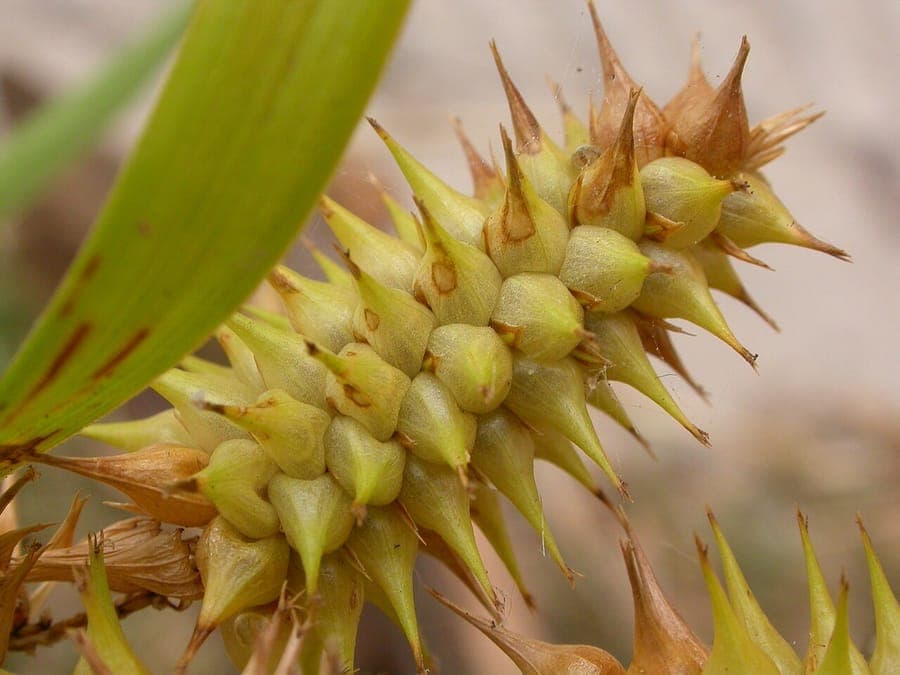
Matt Lavin / CC BY-SA 2.0, via Wikimedia Commons
Carex retrorsa: complete guide
Carex retrorsa
Want to see Carex retrorsa: complete guide in your garden?
1 minute, no credit card
Overview
Carex retrorsa, commonly called knotsheath sedge or retrorse sedge, is a North American grass-like perennial specializing in wet, poorly drained soils. The plant earns its common name from its distinctive reflexed (backward-bending) flower spikes, giving it an unusual bottlebrush-like appearance.
Native across much of Canada and northern United States, this sedge brings reliability to boggy gardens and waterside settings where most conventional plants fail. It's an excellent choice for erosion control, wildlife habitat creation, and adding textural interest to moisture-prone landscape areas.
Appearance and Bloom
Carex retrorsa grows as a clumping perennial 30-80 centimeters tall, forming dense tufts of narrow, linear green to yellow-green foliage. The distinctive feature is its flower spikes: multiple small spikes clustered densely at the stem apex, with characteristic backward-curving bracts and fruits that create a distinctive knobby texture.
Flowers appear May-July. Unlike many sedges, the reflexed spikes remain ornamental well into autumn, providing weeks of visual interest after peak bloom. The developing fruiting heads transition from green to tan-brown, adding seasonal color.
Foliage remains semi-evergreen in mild winters, providing winter structure and food for overwintering wildlife.
Ideal Location
Carex retrorsa thrives in full sun to partial shade (3-4 hours direct light daily). Position it at landscape low points, along streambanks, in rain gardens, or anywhere water collects seasonally. This sedge excels in bioswales, rain garden designs, and constructed wetlands.
Its proven erosion-control ability makes it ideal for stabilizing muddy slopes near water features. Wildlife photographers appreciate this sedge for attracting seed-eating birds that feed on its autumn fruiting heads.
Soil
This species demands consistently moist, often waterlogged soil. Heavy clay with high silt content is perfect. Organic-rich, slightly acidic to neutral pH (5.5-7.0) soil suits it best.
Carex retrorsa tolerates poor drainage that would kill most plants. Amend with peat moss or leaf mold to improve water retention and organic matter. In constructed wetlands, this sedge stabilizes substrate and filters water effectively.
No added fertilizer needed; the species performs better in lean soils.
Free design
Want to see Carex retrorsa: complete guide in your garden? Make a free design now.
Watering
Consistent moisture is essential. During the growing season (April-October), water frequency depends on rainfall. In drought periods, provide supplementary irrigation 2-3 times weekly to maintain consistently moist conditions.
Unlike most perennials, Carex retrorsa actually tolerates temporary standing water. A light mulch (compost, shredded leaves) helps retain moisture during dry spells. In naturally wet sites, supplemental watering may never be necessary.
Pruning
Minimal pruning required. In early spring (March), remove any brown or frost-damaged foliage. This sedge rarely needs hard cutback unless it's overgrown or damaged.
Allow fruiting heads to persist through autumn for visual interest and wildlife food. Clean up matted foliage only when new growth emerges. The plant maintains a neat mound naturally without aggressive spreading.
Maintenance Calendar
- January-February: Minimal maintenance; observe winter structure.
- March: Remove dead foliage; light grooming for neatness.
- April-May: Vigorous growth begins; ensure steady moisture.
- June-July: Peak flowering; decorative spike formation.
- August-September: Fruiting period; continue moderate moisture.
- October: Growth slows; reduce watering slightly.
- November-December: Dormancy; maintain fruiting structure for wildlife.
Winter Hardiness
Carex retrorsa is fully hardy throughout temperate Europe and North America. Temperatures to -20C pose no threat. Foliage may brown in harsh winters, but underground rhizomes survive indefinitely. The species is reliable in USDA zones 3-9.
Companion Plants
This wetland specialist pairs beautifully with:
- Hostas (shade-loving, moisture-tolerant foliage)
- Lobelia cardinalis (red spikes, waterside adaptability)
- Astilbe species (feathery plumes, wet-site champions)
- Filipendula (meadowsweet relatives, moisture-loving)
- Caltha palustris (kingcup, yellow spring flowers)
- Native Iris species (purple/yellow waterside interest)
In water gardens: Combine with water lilies and Iris pseudacorus for layered visual interest and habitat creation.
Conclusion
Carex retrorsa brings reliable performance to wet, overlooked garden spaces. Its distinctive retroflexed spikes provide seasonal architectural interest while its exceptional moisture tolerance makes it invaluable for problem areas. Find it at garden centers and online retailers specializing in native wetland plants. Visit www.gardenworld.app for more ideas on transforming soggy spots into thriving habitat gardens.
With its North American heritage and proven hardiness, this sedge establishes quickly and requires minimal ongoing care once established.
Want to see Carex retrorsa: complete guide in your garden? Make a free design now.
Upload a photo, pick a style, and get a photorealistic design with plant list in under a minute.
No credit card required


Similar plants
Flat-stemmed club-rush: complete guide
Bolboschoenus planiculmis
Everything about Bolboschoenus planiculmis: growing conditions, watering, care, and use as a pond margin or wetland plant in garden design.
Great Plains flatsedge: complete guide
Cyperus lupulinus
Everything about Great Plains flatsedge (Cyperus lupulinus): growing conditions, care, garden uses, and ecological value. Tips for pond margins and dry sandy soils.
Golden beak sedge: complete guide
Rhynchospora corymbosa
Everything about golden beak sedge (Rhynchospora corymbosa): a dramatic tropical marginal for pond edges, bog gardens, and wet habitats.