
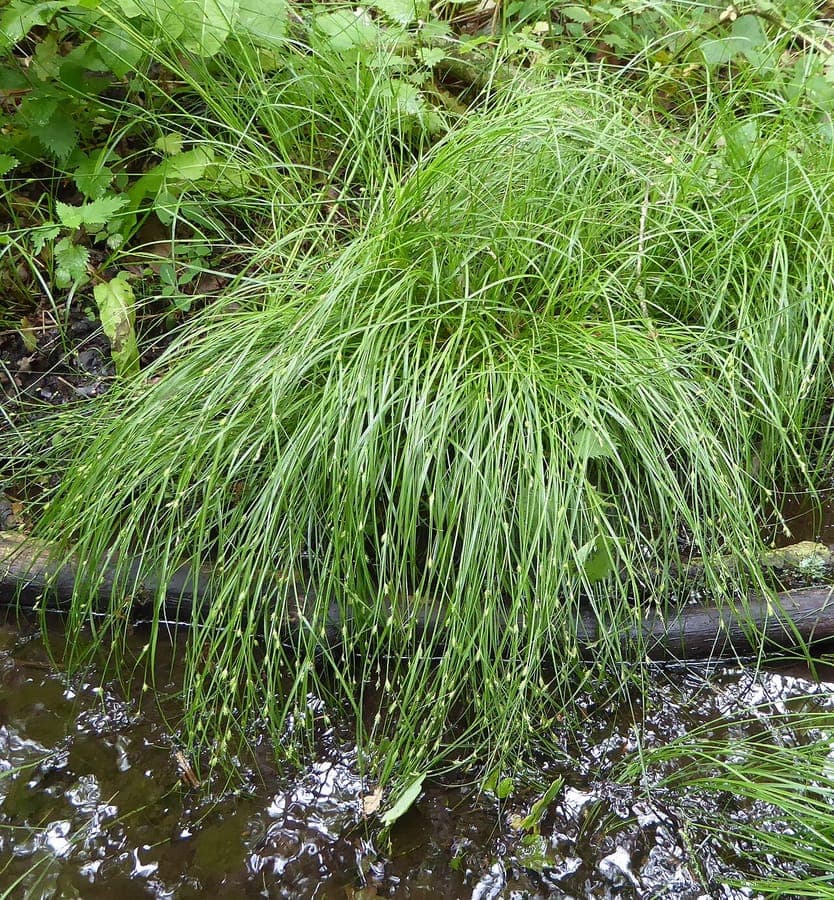
E Wusk / CC BY-SA 4.0, via Wikimedia Commons
Remote sedge: complete guide
Carex remota
Want to see Remote sedge: complete guide in your garden?
1 minute, no credit card
Overview
Carex remota, commonly known as remote sedge, is a graceful, understated ornamental grass in the Cyperaceae family. Native to woodlands across central and eastern Europe - including Austria, the Baltic states, and parts of Belgium - it thrives in cool, shaded environments where few other grasses succeed. Standing between 30 and 50 cm tall, it forms loose, open clumps that slowly spread via rhizomes, creating a soft, textured ground cover without becoming invasive.
What sets Carex remota apart is its airy bloom structure and preference for partial shade. Unlike bold, upright grasses, this sedge excels in subtlety. It's perfect for naturalistic planting schemes, woodland edges, and shaded borders. On gardenworld.app, you can design a planting plan that integrates remote sedge with other shade-tolerant species, ensuring your garden remains lush and layered year-round.
Appearance & bloom cycle
The plant features narrow, arching leaves about 2–4 mm wide and up to 40 cm long. The foliage is a light, fresh green, giving it a delicate presence in the garden. From May through July, Carex remota sends up slender flowering stems with green, inconspicuous spikelets. These are spaced apart - hence the name 'remota' - and often held at slight angles, creating an open, relaxed look.
The flowers are green and not particularly showy, but that's part of their charm. They blend seamlessly into the woodland floor, attracting few pests and no notable diseases. After flowering, small seeds develop, which may be dispersed by wind or insects, though spread in cultivation is minimal. The plant maintains its form through winter, with foliage turning pale brown but remaining upright, adding structure to the dormant garden.
Ideal location
Remote sedge prefers partial shade, rated at light level 5 out of 10. It performs best under light-canopy deciduous trees like beech or hornbeam, where dappled sunlight filters through. Full sun will scorch its leaves during dry spells, especially in USDA zones 7 and above. Full shade, on the other hand, slows growth and reduces flowering.
This sedge shines in woodland gardens, shaded rockeries, or beneath shrubs where other grasses struggle. Pair it with hostas, ferns, or epimediums for a layered, textured effect. Use gardenworld.app to map out sun exposure in your garden and find the ideal microclimate for Carex remota, especially in urban settings where shade patterns shift with buildings.
Soil requirements
Carex remota thrives in moist, humus-rich soil with a pH between 5.0 and 5.5. It prefers acidic to slightly acidic conditions and struggles in alkaline or chalky soils. The soil should be well-draining yet consistently moist - think forest floor conditions. Heavy clay soils can work if amended with leaf mold or compost to improve structure and water retention.
Avoid liming the soil near this plant. If your garden has a history of lime use or stonework, test the pH before planting. Adding pine needles or oak leaf litter can help maintain acidity. Sandy soils will need regular mulching with organic matter to prevent drying out.
Free design
Want to see Remote sedge: complete guide in your garden? Make a free design now.
Watering
Keep the soil evenly moist, especially during the first growing season and in dry springs or summers. Water weekly during droughts, preferably in the morning or evening to reduce evaporation. Rainwater is ideal - tap water, especially in hard-water areas, can raise pH over time and stress the plant.
Drip irrigation or soaker hoses work well in larger plantings. Mulching with wood chips or pine needles helps retain moisture and keeps roots cool. Avoid letting the soil dry out completely, as this can cause leaf browning and stunted growth.
Pruning
Pruning is minimal. In late winter or early spring (February to March), remove any dead, damaged, or unsightly foliage with clean, sharp shears. Cut back only the top layer - avoid cutting into the crown, as this can damage new growth. Wear gloves, as the fine leaf edges can irritate skin.
Do not cut the entire plant to the ground unless it's severely matted. Unlike some ornamental grasses, Carex remota doesn't require hard pruning. Light tidying is enough to encourage fresh growth and maintain a neat appearance.
Maintenance calendar
- Jan: Check for winter damage; maintain mulch layer
- Feb: Begin removing dead foliage
- Mar: Complete pruning; monitor for new shoots
- Apr: Apply a thin layer of compost as top dressing
- May: Bloom begins; check soil moisture
- Jun: Peak flowering; increase watering if dry
- Jul: Flowering ends; no additional care needed
- Aug: Maintain moisture during heatwaves
- Sep: Watch for sun scorch in exposed areas
- Oct: Leave seed heads for winter interest; collect seed if desired
- Nov: Leave plant intact for winter structure
- Dec: No pruning; protect roots with organic mulch if in zone 4
Winter hardiness
Carex remota is hardy to USDA zone 5 (-20°C), surviving most European and North American winters without protection. In zone 4, a light mulch of pine needles or leaf litter can help insulate the rhizomes from freeze-thaw cycles. Avoid heavy mulching over the crown, as this may lead to rot.
The plant retains much of its foliage through winter, providing visual interest and shelter for overwintering insects. Its evergreen to semi-evergreen habit makes it a valuable asset in the off-season garden.
Companion plants
Remote sedge pairs beautifully with other shade-loving perennials:
- Ferns like Dryopteris filix-mas for contrasting texture
- Hosta species for bold foliage contrast
- Epimedium for early spring flowers
- Tiarella cordifolia for ground cover with seasonal color
- Polygonatum multiflorum for vertical interest
These combinations create a dynamic, layered planting that evolves through the seasons. Use gardenworld.app to visualize planting schemes and test combinations before buying.
Closing
Carex remota won't win any beauty contests, but it's a reliable, graceful workhorse for shaded areas. Its low maintenance needs, tolerance for poor light, and natural elegance make it a smart choice for woodland gardens. Buy it from trusted garden centres like those listed on gardenworld.app, or visit major retailers such as OBI or Truffaut in Europe. With the right conditions, it becomes a quiet but essential part of your garden's ecosystem.
Want to see Remote sedge: complete guide in your garden? Make a free design now.
Upload a photo, pick a style, and get a photorealistic design with plant list in under a minute.
No credit card required


Similar plants
Flat-stemmed club-rush: complete guide
Bolboschoenus planiculmis
Everything about Bolboschoenus planiculmis: growing conditions, watering, care, and use as a pond margin or wetland plant in garden design.
Great Plains flatsedge: complete guide
Cyperus lupulinus
Everything about Great Plains flatsedge (Cyperus lupulinus): growing conditions, care, garden uses, and ecological value. Tips for pond margins and dry sandy soils.
Golden beak sedge: complete guide
Rhynchospora corymbosa
Everything about golden beak sedge (Rhynchospora corymbosa): a dramatic tropical marginal for pond edges, bog gardens, and wet habitats.