
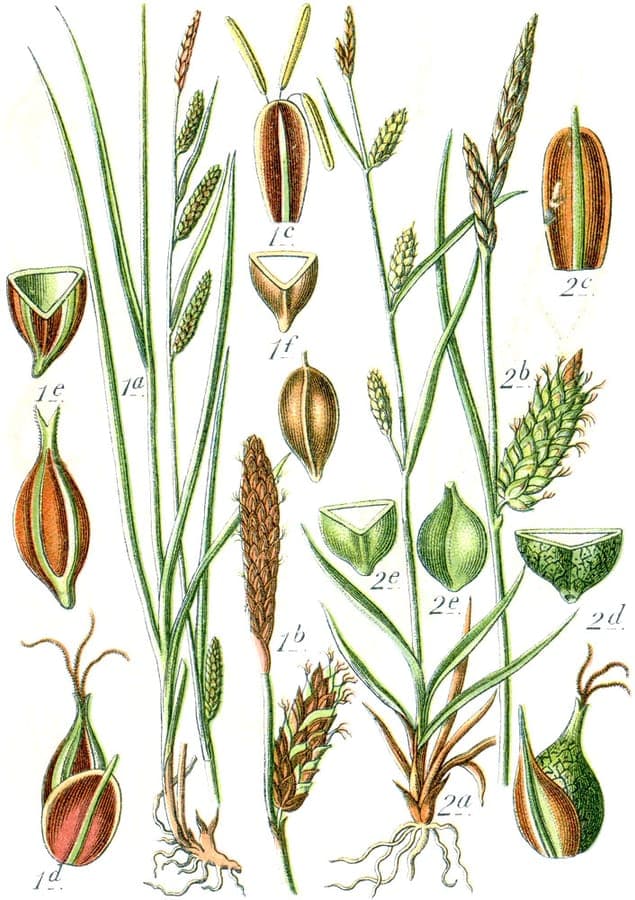
Johann Georg Sturm (Painter: Jacob Sturm) / Public domain, via Wikimedia Commons
Carex recta: complete guide
Carex recta
Want to see Carex recta: complete guide in your garden?
1 minute, no credit card
Overview
Carex recta, commonly known as Estuary sedge or Saltmarsh sedge, is a natural plant from northern Europe and North America. This sedge specializes in wet, moist environments and grows naturally along waterside areas, marshes, and wet meadows.
This plant is perfect for gardeners who want to utilize wet spots in their garden with useful, ecologically valuable plants. Estuary sedge helps prevent erosion and supports local ecosystems.
Appearance & Bloom
Carex recta produces erect, upright leaves in mid-green color. The plant grows in compact to moderate-sized tufts approximately 40-60 centimeters tall. The name "recta" refers to the straight, upright leaves that grow vertically.
In late spring and early summer, the plant blooms with subtle, inconspicuous flowers. The whole plant has a stiff, elegant appearance that works interestingly in modern water features.
Ideal Location
Carex recta thrives in wet to very wet soils. Place this sedge along ponds, in wet areas, marshes, or other very wet garden sections. The plant grows best in full to partial sun.
This plant is perfect for riparian vegetation in hydrological projects or simply for gardeners wanting to transform wet corners with useful plants. Plant in groups for naturally appearing compositions.
Soil
Carex recta grows in wet to saturated soils. The plant prefers silty or organically rich sediments like natural ponds and constructed wetland zones.
Adapts to acidic to neutral pH. The plant dislikes chalky soils. Since this plant naturally grows in wet environments, drainage is not a concern; actually, constantly wet conditions work better.
Watering
Carex recta requires consistently wet soils. In garden design, this means ideally locations where water naturally collects, or where you can artificially maintain water. Ensure soil doesn't dry during summer months.
The plant can even grow in shallow water, up to about 10-15 centimeters deep. This makes it useful for pond edges and marsh zones.
Free design
Want to see Carex recta: complete guide in your garden? Make a free design now.
Pruning
Carex recta requires minimal pruning. Remove dead or damaged foliage in late spring. In many climates, above-ground parts die back in winter and regrow from roots.
Because the plant grows in wild environments, it's better to allow its natural form to develop. Avoid aggressive cutting.
Maintenance Calendar
February-March: Check water levels. Remove any dead winter foliage.
April-May: Ensure adequate water drainage. Beginning of growing season.
June-August: Monitor water levels during dry periods. Observe natural fauna.
September-October: Preparation for winter. Monitor moisture levels.
November-January: Minimal care. Maintain water levels.
Winter Hardiness
Carex recta is extremely winter hardy, tolerating -20 degrees Celsius and lower. This makes it perfect for northern European gardens. The plant grows in northern areas of Canada and Finland.
In icy water it can thrive without frost damage to roots, provided water doesn't remain completely frozen for extended periods.
Companion Plants
Carex recta combines beautifully with other water and marsh plants. Pair with other Carex species, reeds, and water-tolerant plants. Beautiful with aquatic blooming plants like Iris and Pontederia.
The sedge forms a beautiful background for more prominent flowers in wet zones. It also works well with ferns and other foliage plants.
Closing
Carex recta is ideal for gardeners who want to utilize wet spots with ecologically valuable plants. With its erect, elegant form and preference for wet soils, it offers practical and aesthetic solutions. For more ideas about water plants and pond cultivation, visit gardenworld.app for inspiration on how water elements can enhance your garden.
Want to see Carex recta: complete guide in your garden? Make a free design now.
Upload a photo, pick a style, and get a photorealistic design with plant list in under a minute.
No credit card required


Similar plants
Flat-stemmed club-rush: complete guide
Bolboschoenus planiculmis
Everything about Bolboschoenus planiculmis: growing conditions, watering, care, and use as a pond margin or wetland plant in garden design.
Great Plains flatsedge: complete guide
Cyperus lupulinus
Everything about Great Plains flatsedge (Cyperus lupulinus): growing conditions, care, garden uses, and ecological value. Tips for pond margins and dry sandy soils.
Golden beak sedge: complete guide
Rhynchospora corymbosa
Everything about golden beak sedge (Rhynchospora corymbosa): a dramatic tropical marginal for pond edges, bog gardens, and wet habitats.