
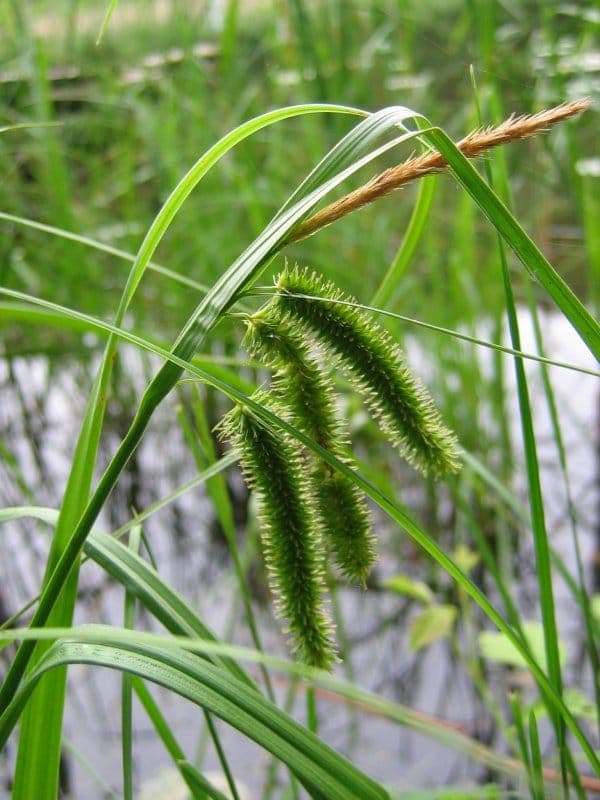
Kristian Peters -- Fabelfroh 08:04, 26 July 2006 (UTC) / CC BY-SA 3.0, via Wikimedia Commons
Cypress-like sedge: complete guide
Carex pseudocyperus
Want to see Cypress-like sedge: complete guide in your garden?
1 minute, no credit card
Overview
Carex pseudocyperus, commonly known as cypress-like sedge, is a graceful, clump-forming perennial that thrives in damp garden conditions. Native to wet woodlands and marshes across Europe, North Africa and parts of Canada, this grass-like plant brings fine texture and subtle movement to shaded, moist corners. As part of the Cyperaceae family, it's not a true grass but behaves like one, offering year-round structure without the high maintenance. If you're designing a wildlife-friendly or rain garden, this sedge is a strong contender. On gardenworld.app, you can generate a custom planting plan that integrates Carex pseudocyperus seamlessly into your damp border or pond edge.
Appearance & bloom cycle
This sedge grows 40 to 70 cm tall with a spread of 30 to 50 cm, forming upright, narrow tufts of bright green foliage. The leaves are slender and arching, giving the plant a soft, feathery appearance. From May through July, it produces upright, cylindrical flower spikes that resemble miniature cypress cones-hence the name. The flowers are green, not showy, but they add structure and interest to the planting scheme. After flowering, small dark fruits form and persist into autumn, providing food for insects and visual texture. The plant remains semi-evergreen in milder climates, with old foliage often lasting through winter.
Ideal location
Choose a spot with partial shade to dappled sunlight for best results. Full sun is acceptable only if the soil stays consistently moist. This sedge hates drying out, so avoid exposed, windy locations or sandy soils without irrigation. It's perfect for planting along ponds, in bog gardens, or beneath shallow-rooted trees like birch or alder. If your garden has a low-lying, wet area, this is the plant to use. Check your garden's microclimate on gardenworld.app to see if your shady, damp corner is suitable.
Soil requirements
Carex pseudocyperus prefers rich, loamy or clay-loam soils with a pH between 7.5 and 8.0-slightly alkaline. The soil must retain moisture but not become waterlogged. Heavy clay can work well if it doesn't compact too much. In sandy soils, improve water retention by mixing in compost or well-rotted manure. Avoid acidic soils (below pH 6.5), as this leads to poor growth and yellowing leaves. Don't use ericaceous compost or peat, as these lower pH and harm the plant.
Free design
Want to see Cypress-like sedge: complete guide in your garden? Make a free design now.
Watering
Keep the soil consistently moist, especially during the first growing season. Water weekly during dry spells, more often in full sun. Established plants are somewhat drought-tolerant but perform best with regular hydration. In bog gardens or pond margins, you can plant it so the roots sit in shallow standing water-just ensure the crown stays above water level. Rainwater is ideal, particularly in hard-water areas where tap water increases soil alkalinity over time.
Pruning
This sedge requires minimal pruning. In early spring (March), cut back any old, damaged, or brown foliage to make way for fresh growth. Use sharp shears and avoid cutting into the crown. If the clump becomes sparse in the center after several years, divide it in spring. Lift the plant, split it into 2–3 sections with a spade, and replant immediately in moist soil.
Maintenance calendar
- Jan: Check for frost damage; protect young shoots if extreme cold is forecast
- Feb: Remove leaf litter; prepare for spring growth
- Mar: Cut back old foliage; divide overcrowded clumps
- Apr: Apply a layer of compost to boost growth
- May: Blooming begins; ensure consistent moisture
- Jun: Peak bloom; watch for slugs on new shoots
- Jul: Continue blooming; avoid drought stress
- Aug: Water deeply during heatwaves
- Sep: Reduce watering gradually; leave seed heads for winter interest
- Oct: Clear heavy debris; do not mulch heavily
- Nov: Check for fungal issues; ensure good drainage
- Dec: Plant remains semi-evergreen; protect from prolonged ice
Winter hardiness
Hardy in USDA zones 5 to 8 (down to -20°C), Carex pseudocyperus survives most UK and North American winters without protection. Foliage may turn yellow or brown but won't collapse entirely. Leave it standing until spring to shelter overwintering insects and protect the crown. In areas with heavy ice or prolonged freezing, a light mulch of straw can help, but it's rarely necessary.
Companion plants
Pair with moisture-loving plants such as Iris versicolor, Ligularia, or Astilbe. For contrast, use bold-leaved plants like Rodgersia or hostas. In sunnier wet areas, combine with Molinia caerulea or Eutrochium maculatum. Avoid planting near drought-tolerant or acid-loving species like lavender or rhododendrons.
Closing
Carex pseudocyperus is a reliable, elegant sedge for moist, shaded areas. It's low-maintenance, supports wildlife, and adds texture year-round. Buy healthy plants from trusted garden centres like those found at OBI or Hornbach in Europe, or local nurseries in the US and UK. With the right placement and soil prep, it will thrive for years. Use gardenworld.app to design a planting scheme that maximizes its potential in your garden.
Want to see Cypress-like sedge: complete guide in your garden? Make a free design now.
Upload a photo, pick a style, and get a photorealistic design with plant list in under a minute.
No credit card required


Similar plants
Flat-stemmed club-rush: complete guide
Bolboschoenus planiculmis
Everything about Bolboschoenus planiculmis: growing conditions, watering, care, and use as a pond margin or wetland plant in garden design.
Great Plains flatsedge: complete guide
Cyperus lupulinus
Everything about Great Plains flatsedge (Cyperus lupulinus): growing conditions, care, garden uses, and ecological value. Tips for pond margins and dry sandy soils.
Golden beak sedge: complete guide
Rhynchospora corymbosa
Everything about golden beak sedge (Rhynchospora corymbosa): a dramatic tropical marginal for pond edges, bog gardens, and wet habitats.