
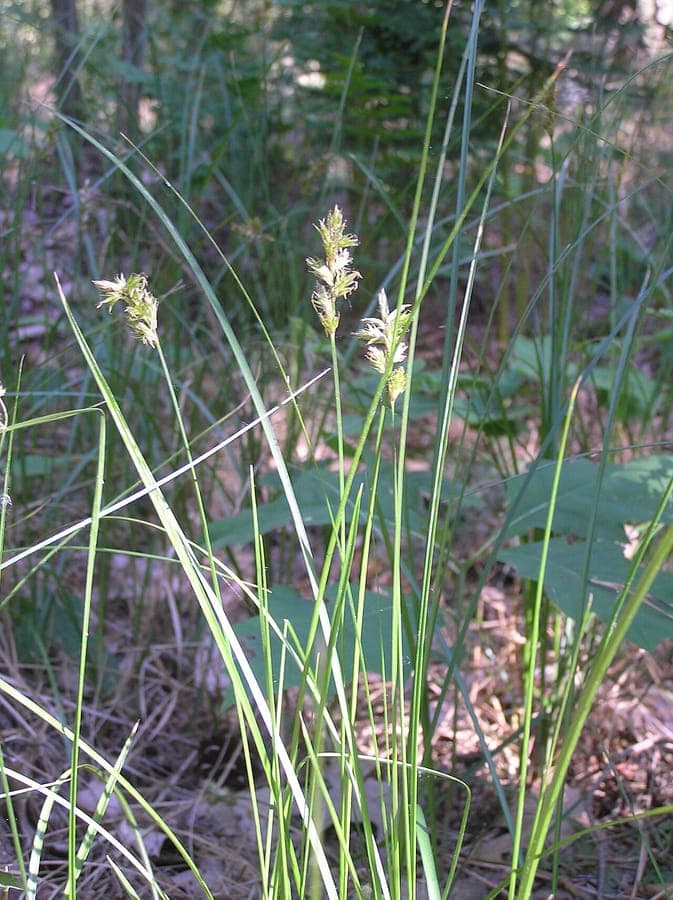
Petr Filippov / CC BY-SA 3.0, via Wikimedia Commons
Carex pseudobrizoides: complete guide
Carex pseudobrizoides
Want to see Carex pseudobrizoides: complete guide in your garden?
1 minute, no credit card
Overview
Carex pseudobrizoides, commonly known as a false sand sedge, is a quietly striking perennial grass relative that belongs to the Cyperaceae family. Native across a broad swathe of Europe-from Belgium and the Netherlands to Poland and the Baltic States-this modest plant thrives in damp, acidic environments typical of forest edges, peat margins, and shaded stream banks. Despite its understated appearance, it's a powerful ally in naturalistic garden designs. Standing 30 to 40 cm tall with a spread of about 35 cm, it forms compact, slowly spreading clumps that add subtle texture and movement to shaded areas.
Unlike flashier ornamental grasses, Carex pseudobrizoides doesn't demand attention. Instead, it earns its place through resilience and quiet beauty. Its preference for low pH soils and consistent moisture makes it ideal for woodland gardens or moisture-retentive borders. At gardenworld.app, you can design a shade garden layout that highlights the delicate structure of this sedge alongside compatible acid-loving plants.
Appearance & bloom cycle
This sedge forms dense, arching tufts of fine, bright green foliage. The leaves are narrow, about 2–3 mm wide, and grow in upright to slightly drooping clusters. In midsummer, between June and July, it produces small, inconspicuous flower spikes-greenish-brown and barely rising above the foliage. These are not ornamental showstoppers, but they do attract small pollinators and add seasonal interest.
By late summer and into autumn, the tips of the foliage often develop soft bronze or purplish tints, especially when grown in partial shade with consistent moisture. This subtle shift enhances the plant's role in seasonal transitions. The foliage remains evergreen in milder climates, adding winter texture, though in colder zones it may die back slightly.
Ideal location
For best results, plant Carex pseudobrizoides in partial shade-around a 6 out of 10 on the light scale. Full sun will dry out the soil too quickly, leading to stressed, floppy growth. Ideal locations include under light-canopy trees like birch or alder, along north-facing walls, or in shaded corners of a damp garden. Avoid windy, exposed spots, as the fine foliage can get shredded.
This plant excels in naturalistic settings, where its grassy texture contrasts well with ferns, hostas, or mossy groundcovers. Use gardenworld.app to visualize how this sedge fits into your garden's seasonal rhythm, adjusting for shade patterns and water retention zones.
Soil requirements
The key to success with this sedge is acidic soil, with a pH between 4.0 and 4.5. Neutral or alkaline soils will stunt growth and cause yellowing leaves. Amend your soil with peat moss, pine bark, or acid compost to lower the pH. A mix of garden soil, leaf mold, and sand in equal parts works well for planting.
The soil must be moisture-retentive but well-draining. Heavy clay will suffocate roots if waterlogged, while pure sand dries too fast. A loamy mix with organic matter ensures steady moisture without waterlogging.
Free design
Want to see Carex pseudobrizoides: complete guide in your garden? Make a free design now.
Watering
Keep the soil consistently moist, especially during the first year after planting. Once established, Carex pseudobrizoides tolerates brief dry spells but performs best with reliable moisture. Water deeply once or twice a week during dry summers, preferably with rainwater to avoid lime buildup.
Mulch with pine needles or shredded bark to retain moisture and suppress weeds. Avoid piling mulch directly against the crown to prevent rot. In container plantings, check moisture daily during summer-pots dry out fast.
Pruning
Minimal pruning is needed. In late winter or early spring, remove any dead or damaged foliage with clean, sharp shears. Do not cut the entire plant back-just tidy up the outer edges. If the clump becomes too dense, divide it every 5 to 7 years in early spring.
Use a sharp spade or knife to split the root ball into sections. Replant immediately in prepared acidic soil. This not only rejuvenates the plant but also provides new plants for other areas of the garden.
Maintenance calendar
- January: Dormant. No action required.
- February: Remove dead leaves. Check clump density.
- March: Divide if needed. Begin light watering as growth resumes.
- April: New growth emerges. Maintain moist soil.
- May: Increase watering during dry spells.
- June: Flower spikes appear. No pruning needed.
- July: Peak moisture demand. Protect from intense sun.
- August: Continue mulching. Watch for drying edges.
- September: Foliage begins to bronze at tips.
- October: Reduce watering. Leave dead foliage for winter cover.
- November: Dormancy begins. No care needed.
- December: Fully dormant. Ensure mulch layer for frost protection.
Winter hardiness
Carex pseudobrizoides is hardy in USDA zones 5 to 8. In zone 7, typical of the UK and much of northern Europe, it survives winter well without protection. In colder areas, a light mulch of pine needles helps prevent frost heave and crown damage.
In containers, wrap the pot in hessian or bubble wrap, and elevate it off cold ground. Avoid placing in unheated greenhouses where temperature fluctuations can harm roots.
Companion plants
Pair with plants that share its need for acidic, moist soil. Excellent companions include Rhododendron, Molinia caerulea, Eriophorum angustifolium, and Calluna vulgaris. Ferns like Dryopteris filix-mas or Matteuccia struthiopteris add complementary texture.
Avoid lime-loving plants such as lavender, sedum, or most roses. These will struggle in the same soil and compete poorly. Instead, focus on woodland perennials and shade-tolerant groundcovers.
Closing
Carex pseudobrizoides is not a plant for those seeking bold color or dramatic form. It's for gardeners who appreciate texture, subtle change, and ecological function. Once established, it asks little-just consistent moisture and acidic soil-and gives back with year-round interest and habitat value.
Available at garden centres across the UK, this sedge is slowly gaining popularity among natural garden enthusiasts. For best results, plant in spring or early autumn. With thoughtful placement and minimal care, it will thrive for years. Explore planting schemes on gardenworld.app to see how this quiet performer can elevate your garden's understated elegance.
Want to see Carex pseudobrizoides: complete guide in your garden? Make a free design now.
Upload a photo, pick a style, and get a photorealistic design with plant list in under a minute.
No credit card required


Similar plants
Flat-stemmed club-rush: complete guide
Bolboschoenus planiculmis
Everything about Bolboschoenus planiculmis: growing conditions, watering, care, and use as a pond margin or wetland plant in garden design.
Great Plains flatsedge: complete guide
Cyperus lupulinus
Everything about Great Plains flatsedge (Cyperus lupulinus): growing conditions, care, garden uses, and ecological value. Tips for pond margins and dry sandy soils.
Golden beak sedge: complete guide
Rhynchospora corymbosa
Everything about golden beak sedge (Rhynchospora corymbosa): a dramatic tropical marginal for pond edges, bog gardens, and wet habitats.