
Krzysztof Ziarnek, Kenraiz / CC BY-SA 4.0, via Wikimedia Commons
Wimper sedge: complete guide
Carex pilosa
Want to see Wimper sedge: complete guide in your garden?
1 minute, no credit card
Overview
Carex pilosa, commonly known as Wimper sedge, is a subtle yet resilient perennial in the sedge family (Cyperaceae). Native to forested regions of central and eastern Europe - including Germany, Austria, and the Baltic States - it's built for life in cool, shaded woodlands. At 25–35 cm tall, it forms neat, arching clumps that stay green through winter, making it a reliable choice for year-round structure in shaded borders or under deciduous trees. It's not native to the UK or North America, but it integrates beautifully into naturalistic planting schemes.
Unlike flashy ornamentals, Carex pilosa shines in texture and quiet persistence. It spreads slowly via short rhizomes, never aggressively, and holds its form well. On gardenworld.app, you can design a planting scheme that highlights sedges like this one, using digital tools to map light patterns and spacing.
Appearance & bloom cycle
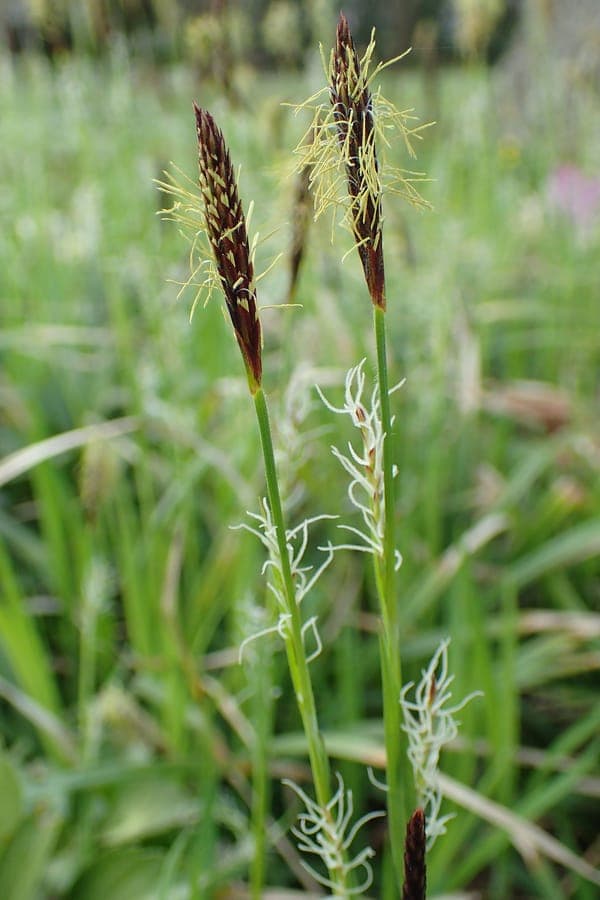
The foliage is narrow, strap-like, and a soft medium green, gently arching at the tips. What sets this sedge apart is its flowering structure. From April through June, delicate brown flower spikes emerge - not showy, but intricate. Close up, you'll notice fine hairs along the spikelets, resembling eyelashes (hence "Wimper"). These persist well into summer, adding fine texture even after pollination.
There's no true flower colour in the conventional sense - just soft, earthy browns. The plant remains semi-evergreen in milder climates (USDA zones 6–8), with old foliage slowly replaced by new growth in spring. Dead leaves can be gently combed out, but avoid cutting back hard - it slows recovery.
Ideal location
Think cool, damp, and dappled. Wimper sedge thrives in light level 4: that's partial to full shade, with no more than a few hours of morning sun. Avoid hot afternoon sun at all costs - it crisps the leaf tips and stresses the plant. It's ideal under beech, birch, or hornbeam, where the soil stays moist and shaded.
Plant in groups of 5 or more for visual impact. Use it as a ground cover in shaded corners, along woodland paths, or at the base of shrubs. It's also effective near pond margins, as long as the soil isn't waterlogged. On gardenworld.app, you can test companion combinations and simulate seasonal changes to see how Carex pilosa fits into your long-term plan.
Soil requirements
This sedge wants humus-rich, moisture-retentive but well-drained soil. pH should be acidic to slightly acidic - ideally between 5.0 and 5.5. Avoid chalky or alkaline soils; Carex pilosa will struggle and may yellow. In areas with higher pH, amend the planting hole with ericaceous compost or leaf mould to create a suitable micro-environment.
Heavy clay can work if it's not compacted, but add organic matter to improve drainage. Sandy soils need generous mulching with compost each spring to retain moisture and nutrients.
Free design
Want to see Wimper sedge: complete guide in your garden? Make a free design now.
Watering
Keep the soil consistently moist, especially in the first growing season and during dry spells. Once established, it's moderately drought-tolerant for short periods, but prolonged dryness leads to browning and thinning. Water deeply once a week in summer if rainfall is below 2.5 cm.
Use rainwater when possible - tap water with high lime content can gradually raise soil pH, harming long-term health. A 5 cm layer of leaf litter or fine bark mulch in spring helps retain moisture and suppresses weeds.
Pruning
No pruning is required. Do not cut back in autumn - the old foliage protects new growth and provides winter interest. In late winter or early spring (February–March), gently remove any damaged or discoloured leaves by hand or with scissors. If clumps become dense or start dying out in the centre, divide every 4–5 years in early spring before new growth starts.
Use a sharp spade to lift and split the root ball. Replant divisions 20–25 cm apart and water in well.
Maintenance calendar
- January: Check for frost heave. Leave foliage intact.
- February: Start removing dead leaves. Prepare for division if needed.
- March: Divide clumps. Top-dress with compost.
- April: Flower spikes emerge. Monitor soil moisture.
- May: Peak bloom. Water if dry.
- June: Flowers fade. No action needed.
- July: Watch for drought stress under trees.
- August: Minimal care. Water in prolonged dry spells.
- September: Mulch with leaf mould.
- October: Leave standing for wildlife.
- November: No pruning. Let nature take over.
- December: Dormant. Check for winter damage (rare).
Winter hardiness
Hardy in USDA zones 5–8. It tolerates temperatures down to -20°C without protection. Foliage may tan in harsh winters but rebounds in spring. No winter mulch is needed in ground plantings, though container-grown plants benefit from a layer of straw or horticultural fleece.
Companion plants
Pair with plants that share its preference for cool, moist shade:
- Helleborus orientalis – early flowers, bold foliage
- Hosta sieboldiana – for contrast in texture and size
- Tellima grandiflora – airy green flower spikes
- Dryopteris filix-mas – robust fern for depth
- Lamium maculatum – for silver foliage and ground coverage
Avoid pairing with sun-lovers like lavender or sedum. Stick to woodland species for harmony.
Closing
Carex pilosa won't grab attention from across the garden, but it earns respect up close. It's a quiet performer - dependable, attractive, and low-maintenance. Perfect for gardeners who value texture, resilience, and ecological function. You'll find it at garden centres across the UK and North America, often near ferns or woodland perennials. Retailers like local independents or larger chains carry it seasonally. When buying, check for the fine-hairy flower spikes to confirm ID - it's sometimes confused with Carex divulsa or Carex flacca. With the right spot and a little attention in dry summers, Wimper sedge becomes a long-term asset in any shaded garden.
Want to see Wimper sedge: complete guide in your garden? Make a free design now.
Upload a photo, pick a style, and get a photorealistic design with plant list in under a minute.
No credit card required


Similar plants
Flat-stemmed club-rush: complete guide
Bolboschoenus planiculmis
Everything about Bolboschoenus planiculmis: growing conditions, watering, care, and use as a pond margin or wetland plant in garden design.
Great Plains flatsedge: complete guide
Cyperus lupulinus
Everything about Great Plains flatsedge (Cyperus lupulinus): growing conditions, care, garden uses, and ecological value. Tips for pond margins and dry sandy soils.
Golden beak sedge: complete guide
Rhynchospora corymbosa
Everything about golden beak sedge (Rhynchospora corymbosa): a dramatic tropical marginal for pond edges, bog gardens, and wet habitats.