
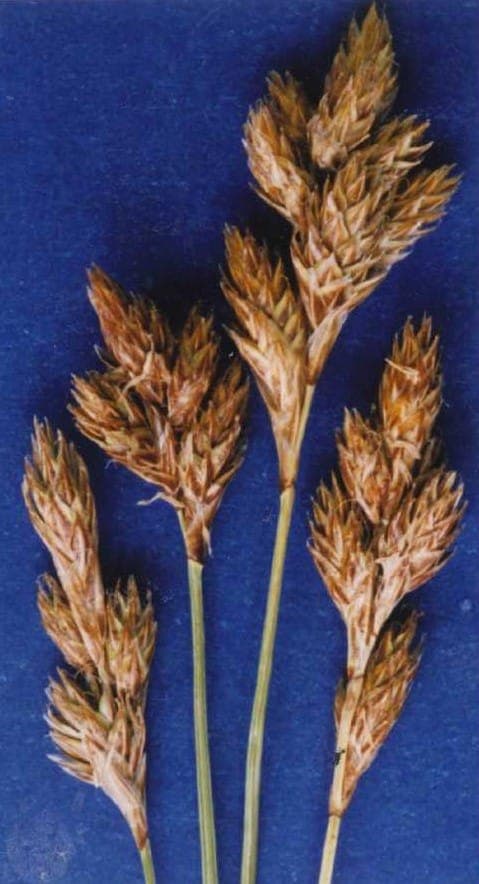
Hurd, E.G., N.L. Shaw, J. Mastrogiuseppe, L.C. Smithman, and S. Goodrich. / Public domain, via Wikimedia Commons
Dunhead Sedge: complete guide
Carex phaeocephala
Want to see Dunhead Sedge: complete guide in your garden?
1 minute, no credit card
Overview
Dunhead sedge (Carex phaeocephala), also known as brown-head sedge or mountain hare sedge, is a robust grass-like perennial from the Cyperaceae family. Native to alpine regions from Alaska through to northern New Mexico, this plant proves its worth in mountain gardens where hardy groundcover is essential. The plant is renowned for its compact growth habit and distinctive dark brown flower heads that emerge in early summer.
The botanical name "phaeocephala" refers to the plant's dark head - a distinguishing feature that sets it apart from related species. This is a plant for gardeners who appreciate mountain flora and seek low-growing accents between rocks and alpine borders.
Appearance and bloom
Dunhead sedge grows as a compact bunch-former, typically reaching 30-40 cm in height. The greenish-grey foliage forms dense tussocks that maintain structure year-round. The flower heads are characteristic: densely packed and dark brown in colour, providing striking colour contrast against lighter foliage.
Blooming peaks from May to June. Female spikelets are tightly packed within the head, whilst male flowers precede them. This creates a unique two-toned effect when flowering occurs. Fruits are fine and small, yellowish-brown in colour.
The leaves are linear and stiff, with a light greyish tint from their waxy coating. This gives the plant a natural alpine appearance that fits perfectly in Scottish borders or alpine zones.
Ideal location
Dunhead sedge thrives in sunny to partially shaded positions. For optimal flowering, choose a spot receiving at least four hours of direct sunlight daily. In warmer climates, this alpine plant appreciates afternoon shade that prevents excessive heat stress.
Watch carefully for soggy feet - this plant naturally grows in dry mountain areas where drainage is essential. A raised bed or sloping terrain provides ideal growing conditions. Also suitable for sunny patios and alpine passageways where water drains quickly.
This alpine heritage means the plant adapts to harsher growing conditions that many other ornamental grasses won't tolerate. Position it where it can experience cool mountain-like conditions.
Soil
Dunhead sedge demands well-draining soil. Heavy clay is absolutely taboo - this plant cannot tolerate waterlogging. A mixture of garden soil, coarse sand and small gravel gives optimal results. The pH may lean slightly acidic (5.5-6.5), but the plant accepts reasonably neutral conditions.
Add organic matter when planting, but not excessively - this plant doesn't want a rich feeding base. In established gardens, slow-release organic fertiliser can be applied in spring. Limited nutrition keeps growth compact.
Sand-gravel soil amendments are ideal because they guarantee drainage whilst also introducing microelements that alpines appreciate. In pots, this sedge grows well in a 2:1:1 mixture of loam, sand and gravel.
Free design
Want to see Dunhead Sedge: complete guide in your garden? Make a free design now.
Watering
Dunhead sedge is drought-tolerant once established. Water regularly during the first season after planting (weekly in dry periods), but this can be greatly reduced once established.
In its natural habitat, this plant receives minimal summer rainfall. Average precipitation in the Rocky Mountains is moderate, so after winter snowmelt and early spring growing season, extra watering is rarely needed.
This plant's moisture preference is nuanced - not soggy, not completely dry. Regular deep moisture, not constant wetness, supports growth. In pots monitor more than in open ground, as drainage in containers works faster.
Don't believe in excessive watering - this is one of the main risks with growing this plant. Too much water leads to root rot and decline.
Pruning
Dunhead sedge doesn't require intensive pruning thanks to its compact growth. In early March you can remove dead or damaged foliage. Use a hard rake to carefully remove dead leaves, bending gently so living blades aren't damaged.
If the plant becomes overgrown for some reason, careful pruning in early spring helps restore shape. This plant flowers on old wood, so aggressive pruning can reduce flowering.
Old flower heads may become brown through the season and lose their elegant appearance. Trim them regularly for a neater look. This also encourages more compact growth.
Maintenance calendar
Spring (March-April): Remove dead foliage, gentle raking. Top-dress with coarse sand/gravel if soil holds too much moisture.
Summer (June-July): Monitor watering needs; in extreme drought water regularly. Remove faded flower heads for a neater appearance.
Autumn (September-October): Less maintenance needed. Check for insects or disease symptoms.
Winter (November-February): Virtually no maintenance. Plant is dormant. Avoid foot traffic during frost.
Winter hardiness
Dunhead sedge is exceptionally winter hardy. Native from Alaska to northern New Mexico, the plant thrives in USDA zones 2a to 7b (European zones 3a to 7b). Extreme cold is not a problem - frost depths to -30C are normal for this plant.
The reddish-brown foliage also provides winter structure in gardens. Many gardeners appreciate the contrast of brown tones against snow in cold months.
Companion plants
Dunhead sedge combines well with other alpines. Rock plants like Phlox subulata, Saxifraga species and small Dianthus varieties work beautifully together. Small conifers such as Picea pungens 'Prostrata' or Juniperus horizontalis form nice contrasts.
In alpine borders, use sedge between rocks with wild thyme, alpine forget-me-nots and small sedums. The dark heads emphasize the brighter colours of companion plants.
For an alpine meadow effect in the front garden, combine with other alpine sedges and small wildflowers. The compact growth makes it suitable for front-row positioning in borders.
Closing
Dunhead sedge is a valuable addition to gardens in mountainous regions or for those wanting to create alpine garden styles. With minimal maintenance requirements, outstanding hardiness and interesting year-round appearance, this sedge deserves more attention in gardens. Plant it in alpine troughs, rock garden rings, or raised borders where drainage is guaranteed and you'll enjoy years of pleasure.
For gardeners in lowland areas, this sedge can thrive in pots on a raised windowsill, provided drainage is perfect. Its alpine heritage makes it a fascinating plant for those who appreciate natural alpine floral aesthetics. Available from Intratuin and Gamma garden centres' alpine plants sections.
Want to see Dunhead Sedge: complete guide in your garden? Make a free design now.
Upload a photo, pick a style, and get a photorealistic design with plant list in under a minute.
No credit card required


Similar plants
Flat-stemmed club-rush: complete guide
Bolboschoenus planiculmis
Everything about Bolboschoenus planiculmis: growing conditions, watering, care, and use as a pond margin or wetland plant in garden design.
Great Plains flatsedge: complete guide
Cyperus lupulinus
Everything about Great Plains flatsedge (Cyperus lupulinus): growing conditions, care, garden uses, and ecological value. Tips for pond margins and dry sandy soils.
Golden beak sedge: complete guide
Rhynchospora corymbosa
Everything about golden beak sedge (Rhynchospora corymbosa): a dramatic tropical marginal for pond edges, bog gardens, and wet habitats.