
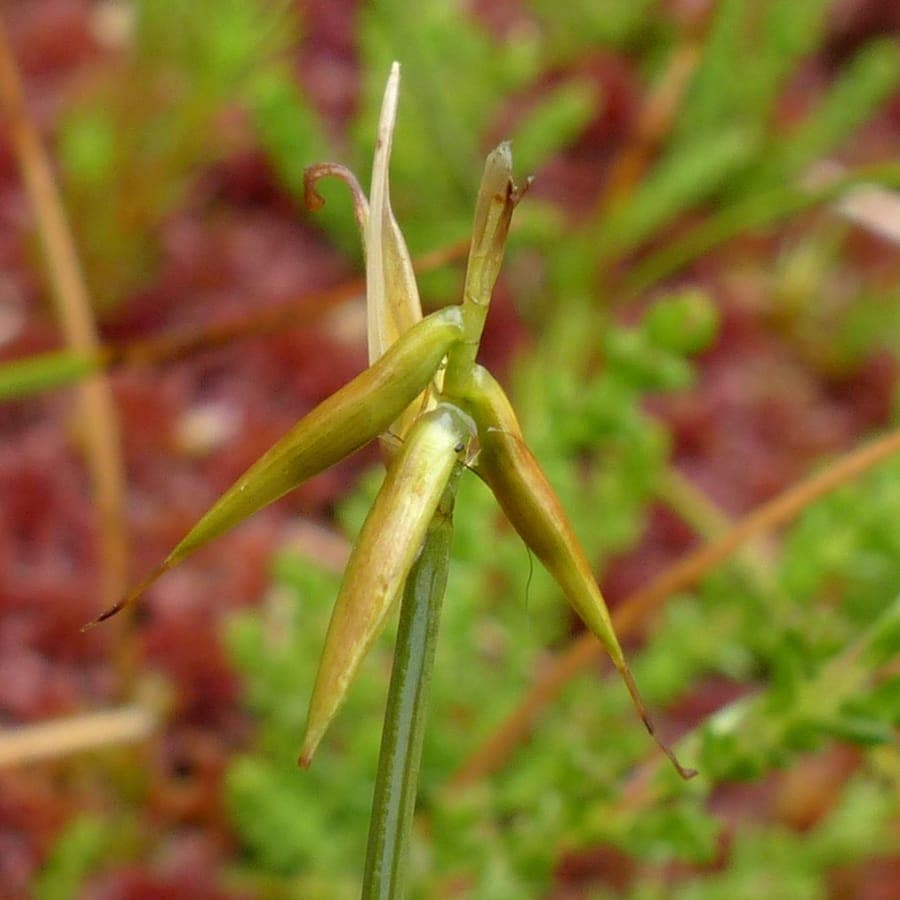
Jean-Claude Bouzat / CC BY-SA 2.0 fr, via Wikimedia Commons
Fewflower sedge: complete guide
Carex pauciflora
Want to see Fewflower sedge: complete guide in your garden?
1 minute, no credit card
Overview
Fewflower sedge (Carex pauciflora) is a fine-textured, evergreen sedge that thrives in consistently wet, acidic conditions. Native to bogs and peatlands across northern Europe and parts of North America, this species prefers environments where few other plants can survive. It's not flashy, but its subtle grace makes it a standout in ecological gardens.
Fewflower sedge grows slowly but steadily, forming tight clumps that spread just enough to fill a niche without becoming invasive. If you're designing a wetland border or a rain garden, you can use gardenworld.app to map out planting zones that match this sedge's moisture and pH needs.
Appearance & bloom cycle
Standing 20–40 cm tall with a spread of about 30 cm, Fewflower sedge has narrow, dark green leaves that arch slightly at the tips. The foliage stays green through winter in milder climates, turning bronze in colder zones.
True to its name, it blooms sparingly. From May through July, slender yellow flower spikes rise just above the foliage. These are not showy flowers, but rather delicate clusters of tiny yellow-green scales that add texture and quiet interest. After flowering, small nutlets form, which may attract small seed-eating birds.
The plant's overall effect is airy and understated-perfect for blending into naturalistic plantings where rhythm and texture matter more than bold color.
Ideal location
This sedge needs full sun to light shade (light level 8/10), but only if the soil stays wet. It performs best at pond margins, in bog gardens, or in low-lying areas that collect water. Avoid planting it in dry spots, even for short periods-drought stress will cause leaf dieback and stunted growth.
If your garden has fluctuating moisture levels, consider using gardenworld.app to design a micro-irrigation layout that keeps the root zone consistently damp without waterlogging.
Soil requirements
Fewflower sedge demands acidic soil with a pH between 3 and 4. It thrives in peaty, humus-rich substrates that retain moisture but drain slightly. Avoid alkaline soils, lime, or composts with high pH, as these will cause yellowing leaves and poor vigor.
To maintain acidity, mulch with pine needles or oak leaves. You can also amend the soil with peat moss or ericaceous compost when planting. Steer clear of mushroom compost or manure, which can raise pH and burn roots.
Watering
Constant moisture is non-negotiable. The soil should never dry out, especially during the growing season (April–September). Water daily if necessary, using rainwater when possible-tap water is often too alkaline for this acid-loving plant.
If you're growing in a container, ensure the pot has no drainage holes or place it in a saucer that stays filled with water. However, avoid stagnant water for long periods to prevent root rot.
Free design
Want to see Fewflower sedge: complete guide in your garden? Make a free design now.
Pruning
This sedge requires minimal pruning. In late winter or early spring (February–March), cut back old, damaged foliage to make way for new growth. Use clean, sharp shears to avoid spreading disease.
Leave the flower spikes through winter for visual interest and habitat value. Cut everything back to about 5 cm above the crown just before new shoots emerge.
Maintenance calendar
- Jan: Check for winter damage; avoid walking on wet soil
- Feb: Begin light cleanup; remove dead leaves
- Mar: Cut back old growth; refresh acidic mulch
- Apr: Monitor soil moisture; plant new sedges
- May: Flowers begin; ensure consistent water
- Jun: Peak bloom; watch for drying edges
- Jul: Continue watering; no feeding needed
- Aug: Watch for dry spells; increase watering if needed
- Sep: Reduce watering gradually
- Oct: Leave plants standing for winter structure
- Nov: No action required
- Dec: Observe; protect crowns with mulch in harsh winters
Winter hardiness
Fewflower sedge is hardy in USDA zones 4–8. In zone 8 (like the UK and Pacific Northwest), it remains evergreen. In colder zones, foliage may turn bronze or brown but will regrow in spring. No winter protection is usually needed, but in areas with little snow cover, a light mulch of pine needles can help insulate the crown.
Companion plants
Pair Fewflower sedge with other acid-loving, moisture-dependent plants. Good companions include Calluna vulgaris (heather), Drosera (sundew), Eriophorum angustifolium (cotton grass), and Molinia caerulea (purple moor grass).
For contrast, add Eupatorium maculatum (spotted joe-pye weed) for late summer blooms or Iris versicolor (blue flag iris) for spring color. Avoid aggressive spreaders like Phalaris arundinacea, which can overwhelm this delicate sedge.
Closing
Fewflower sedge isn't for every garden, but if you've got a damp, acidic spot begging for life, this plant is a quiet hero. It asks for very specific conditions-constant moisture, low pH, full sun-but delivers years of reliable, low-maintenance beauty. Find healthy stock at garden centres like those carrying specialist bog plants, or check online suppliers during spring planting season.
With thoughtful placement and the right companions, Fewflower sedge becomes a foundational piece in a resilient, nature-inspired garden. Use tools like gardenworld.app to visualize how it fits into your long-term landscape plan.
Want to see Fewflower sedge: complete guide in your garden? Make a free design now.
Upload a photo, pick a style, and get a photorealistic design with plant list in under a minute.
No credit card required


Similar plants
Flat-stemmed club-rush: complete guide
Bolboschoenus planiculmis
Everything about Bolboschoenus planiculmis: growing conditions, watering, care, and use as a pond margin or wetland plant in garden design.
Great Plains flatsedge: complete guide
Cyperus lupulinus
Everything about Great Plains flatsedge (Cyperus lupulinus): growing conditions, care, garden uses, and ecological value. Tips for pond margins and dry sandy soils.
Golden beak sedge: complete guide
Rhynchospora corymbosa
Everything about golden beak sedge (Rhynchospora corymbosa): a dramatic tropical marginal for pond edges, bog gardens, and wet habitats.