
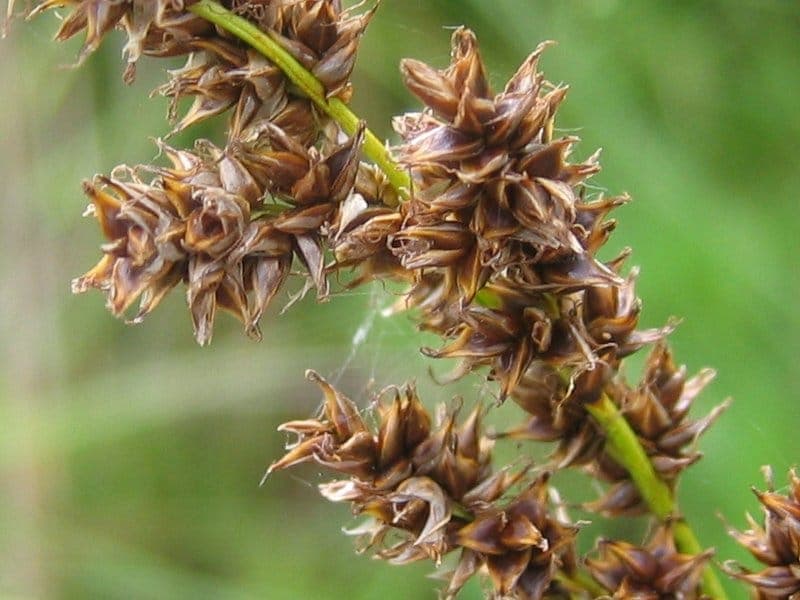
Kristian Peters -- Fabelfroh 15:25, 18 July 2006 (UTC) / CC BY-SA 3.0, via Wikimedia Commons
Greater tussock sedge: complete guide
Carex paniculata
Want to see Greater tussock sedge: complete guide in your garden?
1 minute, no credit card
Overview
Carex paniculata, commonly known as greater tussock sedge, is a standout ornamental grass that brings structure and soft movement to moist garden areas. Native to damp woodlands and stream banks across Central and Southern Europe, this hardy perennial forms large, arching clumps that can reach up to 120 cm in both height and spread. It's not just a background filler - it's a statement plant for shaded, wet corners where few others thrive.
Gardeners are increasingly turning to native, low-maintenance species, and greater tussock sedge fits the bill perfectly. It's resistant to most pests, doesn't spread aggressively, and supports local biodiversity. On gardenworld.app, you can design a garden layout that integrates this sedge seamlessly with other moisture-loving plants.
Appearance & bloom cycle
This sedge forms loose, open tussocks with long, gracefully arching leaves that range from bright green to deep olive. The foliage grows 60–100 cm long and has a fine, ribbon-like texture. From May through July, slender, branched flower spikes rise above the leaves. These panicles are a soft, warm brown - not flashy, but elegant in their subtlety.
The bloom adds visual interest without dominating the border. Even after flowering, the seed heads persist into winter, catching frost and dew. In autumn, the leaves fade to a pale yellow-brown but rarely collapse completely, providing year-round texture. This makes Carex paniculata a valuable plant for winter gardens.
Ideal location
Greater tussock sedge prefers partial to full shade - think dappled light under deciduous trees like alder or birch. A light level of 5 out of 10 (with 10 being full sun) is ideal. In full sun, especially on sandy soils, it will dry out too quickly. In deep shade, it becomes leggy and loses its fullness.
It excels along pond margins, in damp woodland gardens, or in low-lying areas with consistent moisture. Use gardenworld.app to map light patterns in your garden and find the perfect spot for this sedge, factoring in seasonal shade from trees and structures.
Soil requirements
The soil must be consistently moist, rich in organic matter, and well-draining. A pH between 5.5 and 6.5 - slightly acidic to neutral - is optimal. Heavy clay can work if it doesn't become waterlogged. Sandy soils need amending with compost to retain moisture.
At planting, mix in 2–3 buckets of compost or well-rotted manure per plant. Avoid chalky or alkaline soils; this sedge struggles above pH 7.0 and may show signs of chlorosis.
Free design
Want to see Greater tussock sedge: complete guide in your garden? Make a free design now.
Watering
Moisture is non-negotiable. The root zone should never dry out, especially in the first two growing seasons. During dry spells in summer, water deeply once a week - about 10–15 litres per plant. Mulch with leaf mould or wood chips to reduce evaporation.
If you notice browning leaf tips or stunted growth, it's likely due to drought stress. In gardens with low water tables, consider grouping this sedge with other moisture-dependent plants in a dedicated damp zone.
Pruning
Pruning is minimal. In late winter or early spring (February–March), remove dead or damaged foliage by hand or with shears. Cut back to about 15–20 cm above ground level. Avoid pulling - this can damage healthy crown tissue.
After 5–7 years, the center of the clump may die out. Lift and divide the plant in early spring using a sharp spade or saw. Replant the outer, vigorous sections and compost the center. This reinvigorates growth and prevents congestion.
Maintenance calendar
- Jan: check for winter damage
- Feb: begin removing old foliage
- Mar: divide mature clumps; plant out divisions
- Apr: apply mulch; watch for new growth
- May: flowering begins; monitor soil moisture
- Jun: peak bloom; increased insect activity
- Jul: final month of flowering
- Aug: check for drought; water if needed
- Sep: observe seed development
- Oct: leave standing for winter interest
- Nov: no action required
- Dec: fully dormant; winter-hardy
Winter hardiness
Greater tussock sedge is hardy to USDA zone 5 (–20°C). It survives most UK and northern European winters without protection. Foliage remains semi-evergreen, offering shelter for overwintering insects.
In extreme cold (below –25°C), a light mulch of straw or bracken can help, but avoid thick coverings that trap moisture and encourage rot. No additional winter care is usually needed.
Companion plants
Pair Carex paniculata with other moisture-tolerant species:
- Carex elata 'Aurea' – for golden contrast
- Filipendula ulmaria – for frothy summer blooms
- Molinia caerulea – for airy plumes
- Iris pseudacorus – for bold yellow flowers
- Eutrochium maculatum – for late-season pollinators
Avoid drought-tolerant plants like lavender or sedum. This sedge thrives best with companions that share its love for damp, humus-rich soil.
Closing
Greater tussock sedge is a reliable, elegant choice for damp, shady areas. Its architectural form and year-round presence make it ideal for naturalistic planting schemes. Get the location and moisture right, and it will reward you with decades of quiet beauty.
In the UK and Ireland, find Carex paniculata at local garden centres, often in 2L or 5L pots. Check the root ball - it should be moist, not cracked or slimy. On gardenworld.app, you can create a planting plan that includes this sedge, complete with companion suggestions and seasonal care reminders.
Want to see Greater tussock sedge: complete guide in your garden? Make a free design now.
Upload a photo, pick a style, and get a photorealistic design with plant list in under a minute.
No credit card required


Similar plants
Flat-stemmed club-rush: complete guide
Bolboschoenus planiculmis
Everything about Bolboschoenus planiculmis: growing conditions, watering, care, and use as a pond margin or wetland plant in garden design.
Great Plains flatsedge: complete guide
Cyperus lupulinus
Everything about Great Plains flatsedge (Cyperus lupulinus): growing conditions, care, garden uses, and ecological value. Tips for pond margins and dry sandy soils.
Golden beak sedge: complete guide
Rhynchospora corymbosa
Everything about golden beak sedge (Rhynchospora corymbosa): a dramatic tropical marginal for pond edges, bog gardens, and wet habitats.