
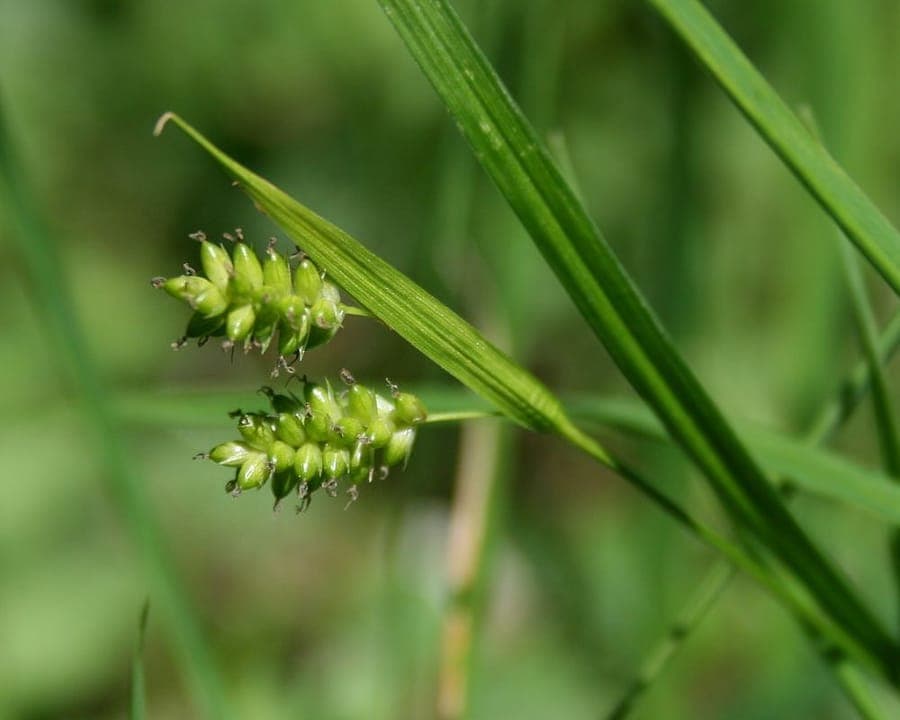
Franz Xaver / CC BY-SA 3.0, via Wikimedia Commons
Pale sedge: complete guide
Carex pallescens
Want to see Pale sedge: complete guide in your garden?
1 minute, no credit card
Overview
Pale sedge (Carex pallescens) is a quietly elegant graminoid that brings texture and year-round interest to the right garden setting. Native to damp woodlands and stream banks across Central and Western Europe, including parts of New England like Connecticut, this plant thrives in cool, moist conditions. It forms dense, slowly spreading clumps via rhizomes, reaching 20–30 cm in height with a spread of 30–40 cm. Unlike showy ornamental grasses, pale sedge excels in subtlety - its soft, narrow foliage provides a soothing backdrop for bolder plants. It's ideal for naturalistic designs, woodland gardens, or as ground cover in wetter spots where few other perennials succeed.
Appearance & bloom cycle
The foliage of Carex pallescens is fine-textured, with slender, arching leaves 2–4 mm wide and a pale green to silvery-green hue - hence the name 'pale' sedge. The leaves remain evergreen in mild winters, though tips may brown during prolonged cold spells. In late spring, typically May to early June, small, inconspicuous flower spikes emerge, turning into brownish seed heads that attract minimal attention but support native insects. There's no flashy bloom, but the plant maintains visual cohesion throughout the seasons, peaking in lushness from April through October.
Ideal location
This sedge prefers light to partial shade - aim for a 7 on the light scale. Full sun (8+) risks scorching and drying, especially in summer, while deep shade slows growth. An ideal spot is under open-canopy trees like birch or alder, where dappled light reaches the ground and soil stays consistently moist. It performs well along pond edges, in rain gardens, or as filler between shrubs. On gardenworld.app, you can generate a planting plan that integrates pale sedge seamlessly into shaded, damp zones of your yard.
Soil requirements
Pale sedge thrives in humus-rich, moisture-retentive soils with a pH between 5.0 and 5.5. It favors slightly acidic, loamy or clay-loam substrates that don't dry out quickly. Avoid sandy soils unless amended with compost or leaf mold. Incorporate 5–7 cm of organic matter before planting to improve moisture retention and root establishment. A 3–4 cm mulch layer of shredded bark or leaf litter helps maintain consistent soil moisture and suppresses weeds.
Watering
Consistent moisture is key, especially during the first 12–18 months. Water weekly during dry spells, increasing to twice weekly in hot summers (July–August). Once established, it tolerates short dry periods but performs best with even moisture. Never let it sit in standing water - good drainage is essential even in wet areas. Drought stress leads to browning and reduced vigor.
Free design
Want to see Pale sedge: complete guide in your garden? Make a free design now.
Pruning
Pruning is minimal. In early spring (February–March), remove any damaged or dead foliage with sharp snips. Avoid cutting into the crown; just trim the tips if needed. A light hand-raking helps clear old leaves and encourages fresh growth. Do not shear heavily - the plant grows from the base and may not recover well from deep cuts.
Maintenance calendar
- Jan: Check for frost damage, top up mulch if needed
- Feb: Begin clearing dead leaves
- Mar: Light trim, inspect for pests
- Apr: Monitor soil moisture, sow seeds if propagating
- May: Flower spikes emerge, watch for slug activity
- Jun: Maintain weekly watering in dry weather
- Jul: Peak growth; water 1–2x weekly
- Aug: Continue moisture management, prevent scorching
- Sep: Reduce watering, allow seeds to mature
- Oct: Leave foliage for winter protection
- Nov: Final check before winter dormancy
- Dec: Minimal care; avoid walking on frozen clumps
You can download a custom care calendar on gardenworld.app tailored to your local climate and planting zone.
Winter hardiness
Pale sedge is hardy to USDA zone 5 (-20°C). In zone 4, a protective mulch of pine needles or shredded leaves helps insulate the crowns. In milder zones (6–8), it stays mostly green year-round. While not fully deciduous, it may show some browning in harsh winters - this is normal and new growth will cover it in spring. Avoid stepping on frozen foliage to prevent crown damage.
Companion plants
Pair pale sedge with moisture-loving companions like Carex vulpinoidea, Eriophorum angustifolium, or ferns such as Matteuccia struthiopteris. Add spring ephemerals like Trillium grandiflorum or Hepatica for seasonal contrast. Avoid aggressive spreaders like Lysimachia nummularia, which can overwhelm it. In a woodland planting, it forms a soft, textured underlayer that complements taller, structural plants.
Closing
Pale sedge may not grab attention, but it earns its place through reliability and texture. It's a go-to for damp, shaded corners where other plants struggle. Plant in groups of 5–7 for best effect. Look for it at garden centres across the UK and US, often sold in 1-litre pots or as plugs for mass planting. With the right conditions and a bit of early care, Carex pallescens becomes a low-maintenance staple in naturalistic gardens. Use gardenworld.app to visualise how it fits into your overall garden design before you plant.
Want to see Pale sedge: complete guide in your garden? Make a free design now.
Upload a photo, pick a style, and get a photorealistic design with plant list in under a minute.
No credit card required


Similar plants
Flat-stemmed club-rush: complete guide
Bolboschoenus planiculmis
Everything about Bolboschoenus planiculmis: growing conditions, watering, care, and use as a pond margin or wetland plant in garden design.
Great Plains flatsedge: complete guide
Cyperus lupulinus
Everything about Great Plains flatsedge (Cyperus lupulinus): growing conditions, care, garden uses, and ecological value. Tips for pond margins and dry sandy soils.
Golden beak sedge: complete guide
Rhynchospora corymbosa
Everything about golden beak sedge (Rhynchospora corymbosa): a dramatic tropical marginal for pond edges, bog gardens, and wet habitats.