
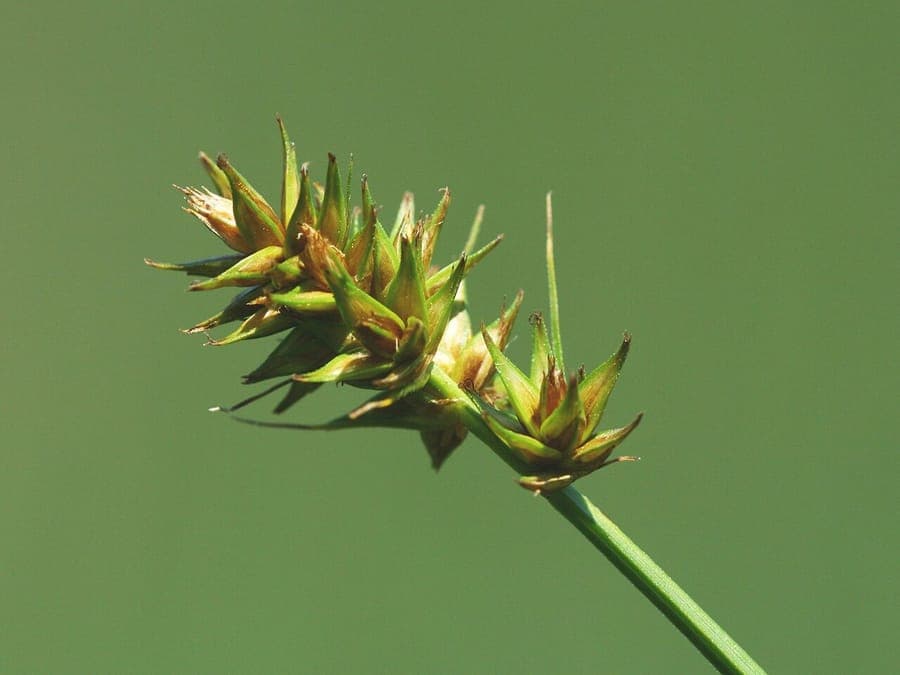
Kristian Peters -- Fabelfroh 07:35, 28 June 2007 (UTC) / CC BY-SA 3.0, via Wikimedia Commons
False fox sedge: complete guide
Carex otrubae
Want to see False fox sedge: complete guide in your garden?
1 minute, no credit card
Overview
Carex otrubae, commonly known as false fox sedge, is a robust, evergreen sedge that brings quiet structure to damp, shaded corners of the garden. Native across much of Europe-from the Baltic states to the Mediterranean-it's adapted to thrive where other ornamental grasses struggle. It doesn't shout for attention, but that's exactly what makes it valuable: it's subtle, dependable, and always present. You'll find it increasingly used in rain gardens, wet borders, and woodland edges across the UK and northern Europe.
Despite its common name, false fox sedge isn't related to true fox sedge (Eriophorum). The name refers to its visual similarity-soft, arching foliage that gives a feathery effect. Botanically, it's part of the Cyperaceae family, growing in dense tussocks up to 80 cm tall and spreading about 50 cm wide. It's a graminoid with a clump-forming habit, making it ideal for adding vertical rhythm without aggression.
On gardenworld.app, you can design a planting scheme that highlights moisture-loving plants like Carex otrubae, especially in areas with poor drainage or seasonal wetness.
Appearance & bloom cycle
False fox sedge has soft, bright green leaves with a prominent central vein. The blades are strap-like, 5–8 mm wide, and gently arch outward, creating a full, fountain-like mound. In early spring, dark brown, cylindrical flower spikes emerge, standing just above the foliage. These appear from April to early June and are not particularly flashy, but they add texture and contrast.
After flowering, the spikes fade to a warm coppery brown, persisting into autumn and even winter. The plant remains evergreen in mild climates, though it may die back slightly in harsh winters. It regrows vigorously in spring from the base. While it won't win prizes for bloom, it offers year-round presence-ideal for low-drama, high-reliability gardens.
Ideal location
Looking for a plant that handles damp soil and partial shade? False fox sedge is your go-to. Plant it in light to full shade-under deciduous trees, along north-facing walls, or in woodland clearings. It tolerates full sun only if the soil stays consistently moist. In dry, sandy soils under full sun, it will struggle and scorch.
Best performance comes from moist borders, stream banks, or low-lying areas where water collects. It also works in containers, provided you water regularly. Use a large pot with good drainage and keep it in a sheltered spot.
On gardenworld.app, use the microclimate mapper to identify shady, damp zones in your garden where Carex otrubae can thrive.
Free design
Want to see False fox sedge: complete guide in your garden? Make a free design now.
Soil requirements
This sedge prefers moist, humus-rich soil-think clay-loam or silt with plenty of organic matter. It tolerates slightly acidic to neutral pH (5.5–7.0). Avoid highly calcareous soils, which can lead to chlorosis (yellowing leaves). It doesn't mind temporary waterlogging, but prolonged drought is a dealbreaker.
When planting, amend the soil with well-rotted compost or leaf mould. A 5 cm mulch layer of wood chips or straw helps retain moisture and suppress weeds. Don't bury the crown-plant at the same depth as in the pot.
Watering
In the first growing season (March to September), water weekly with 5–8 liters per plant, more in hot spells. Keep the root zone consistently moist. After the first year, it becomes more resilient but still prefers damp conditions. In dry summers, water once a week. Never let it dry out completely-crispy leaf tips mean it's thirsty.
Pruning
False fox sedge doesn't need pruning for flowering, but a spring tidy-up helps. In early March, cut back any damaged, dead, or tattered foliage to about 10 cm above ground. Use sharp shears and avoid cutting into the crown. This encourages fresh growth and maintains a neat appearance.
Every 4–5 years, divide large clumps in early spring. Lift the plant, split with a spade or knife, and replant immediately in a moist spot. Division reinvigorates older plants and gives you extras to share.
Maintenance calendar
- January: Dormant. No action needed.
- February: Check for winter damage. Remove any browned leaves.
- March: Cut back old growth. Divide if necessary.
- April: New shoots emerge. Apply a light organic feed.
- May: Growth accelerates. Water regularly.
- June: Flower spikes appear. No extra care.
- July–August: Monitor soil moisture. Water weekly in dry spells.
- September: Growth slows. Top up mulch.
- October–November: Leave dead material for winter insulation.
- December: Dormancy. No intervention.
Winter hardiness
Carex otrubae is hardy in USDA zones 5–9. In the UK (zone 8), it survives without protection. In colder zones, it may die back but regrows from the roots. No winter covering is needed, though a light mulch can help in exposed sites.
Companion plants
Pair false fox sedge with plants that share its moisture and shade preferences:
- Carex remota – for textural contrast
- Tellima grandiflora – for spring flowers
- Astilbe rivularis – for feathery plumes
- Lysimachia clethroides – for vertical white spikes
- Darmera peltata – for bold foliage near water
It also combines well with woody stems like Cornus alba or Salix purpurea, adding movement and depth.
Closing
False fox sedge isn't a showstopper, but it's a quiet achiever. It fills awkward damp spots with grace and stays green when little else does. Buy it in spring or autumn from garden centres like those stocking British native plants. Plant in groups of 3–5 for impact. And remember: on gardenworld.app, you can visualise how this sedge fits into your overall garden design before you dig a single hole.
Want to see False fox sedge: complete guide in your garden? Make a free design now.
Upload a photo, pick a style, and get a photorealistic design with plant list in under a minute.
No credit card required


Similar plants
Flat-stemmed club-rush: complete guide
Bolboschoenus planiculmis
Everything about Bolboschoenus planiculmis: growing conditions, watering, care, and use as a pond margin or wetland plant in garden design.
Great Plains flatsedge: complete guide
Cyperus lupulinus
Everything about Great Plains flatsedge (Cyperus lupulinus): growing conditions, care, garden uses, and ecological value. Tips for pond margins and dry sandy soils.
Golden beak sedge: complete guide
Rhynchospora corymbosa
Everything about golden beak sedge (Rhynchospora corymbosa): a dramatic tropical marginal for pond edges, bog gardens, and wet habitats.