
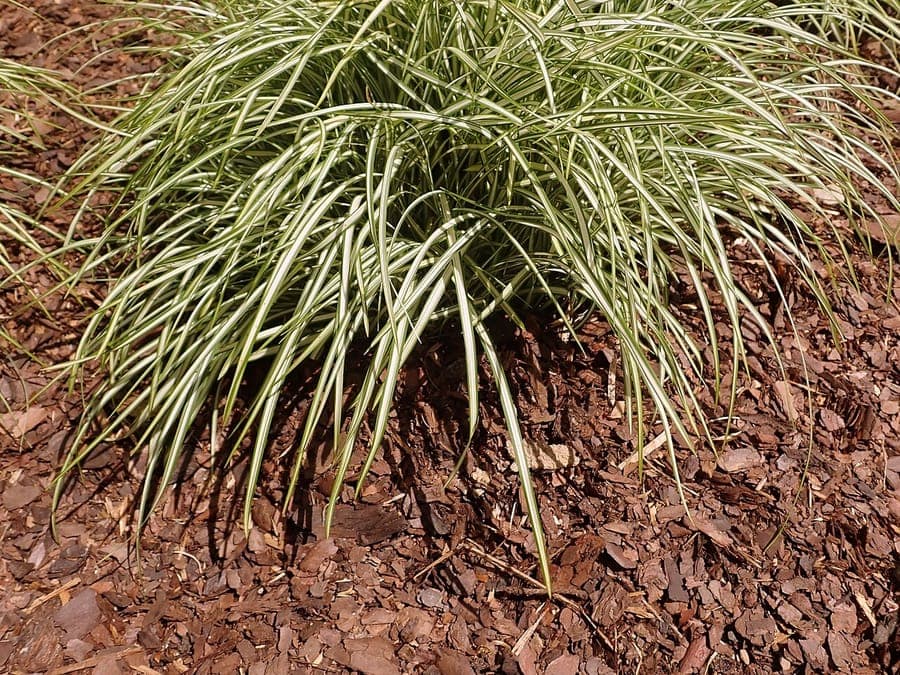
Salicyna / CC BY-SA 4.0, via Wikimedia Commons
Bird-foot sedge: complete guide
Carex ornithopoda
Want to see Bird-foot sedge: complete guide in your garden?
1 minute, no credit card
Overview
Bird-foot sedge (Carex ornithopoda) is a quietly resilient ornamental grass that thrives where many other plants struggle. Native to woodland regions across Central and Eastern Europe - including Finland, Belarus and the Baltic States - it has adapted to cool, shaded, moisture-retentive conditions. In the UK and northern Europe, it's increasingly used in naturalistic planting schemes, especially in shady borders or damp corners under trees. This sedge forms neat, evergreen to semi-evergreen clumps that provide year-round structure without demanding attention.
What makes Bird-foot sedge stand out is its ability to persist in consistently moist, low-light environments. It doesn't need flashy flowers to earn its place - it's all about texture, form and reliability. On gardenworld.app, you can design a garden layout that highlights this plant's strengths, particularly in areas with poor drainage or heavy canopy cover.
Appearance & bloom cycle
Bird-foot sedge grows 30 to 50 cm tall, with a spread of about 35 cm. The leaves are narrow, arching, and a deep glossy green, forming a dense rosette from the base. Each leaf is finely textured, with a subtle fold along the midrib that catches light beautifully in dappled shade.
From April through June, the plant sends up slender, brown flower spikes - typical of the Cyperaceae family - that rise just above the foliage. These aren't showy, but they add subtle architectural detail during late spring. The flowers mature into soft, russet-brown seed heads that persist into early summer, offering continued interest after flowering. Even after the blooms fade, the plant retains its clean, grassy form.
Ideal location
This sedge prefers partial to full shade, especially under deciduous trees or on the north side of structures. It tolerates as little as one to three hours of direct sun per day, but full sun will cause the soil to dry out too quickly and the leaves may scorch or lose their sheen. The ideal spot mimics its natural habitat: cool, shaded, and sheltered from drying winds.
Plant Bird-foot sedge along woodland edges, under shrubs like hazel or hawthorn, or near a pond margin - just avoid standing water. On gardenworld.app, you can map your garden's light patterns to identify the best microclimates for moisture-loving plants like this sedge.
Soil requirements
Carex ornithopoda thrives in moist, humus-rich loam or clay-loam soils with a pH between 5.5 and 7.0. It dislikes dry, sandy soils unless amended with organic matter. If your garden has free-draining soil, incorporate plenty of compost or well-rotted leaf mould before planting to improve moisture retention.
Avoid highly alkaline soils - these can trigger iron deficiency, leading to yellowing leaves (chlorosis). A 5–7 cm mulch of leaf litter or compost in spring helps maintain moisture and slowly feeds the plant. The soil should stay consistently damp but not waterlogged.
Free design
Want to see Bird-foot sedge: complete guide in your garden? Make a free design now.
Watering
Water regularly during the first growing season, especially in dry spells. Once established, Bird-foot sedge is moderately drought-tolerant but performs best with consistent moisture. During prolonged dry periods in summer, water deeply once a week using a watering can with a long spout or a drip system to target the roots directly.
Rainwater is preferable, as tap water can be too alkaline over time. Never let the plant sit in stagnant water - while it likes damp soil, it won't survive in flooded conditions.
Pruning
This sedge requires minimal pruning. In early spring (March or April), cut back any damaged, dead, or discoloured foliage with sharp shears. This encourages fresh growth and reduces the risk of fungal issues. Leave the spent flower spikes over winter - they add texture and provide shelter for overwintering insects.
If the clump becomes sparse in the centre after several years, divide it in spring. Use a sharp spade to split the root ball into 2–4 sections, replant them immediately in moist soil, and water well until established.
Maintenance calendar
- Jan: Check for frost damage; remove heavy snow from foliage
- Feb: Monitor soil moisture, especially during dry freezes
- Mar: Cut back old growth; divide if needed
- Apr: Apply light compost layer; flowering begins
- May: Watch for moisture stress in dry weather
- Jun: Peak flowering; maintain consistent watering
- Jul: No routine care, unless drought occurs
- Aug: Water deeply during dry spells
- Sep: Leave foliage and seed heads intact
- Oct: Add mulch if desired for winter protection
- Nov: Final check before winter dormancy
- Dec: Monitor for rodent activity near clumps
Winter hardiness
Bird-foot sedge is hardy in USDA zones 5 to 8 (-20°C to -10°C). It remains semi-evergreen in milder climates, with foliage turning bronzed or brownish but rarely dying back completely. In colder zones, protect container-grown plants with a layer of mulch or move them to a sheltered spot. Ground-planted sedges typically survive without intervention, though young plants may benefit from a light leaf mulch.
Avoid pruning in autumn - the old foliage insulates the crown during freeze-thaw cycles.
Companion plants
Pair Bird-foot sedge with other shade and moisture lovers. Good companions include Hosta sieboldiana, Alchemilla mollis, and ferns like Dryopteris filix-mas. For spring interest, plant understorey bulbs such as Scilla siberica or Anemone nemorosa. The sedge's fine texture contrasts beautifully with bold-leaved plants like Ligularia or Rodgersia.
Avoid aggressive spreaders like mint or ground elder, which can overwhelm slower-growing sedges. Use gardenworld.app to test plant compatibility and visual balance in your design.
Closing
Bird-foot sedge isn't loud, but it's dependable. It brings quiet structure to shady gardens, handles wet soil with ease, and asks for little in return. Whether in a wildflower meadow edge, a damp border, or under a deciduous canopy, this sedge earns its place through resilience and understated beauty. It's a plant for gardeners who appreciate function as much as form. Find it at garden centres across the UK, particularly in spring, or order online for autumn planting.
Want to see Bird-foot sedge: complete guide in your garden? Make a free design now.
Upload a photo, pick a style, and get a photorealistic design with plant list in under a minute.
No credit card required


Similar plants
Flat-stemmed club-rush: complete guide
Bolboschoenus planiculmis
Everything about Bolboschoenus planiculmis: growing conditions, watering, care, and use as a pond margin or wetland plant in garden design.
Great Plains flatsedge: complete guide
Cyperus lupulinus
Everything about Great Plains flatsedge (Cyperus lupulinus): growing conditions, care, garden uses, and ecological value. Tips for pond margins and dry sandy soils.
Golden beak sedge: complete guide
Rhynchospora corymbosa
Everything about golden beak sedge (Rhynchospora corymbosa): a dramatic tropical marginal for pond edges, bog gardens, and wet habitats.