
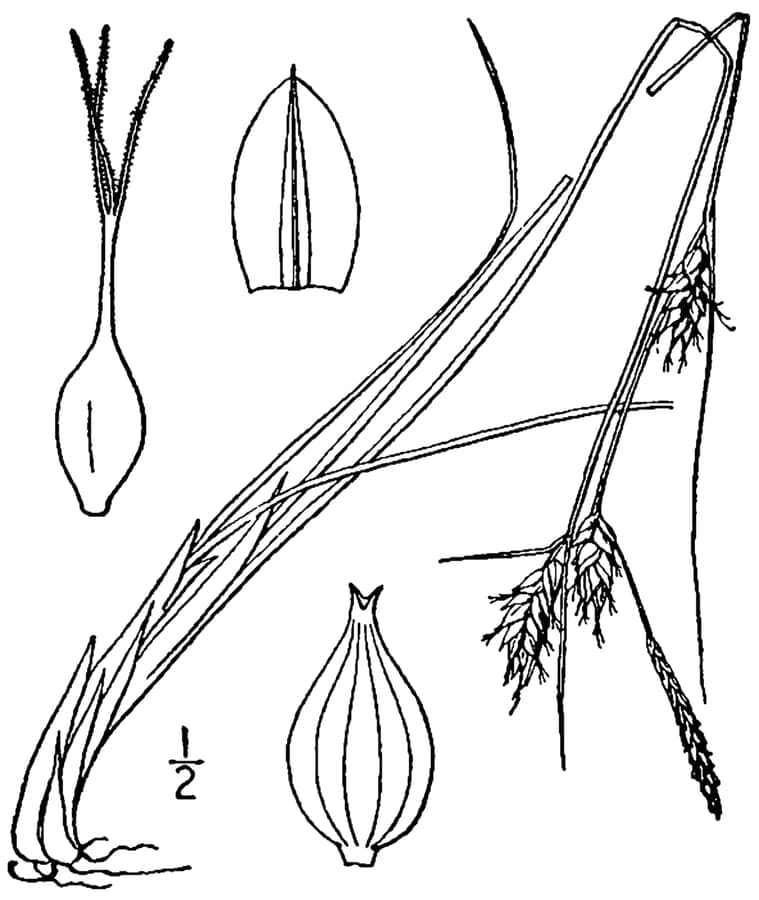
Britton, N.L., and A. Brown. 1913. An illustrated flora of the northern United States, Canada and the British Possessions. 3 vols. Charles Scribner's Sons, New York. Vol. 1: 436. Courtesy of Kentucky Native Plant Society. Scanned by Omnitek Inc. / Public domain, via Wikimedia Commons
Carex oligosperma: complete guide
Carex oligosperma
Want to see Carex oligosperma: complete guide in your garden?
1 minute, no credit card
Carex oligosperma: Complete Guide
Overview
Carex oligosperma, commonly known as "Few-seed sedge," is an elegant sedge species in the Cyperaceae family. Native to North America (ranging from Canada to the northern United States) and also found in Japan and the Kuril Islands, this grass-like perennial thrives in consistently moist environments.
The common name refers to the plant's characteristic of producing relatively few seeds per fruit, distinguishing it from many other sedge species. This versatile groundcover excels in wet areas where traditional plants struggle, making it invaluable for gardens with drainage challenges or marshy regions.
Appearance & Bloom
Carex oligosperma forms dense tufts reaching 30-50 cm in height. The leaves are fine and grass-like, with a dark green color that creates an elegant, refined appearance.
Flowering occurs in late spring (May-June), producing small, inconspicuous flower spikes. While not showy, these delicate inflorescences contribute to the plant's natural character. The fruits are small, round-ellipsoid capsules that remain visible through late summer.
Ideal Location
This sedge prefers shaded to partially shaded positions. Full sun can cause winter damage in warmer climates.
Select a spot with:
- Consistently moist to very wet soil
- Rich organic matter content
- Wind protection
- Seasonal standing water is acceptable
Ideally suited for pond margins, wetland gardens, near water features, or naturally wet depressions.
Soil
Carex oligosperma thrives in slightly acidic soils with optimal pH between 4.0 and 6.5. Ideal soil conditions include:
- Excellent water retention
- High organic matter content (amend with compost)
- Tolerance for occasional standing water (several centimeters deep)
- Non-saline (avoid salty soils)
If your soil drains too quickly, incorporate garden compost and consider supplemental irrigation during dry periods.
Watering
This plant is essentially water-loving. Overwatering is virtually impossible. Keep the soil consistently moist to very wet, particularly during the growing season (April through October).
Optimal watering approach:
- Never allow soil to completely dry out
- Accept standing water for short periods
- In containers: ensure drainage and maintain base water reservoir
- During wet seasons: minimal supplemental watering needed
- During dry summers: water daily
Free design
Want to see Carex oligosperma: complete guide in your garden? Make a free design now.
Pruning
Carex oligosperma requires minimal pruning. Follow these simple guidelines:
- Late-winter pruning: Cut back dead leaves in February/March, just above ground level. This encourages fresh growth.
- Summer maintenance: Remove dead or damaged foliage as needed.
- Seed control: If you prefer to limit self-seeding, remove spent seed heads before they fully mature.
Maintenance Calendar
March: Cut back dead leaves, incorporate compost around base May-June: Observe flowering, maintain consistent moisture July-August: Extra watering during dry spells September: Monitor for pest damage October-November: Fallen leaves from nearby trees provide beneficial organic matter December-February: Minimal maintenance, frost protection generally unnecessary
Winter Hardiness
Carex oligosperma is extremely hardy (USDA zone 2 / temperatures to -30°C). This sedge survives severe frost without protection.
Winter protection is normally unnecessary, but in regions with extreme frosts or fluctuating conditions, a 5-10 cm layer of organic mulch provides additional security.
Companion Plants
Carex oligosperma pairs well with other moisture-loving plants:
- Other sedge species (Carex pendula, Carex oshimensis)
- Iris versicolor (American iris)
- Astilbe (feathered plumes)
- Filipendula (queen-of-the-meadow)
- Osmunda ferns
- Matteuccia struthiopteris (ostrich fern)
- Lysichiton americanus (American skunk cabbage)
Combining these creates a natural, semi-wetland biotope in your garden.
Closing Thoughts
Carex oligosperma deserves a place in any garden with consistently wet areas. Its minimal maintenance requirements and exceptional tolerance for moisture make it an elegant solution to problem areas.
Fine grass-like foliage combined with native plant credentials makes this sedge both practical and ecologically valuable. Position it where water naturally collects and watch as it transforms overlooked garden corners into naturally beautiful spaces.
Available at major garden centres and online retailers. For personalized garden designs incorporating this plant, visit GardenWorld.app.
Want to see Carex oligosperma: complete guide in your garden? Make a free design now.
Upload a photo, pick a style, and get a photorealistic design with plant list in under a minute.
No credit card required


Similar plants
Flat-stemmed club-rush: complete guide
Bolboschoenus planiculmis
Everything about Bolboschoenus planiculmis: growing conditions, watering, care, and use as a pond margin or wetland plant in garden design.
Great Plains flatsedge: complete guide
Cyperus lupulinus
Everything about Great Plains flatsedge (Cyperus lupulinus): growing conditions, care, garden uses, and ecological value. Tips for pond margins and dry sandy soils.
Golden beak sedge: complete guide
Rhynchospora corymbosa
Everything about golden beak sedge (Rhynchospora corymbosa): a dramatic tropical marginal for pond edges, bog gardens, and wet habitats.