
Mason Brock (Masebrock) / Public domain, via Wikimedia Commons
Muskingum sedge: complete guide
Carex muskingumensis
Want to see Muskingum sedge: complete guide in your garden?
1 minute, no credit card
Overview
Carex muskingumensis, commonly known as Muskingum sedge, is a clump-forming perennial sedge native to the central United States, thriving in states like Ohio, Indiana, and Missouri. Belonging to the Cyperaceae family, this plant brings structure and soft texture to moist garden spaces. It's not flashy, but its subtle elegance and adaptability make it a top choice for wetland edges, rain gardens, or shaded borders. Reaching 24 to 36 inches tall with a spread of 20 inches, it forms dense, palm-like clumps that stay semi-evergreen in milder winters. If you're designing a moisture-loving garden layout, gardenworld.app lets you map out plant zones that match the sedge's preferences.
Appearance & bloom cycle
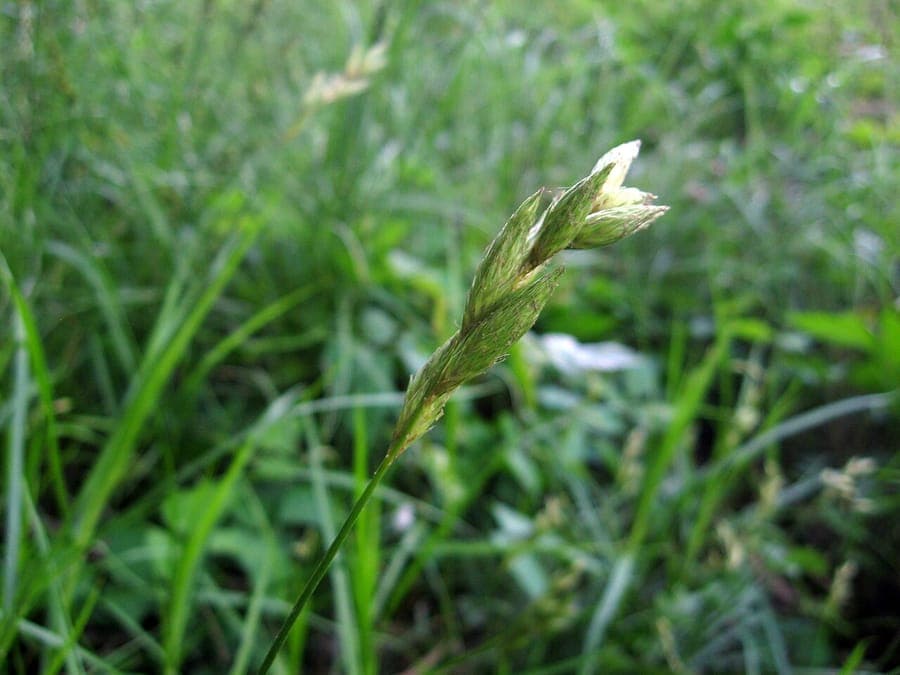
Muskingum sedge features narrow, arching leaves that grow up to 30 inches long, forming a graceful, fountain-like mound. The foliage is medium green with a slightly ribbed texture, turning bronze in winter when exposed to frost. It blooms in late spring, typically May to June, producing inconspicuous brownish flower spikes on slender stalks. These aren't showy, but they add depth and movement to the planting scheme. The seed heads persist into winter, providing visual interest and food for small birds. Unlike flowering perennials, its appeal is textural and structural, peaking from spring through early winter.
Ideal location
This sedge thrives in light to partial shade (around 7 out of 10 on the light scale). It can tolerate full sun only if the soil stays consistently moist. Ideal spots include the margins of ponds, low-lying garden beds, or beneath open-canopy trees like oaks or birches. Avoid hot, dry south-facing exposures. In gardens across USDA hardiness zones 4 to 8, it establishes well when given the right conditions. For gardeners in the UK or northern US, planting in a sheltered, east-facing spot helps prevent leaf scorch. Use gardenworld.app to plan your garden's light and moisture zones before planting.
Soil requirements
Muskingum sedge prefers acidic soils with a pH between 4.5 and 5.0. It flourishes in humus-rich, loamy soils that retain moisture without becoming waterlogged. Amend heavy clay with peat moss or well-rotted leaf compost to improve drainage and acidity. Sandy soils will need organic matter added to boost water retention. Avoid alkaline or chalky soils - they lead to nutrient deficiencies and yellowing leaves. A soil test before planting is highly recommended, especially in urban gardens where pH can vary.
Free design
Want to see Muskingum sedge: complete guide in your garden? Make a free design now.
Watering
Consistent moisture is key. During the first growing season, water weekly if rainfall is below 2.5 cm. In summer droughts, increase to twice weekly, applying at least 15 litres per plant. Use rainwater when possible, as tap water can raise pH over time. Once established, the sedge is more resilient but still performs best in damp conditions. It's not suited for dry meadows or xeriscapes. A nearby rain barrel or soaker hose system works well for long-term care.
Pruning
Minimal pruning is needed. In late winter or early spring (February to March), cut back old foliage to about 15 cm from the ground using sharp shears. This encourages fresh, upright growth and reduces pest hiding spots. Do not cut into the crown - just the outer, weathered leaves. Leave the new shoots untouched. Compost the removed material unless disease is suspected.
Maintenance calendar
- Jan: Monitor clump integrity, remove loose debris
- Feb: Prune old foliage, prepare for spring growth
- Mar: Apply acidic compost around base
- Apr: Check soil moisture, especially in dry spells
- May: Bloom begins, maintain even moisture
- Jun: Seed heads form, no additional feeding needed
- Jul: Watch for drought stress, water deeply if needed
- Aug: Growth slows, avoid fertilizing
- Sep: Leave seed heads for winter interest
- Oct: Observe fall color, minimal care
- Nov: Clump provides structure, leave standing
- Dec: Semi-evergreen in mild zones, tolerates frost
Winter hardiness
Hardy in USDA zones 4–8, Muskingum sedge survives temperatures down to -34°C. In zone 4, mulching with pine needles or shredded leaves helps protect the crown. In zones 6 and above, it often remains semi-evergreen. The foliage may turn bronze or brown but provides winter texture and shelter for insects. Avoid cutting back in autumn - leave it for winter structure.
Companion plants
Pair with moisture-loving, shade-tolerant species. Good companions include Eutrochium maculatum (spotted Joe-Pye weed), Iris versicolor, Carex vulpinoidea, and ferns like Matteuccia struthiopteris. Avoid drought-tolerant plants like lavender or sedum. For a naturalistic look, plant in groups of 3–5. This sedge also works well in bioswales or along stream banks.
Closing
Muskingum sedge isn't a headline-grabber, but it's a reliable backbone plant for wet, shaded gardens. It's low-maintenance, wildlife-friendly, and adds year-round texture. Plant it where other perennials struggle - and watch it thrive. Available at local garden centres across the US and UK. For design help, use gardenworld.app to create a layout that highlights its soft, arching form.
Want to see Muskingum sedge: complete guide in your garden? Make a free design now.
Upload a photo, pick a style, and get a photorealistic design with plant list in under a minute.
No credit card required


Similar plants
Flat-stemmed club-rush: complete guide
Bolboschoenus planiculmis
Everything about Bolboschoenus planiculmis: growing conditions, watering, care, and use as a pond margin or wetland plant in garden design.
Great Plains flatsedge: complete guide
Cyperus lupulinus
Everything about Great Plains flatsedge (Cyperus lupulinus): growing conditions, care, garden uses, and ecological value. Tips for pond margins and dry sandy soils.
Golden beak sedge: complete guide
Rhynchospora corymbosa
Everything about golden beak sedge (Rhynchospora corymbosa): a dramatic tropical marginal for pond edges, bog gardens, and wet habitats.