
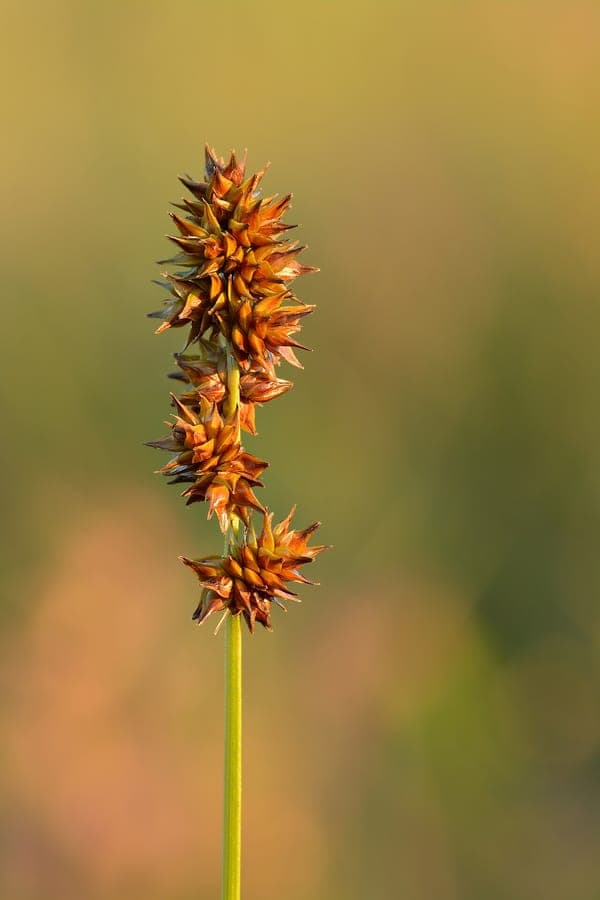
Ivar Leidus / CC BY-SA 3.0, via Wikimedia Commons
Rough sedge: complete guide
Carex muricata
Want to see Rough sedge: complete guide in your garden?
1 minute, no credit card
Overview
Carex muricata, commonly known as rough sedge, is a clump-forming perennial sedge in the Cyperaceae family. Native to regions across Central and Eastern Europe-including Austria, the Baltic States, Belarus, and parts of Russia-this hardy plant thrives in moist, cool environments. It's increasingly popular among UK and North American gardeners looking for resilient, low-input plants that support ecological balance. Growing to a modest 20–40 cm in height, it's well-suited for borders, woodland gardens, or wetland edges.
As a graminoid, rough sedge mimics the look of grass but belongs to a different botanical lineage. Its dense, upright tufts make it excellent for ground cover in areas where traditional grasses might struggle. If you're designing a rain garden or damp corner, consider using gardenworld.app to visualise how Carex muricata integrates with drainage patterns and companion planting.
Appearance & bloom cycle
The foliage of Carex muricata is narrow, stiff, and dark green, typically reaching 25–30 cm in length with a width of just 2–4 mm. The leaves have a slightly rough texture-hence the name "muricata" (meaning rough or prickly). In spring, triangular flower spikes emerge, bearing small green flowers that bloom from April through August, peaking in May and June.
The flowers aren't showy, but their subtle structure adds texture and movement to the garden. After pollination, brownish-green perigynia form, persisting into late summer. While not a focal point, the plant provides consistent visual interest across seasons, especially when contrasted with flowering perennials.
Ideal location
Rough sedge performs best in partial shade to light woodland conditions, with a light requirement of around 7 out of 10. Full sun is tolerable only if soil moisture remains consistent. In hot, southern exposures, leaf scorch can occur without adequate humidity or shade. North- or east-facing slopes are ideal, as they retain moisture and offer protection from intense afternoon sun.
This sedge is perfect for planting along stream banks, pond margins, or in damp forest clearings. Use gardenworld.app to map sun patterns and moisture zones in your yard, helping you place Carex muricata where it will thrive naturally.
Soil requirements
Carex muricata prefers moist, humus-rich soils with a pH between 6.5 and 7.0. It adapts well to clay or loam but struggles in sandy, fast-draining substrates unless irrigated regularly. The key is consistent moisture-never let the root zone dry out completely.
If your soil is too sandy, amend it with well-rotted leaf mould or compost to improve water retention. For heavy clay, add grit or compost to prevent waterlogging, though this species tolerates short periods of saturation better than drought.
Free design
Want to see Rough sedge: complete guide in your garden? Make a free design now.
Watering
During its first growing season, water weekly to establish strong roots. Once established, it's moderately drought-tolerant but prefers consistently damp soil. During dry spells in June or July, supplement with 1–2 inches of water per week. Avoid overhead watering if possible to prevent fungal issues, especially in crowded plantings.
Rainwater is ideal, as tap water with high lime content may alter soil pH over time. Mulch with leaf litter or wood chips to conserve moisture and suppress weeds.
Pruning
Minimal pruning is needed. In late winter or early spring (February to March), cut back old foliage to about 10 cm above ground level. This clears space for fresh growth and improves air circulation. Use clean, sharp shears to avoid damaging the crown.
Leave the plant intact through autumn and winter-its evergreen to semi-evergreen foliage adds structure to the dormant garden and shelters overwintering insects.
Maintenance calendar
- Jan: Check for frost damage; leave old growth in place
- Feb: Begin light cleanup; prepare for spring cutback
- Mar: Trim old leaves to 10 cm; apply compost if needed
- Apr: New growth emerges; monitor soil moisture
- May: Blooming begins; watch for slugs
- Jun: Peak flowering; ensure consistent watering
- Jul: Flowers persist; check for heat stress
- Aug: Seed dispersal; foliage may thin slightly
- Sep: Growth slows; no intervention required
- Oct: Leave foliage for winter interest
- Nov: Top-dress with compost; inspect for pests
- Dec: Dormant phase; minimal care needed
Winter hardiness
Hardy in USDA zones 5–8, Carex muricata withstands winter temperatures down to -20°C. It remains evergreen or semi-evergreen in milder climates, providing year-round texture. In harsh winters, foliage may brown slightly but recovers in spring.
Potted plants are more vulnerable-insulate containers with hessian or move them to a sheltered spot. Avoid exposing root balls to repeated freeze-thaw cycles.
Companion plants
Pair rough sedge with moisture-loving species like Caltha palustris, Eutrochium maculatum, or Tellima grandiflora. It also complements ferns such as Matteuccia struthiopteris or Dryopteris filix-mas. For contrast, use golden variegated grasses like Carex elata 'Aurea' or bronze-tinted sedges like Carex vulpinoidea.
Avoid pairing with drought-tolerant plants like Lavandula or Sedum, as their cultural needs clash.
Closing
Carex muricata is a quiet achiever in the garden-unassuming but essential. It stabilises damp soils, supports pollinators, and adds subtle texture throughout the year. Look for it at garden centres across the UK or order online from specialist nurseries. Remember, integrating plants like rough sedge into your design is easier when you visualise spacing and light needs-try gardenworld.app to build a custom planting plan that works with your garden's natural conditions.
Want to see Rough sedge: complete guide in your garden? Make a free design now.
Upload a photo, pick a style, and get a photorealistic design with plant list in under a minute.
No credit card required


Similar plants
Flat-stemmed club-rush: complete guide
Bolboschoenus planiculmis
Everything about Bolboschoenus planiculmis: growing conditions, watering, care, and use as a pond margin or wetland plant in garden design.
Great Plains flatsedge: complete guide
Cyperus lupulinus
Everything about Great Plains flatsedge (Cyperus lupulinus): growing conditions, care, garden uses, and ecological value. Tips for pond margins and dry sandy soils.
Golden beak sedge: complete guide
Rhynchospora corymbosa
Everything about golden beak sedge (Rhynchospora corymbosa): a dramatic tropical marginal for pond edges, bog gardens, and wet habitats.