
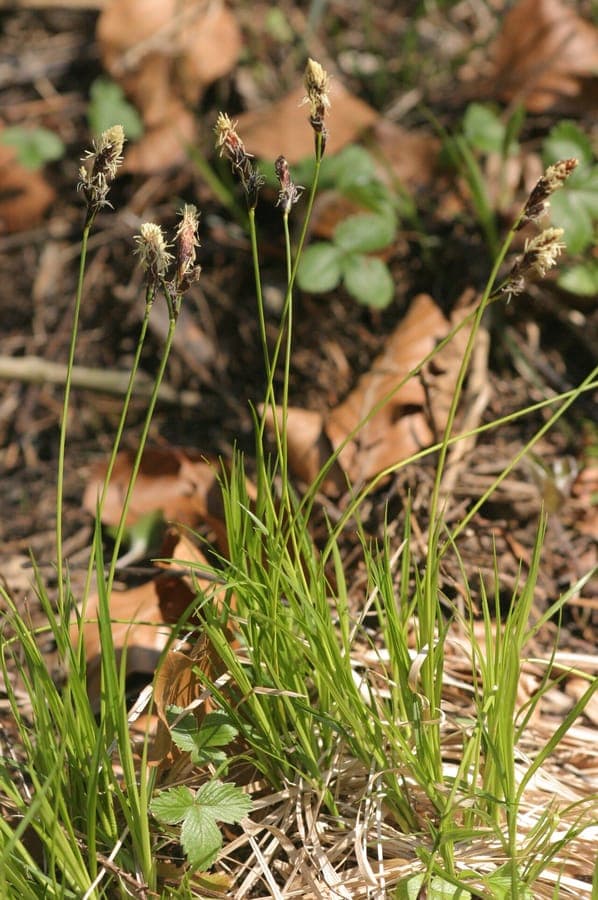
HermannSchachner / Public domain, via Wikimedia Commons
Mountain sedge: complete guide
Carex montana
Want to see Mountain sedge: complete guide in your garden?
1 minute, no credit card
Overview
Carex montana, commonly known as mountain sedge, is a refined, creeping perennial that thrives in cool, shaded environments. Despite its name, it's not limited to alpine zones - this sedge adapts well to woodland edges, shaded borders, and low-maintenance gardens across temperate Europe. Growing 15 to 30 cm tall, it forms a soft, evergreen carpet over time, making it an excellent choice for ground cover under trees or as a subtle edging plant. It's hardy in USDA zones 5 through 9, which covers most of the UK, central Europe, and the northern US.
Mountain sedge is ideal for gardeners who want a resilient, low-effort plant that performs well in tough spots. It spreads slowly via short rhizomes, filling gaps without becoming invasive.
On gardenworld.app you can create a custom garden layout that incorporates mountain sedge for natural texture and year-round interest.
Appearance & bloom cycle
The foliage is fine-textured, light green, and arches gracefully, creating a soft ripple effect in breezes. Leaves are flat, about 3–5 mm wide, and emerge fresh in early spring (March–April). A subtle bloom appears in May - small, greenish-brown spikes rise to around 35 cm. These aren't showy, but they add structure and support pollinators like early bees and hoverflies.
Seed heads mature by late summer and persist into autumn, offering subtle movement and texture. The plant remains evergreen in mild winters, providing visual continuity when most perennials have died back. In colder zones, it may yellow slightly but rebounds quickly in spring.
Full coverage takes two to three years, depending on spacing. Plant at 25 cm intervals for solid ground cover within 24 months.
Ideal location
Mountain sedge prefers partial to full shade - a light value of 5 on a 1–10 scale (1 = full sun, 10 = deep shade). It performs best under deciduous trees, on north-facing slopes, or along shaded pathways. Avoid hot, south-facing exposures, which dry out the soil and scorch leaf tips. Too much shade, however, leads to leggy growth and reduced spread.
Give it space to expand: allow 25–30 cm between plants. Use it beneath shrubs like Fagus sylvatica or alongside spring ephemerals such as Anemone nemorosa.
Soil requirements
It likes moist, well-drained soil with a neutral to slightly acidic pH - ideal between 6.5 and 7.0. Heavy clay soils should be amended with compost or leaf mold to improve drainage and aeration. Sandy soils benefit from added organic matter to retain moisture.
Avoid waterlogged conditions - while it tolerates dampness, prolonged wet feet can cause root rot. Incorporate 2–3 liters of compost per square meter at planting time to boost fertility and water retention.
Free design
Want to see Mountain sedge: complete guide in your garden? Make a free design now.
Watering
Water thoroughly once or twice a week during the first growing season, especially in dry spells. Apply 5–7 liters per m² weekly to establish strong roots. Once established, it's moderately drought-tolerant but looks best with occasional deep watering in summer droughts.
Use rainwater when possible - mountain sedge can show tip burn with highly alkaline tap water. Mulch with leaf litter or shredded bark to maintain moisture and suppress weeds.
Pruning
No formal pruning is needed. In early spring (March), tidy up by removing old, tattered, or browned foliage with hand shears or by pulling gently. This encourages fresh growth and reduces disease risk. Do not cut into the crown - just trim the outer leaves.
If clumps become too dense or start lifting, divide them in early spring or autumn. Replant divisions 25 cm apart to fill new areas.
Maintenance calendar
- Jan: Check for winter damage; protect young plants if extreme cold is forecast
- Feb: Prepare tools; plan spring cleanup
- Mar: Remove old foliage; divide if needed
- Apr: New growth emerges; apply light compost dressing
- May: Flowers appear; monitor soil moisture
- Jun: Watch for dry spells; water if needed
- Jul: Minimal care; ensure mulch layer remains intact
- Aug: Seed heads develop; avoid cutting back
- Sep: Divide or transplant; add mulch
- Oct: Tidy beds; assess spread and plan next season
- Nov: Let plant go dormant; no feeding
- Dec: Winter dormancy; mulch newly planted areas
Winter hardiness
Hardy to -23°C (USDA zone 5), Carex montana handles most European and North American winters with ease. In zone 5, a light mulch of leaves or straw helps young plants survive harsh freezes. Mature clumps usually overwinter without protection.
Its evergreen habit is a major asset - it keeps gardens from looking bare in winter. In milder climates (zones 7–9), it stays fully green and lush year-round.
Companion plants
Pair mountain sedge with shade-loving perennials for layered interest:
- Pulmonaria officinalis: early blooms and spotted foliage
- Helleborus foetidus: architectural form and winter flowers
- Lamium galeobdolon: golden foliage and creeping habit
- Hosta spp.: bold contrast in leaf size
- Galium odoratum: fragrant, spreading ground cover
Avoid aggressive spreaders like Vinca minor that can overwhelm it. Stick to plants with similar moisture and light needs.
Closing
Carex montana is a quiet achiever - unobtrusive but essential. It adds texture, suppresses weeds, and survives where many plants struggle. Whether you're restoring a woodland edge or softening a shady corner, this sedge delivers reliability and subtle beauty.
Plant in autumn or early spring, when soil is workable and not frozen. Established plants settle faster and spread steadily.
You'll find Carex montana at garden centres like garden centres across the UK and Europe, often sold in 1-litre pots or as 3-plant clusters. Check availability in late winter for spring planting.
On gardenworld.app you can visualize how mountain sedge fits into your space, test plant pairings, and generate a planting plan with spacing and care tips.
Want to see Mountain sedge: complete guide in your garden? Make a free design now.
Upload a photo, pick a style, and get a photorealistic design with plant list in under a minute.
No credit card required


Similar plants
Flat-stemmed club-rush: complete guide
Bolboschoenus planiculmis
Everything about Bolboschoenus planiculmis: growing conditions, watering, care, and use as a pond margin or wetland plant in garden design.
Great Plains flatsedge: complete guide
Cyperus lupulinus
Everything about Great Plains flatsedge (Cyperus lupulinus): growing conditions, care, garden uses, and ecological value. Tips for pond margins and dry sandy soils.
Golden beak sedge: complete guide
Rhynchospora corymbosa
Everything about golden beak sedge (Rhynchospora corymbosa): a dramatic tropical marginal for pond edges, bog gardens, and wet habitats.