
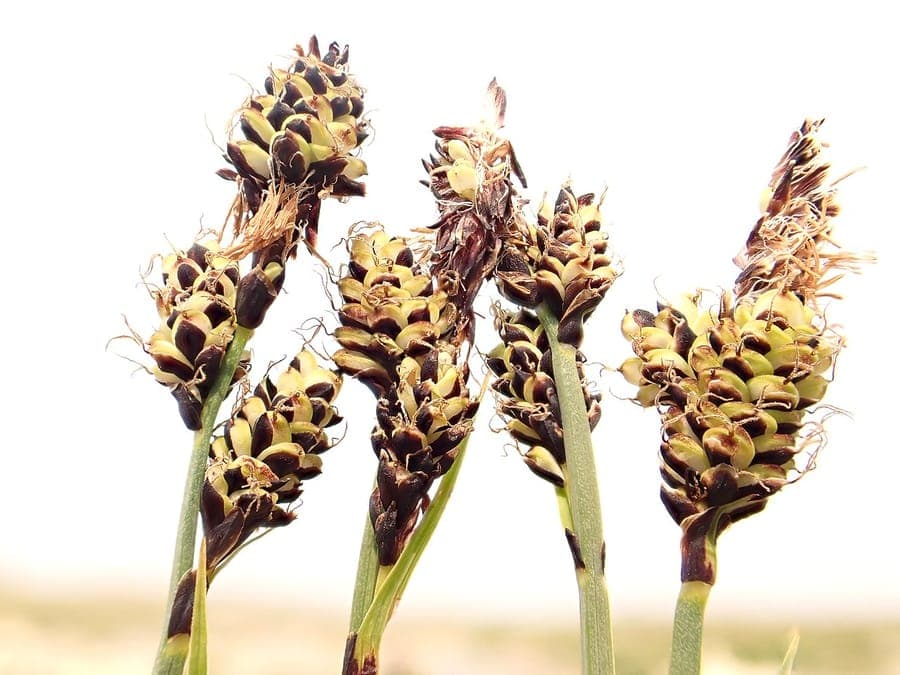
Matt Lavin / CC BY-SA 2.0, via Wikimedia Commons
Intermediate sedge: complete guide
Carex media
Want to see Intermediate sedge: complete guide in your garden?
1 minute, no credit card
Overview
Carex media, commonly called intermediate sedge or alpine sedge, is a delicate ornamental grass from the Cyperaceae family. This plant grows naturally in subarctic and alpine zones of North America, Europe, and Asia, which guarantees special hardiness against extreme cold. On GardenWorld, we integrate intermediate sedge into mountain gardens and alpine landscapes where frost resistance is essential.
Appearance and bloom
Carex media forms compact clumps with fine, greenish-gray needle-like foliage. The plant typically reaches 20-40 cm height. In late spring, it produces inconspicuous, brownish sedge flowers gathered in small spikes. The delicate foliage creates pleasant texture contrast in mountain gardens. This plant maintains good color year-round, adding permanent value to garden structure.
Ideal location
Intermediate sedge grows optimally in full sun to light half-shade. Plant this species on mountain slopes, alpine meadows, scree beds, and dry mountain terrain. The plant thrives in cold, windy conditions that many other plants cannot tolerate. Protect from intense afternoon sun only in warmest gardens; in temperate climates, however, it thrives in full sunlight.
Soil
Carex media makes low demands on soil quality. This plant grows best in well-draining, slightly acidic to neutral soils. Alpine soils are typically poor and stony - this plant gladly accepts such earth. Avoid waterlogged soil; drainage is critical. Add gravel or sand to heavy soils to improve drainage properties.
Free design
Want to see Intermediate sedge: complete guide in your garden? Make a free design now.
Watering
Once established, intermediate sedge is very drought-tolerant. Water regularly during the first growing season. After that, water minimally - in mountain areas where natural precipitation occurs, this plant manages moisture independently. Avoid stagnation, as this plant cannot tolerate waterlogging.
Pruning
Carex media requires minimal pruning. Remove dead or damaged foliage in early spring. Gentle, regular pruning can maintain compact form. Many gardeners let this plant grow completely untouched, because the natural form is already elegant and orderly.
Maintenance calendar
Spring: Carefully remove dead overwintered foliage. Summer: Check water status only during extreme drought. Fall: No pruning - leave dead foliage for protection. Winter: This plant is extremely frost-hardy; no extra protection needed.
Winter hardiness
Carex media is excellently frost-hardy, growing naturally to very high latitudes in North America, Europe, and Siberia. This plant tolerates temperatures below -30 degrees Celsius without any problem. It is arguably one of the most frost-hardy ornamental grasses available for gardens.
Companion plants
Intermediate sedge combines beautifully with other alpine plants: Silene, Gentiana, Campanula, Saxifraga, and alpine Sedum varieties. Plant with dwarf conifers and alpine heather. In GardenWorld alpine designs, we position Carex media in the front of alpine beds with flowering mountain plants.
Closing
Carex media is an indispensable plant for gardeners in cold zones, alpine gardens, and mountain gardens. With its elegant form, extreme frost hardiness, and minimal maintenance requirement, it delivers reliable beauty in the most challenging climates. On GardenWorld, intermediate sedge represents the height of alpine garden design.
Want to see Intermediate sedge: complete guide in your garden? Make a free design now.
Upload a photo, pick a style, and get a photorealistic design with plant list in under a minute.
No credit card required


Similar plants
Flat-stemmed club-rush: complete guide
Bolboschoenus planiculmis
Everything about Bolboschoenus planiculmis: growing conditions, watering, care, and use as a pond margin or wetland plant in garden design.
Great Plains flatsedge: complete guide
Cyperus lupulinus
Everything about Great Plains flatsedge (Cyperus lupulinus): growing conditions, care, garden uses, and ecological value. Tips for pond margins and dry sandy soils.
Golden beak sedge: complete guide
Rhynchospora corymbosa
Everything about golden beak sedge (Rhynchospora corymbosa): a dramatic tropical marginal for pond edges, bog gardens, and wet habitats.