
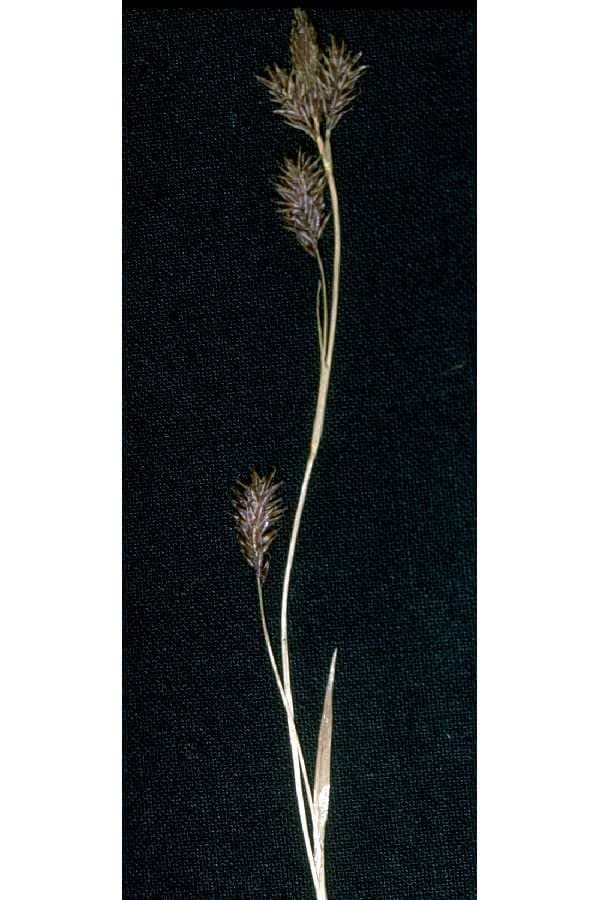
Robert H. Mohlenbrock / Public domain, via Wikimedia Commons
Woodrush sedge: complete guide
Carex luzulina
Want to see Woodrush sedge: complete guide in your garden?
1 minute, no credit card
Overview
Carex luzulina, commonly called Woodrush sedge, Spring sedge or Wingseed sedge, is a distinctive alpine sedge from the Cyperaceae family native to western North America. This species naturally inhabits mountainous regions from British Columbia south through California, Idaho, Montana, Nevada, New Mexico, Oregon, Utah, Washington and Wyoming, typically thriving at higher elevations in alpine meadows and mountain slopes. Carex luzulina is a notoriously slow-growing plant requiring several years to achieve mature size, but once established remains exceptionally ornamental without demanding maintenance. The species is renowned for its fine, grayish-green foliage and subtle, understated fruit structures. In alpine gardens and rock gardens, this plant is invaluable for creating authentic mountain landscapes even in lowland settings where natural alpine conditions prove difficult to replicate.
Appearance and Bloom
Carex luzulina develops as an extremely compact, slowly-spreading tuft with fine, grayish-green leaves typically reaching only 10-20 cm height. The plant exhibits remarkably fine, silky texture with extremely narrow leaves measuring approximately 1-2 mm wide, imparting an almost hair-fine appearance that distinguishes it from larger Carex competitors. The plant grows extraordinarily slowly, sometimes requiring many years to achieve mature proportions, meaning mature specimens are rare and highly valued by collectors. The blooming period spans May through July, producing small, green-brown flowers that develop into small, brown seed clusters. These fruit clusters are considerably less conspicuous than many competing Carex species, yet remain interesting upon close inspection. The plant is evergreen in many climates, providing year-round structure and visual interest without seasonal dormancy.
Ideal Location
Carex luzulina clearly prefers alpine or sub-alpine conditions featuring abundant sunshine and exceptionally well-drained terrain. In warm-summer gardens, afternoon shade may prove beneficial preventing heat stress. This plant thrives in rock gardens, alpine borders and alpine scree plantings. The species excels in very dry, rocky conditions where most competing plants struggle achieving success. The plant accepts full sun positions, and many gardeners report success cultivating this species in intensely sunny, persistently windy locations. In very warm climates, slightly more-moist terrain with light shade may perform better, but in mountain climates the plant prefers full sun exposure. The plant demonstrates excellent wind tolerance, even thriving in exposed alpine positions where many tender plants suffer damage.
Soil
Carex luzulina has extremely specific soil requirements and performs optimally in well-drained, sandy or rocky substrates with minimal organic matter. The plant accepts both acidic and alkaline soils depending on specific population origin. The essential factor is drainage: waterlogging is fatal to this alpine specialist. Heavy clay soils are completely unacceptable without extremely aggressive amendment. In rock gardens, position this plant in very gritty, sandy/stony mixes providing maximum drainage. A soil pH range of approximately 5.6 to 7.6 is acceptable. The plant demands minimal nutrition and actually thrives in extremely impoverished soils. The plant should never be fertilized; feeding actually compromises the plant's characteristic compact form.
Free design
Want to see Woodrush sedge: complete guide in your garden? Make a free design now.
Watering
Carex luzulina is extremely drought-tolerant once established and demands minimal irrigation. During the initial growth period (first year), maintain regular moderate moisture as the root system develops. After establishment, reduce supplemental watering substantially. Once mature, this plant flourishes without supplemental water in most climates, relying on natural precipitation. During exceptionally dry summers, cautious watering may help, but generally less water proves better. The plant absolutely cannot tolerate waterlogging and dies rapidly in wet conditions. Container-grown specimens require careful attention to drainage, with pots emptied promptly if water accumulates.
Pruning
Carex luzulina demands virtually no pruning and should almost always be left completely uncut. The plant grows so slowly that cutting may disrupt growth patterns. Only in exceptional circumstances should very carefully-damaged foliage be removed, and this should occur rarely if at all. The plant grows so compactly and slowly that pruning needs rarely manifest in normal use. Many gardeners leave this plant completely unpruned throughout its entire cultivation lifetime, allowing its natural sculptural form to develop undisturbed.
Maintenance Calendar
April-May: Check for winter damage. Gentle weeding around the plant may be needed. May-July: Enjoy flowering and slow growth. Water very cautiously during extreme droughts. July-September: Minimal watering needed given regular rainfall. October-March: Virtually no maintenance required.
Winter Hardiness
Carex luzulina demonstrates winter hardiness to USDA Zones 3-4 (temperatures to approximately -40 degrees Celsius), making it an exceptionally cold-hardy species. The plant thrives in all mountain climates and temperate zones throughout western North America. In very warm climates (zones 9-10), the plant may struggle with summer heat stress. In harsh mountain climates (zones 2-3), plants perform excellently. In extremely windy alpine terrain, the compact growth form actually proves advantageous, suffering less wind damage than taller competitors.
Companion Planting
Carex luzulina combines beautifully with other alpine plants sharing similar growth requirements, particularly Sempervivum species, miniature Sedum varieties, alpine Phlox and Armeria maritima. Plant groups against stonework spaced approximately 20-30 cm apart for naturalistic alpine effect. For alpine rock garden composition, associate with alpine Dianthus, Saxifraga species and dwarf Allium types. For container culture in alpine settings, pair with alpine house-leeks and diminutive Juniperus forms for authentic miniature landscapes.
Conclusion
Carex luzulina is a valued but patient-demanding plant for serious alpine gardeners seeking to create authentic mountain landscapes. With its exceptional slow growth, minimal water requirements and ability to flourish in extremely poor, well-drained soils, this plant is ideal for rock gardens and alpine borders. For gardeners in mountainous regions and cold climates, this sedge offers uncompromised authentic alpine beauty without maintenance demands. Source this distinctive species from specialized alpine plant nurseries or gardenworld.app for your next alpine garden project.
Want to see Woodrush sedge: complete guide in your garden? Make a free design now.
Upload a photo, pick a style, and get a photorealistic design with plant list in under a minute.
No credit card required


Similar plants
Flat-stemmed club-rush: complete guide
Bolboschoenus planiculmis
Everything about Bolboschoenus planiculmis: growing conditions, watering, care, and use as a pond margin or wetland plant in garden design.
Great Plains flatsedge: complete guide
Cyperus lupulinus
Everything about Great Plains flatsedge (Cyperus lupulinus): growing conditions, care, garden uses, and ecological value. Tips for pond margins and dry sandy soils.
Golden beak sedge: complete guide
Rhynchospora corymbosa
Everything about golden beak sedge (Rhynchospora corymbosa): a dramatic tropical marginal for pond edges, bog gardens, and wet habitats.