
no rights reserved / CC0, via Wikimedia Commons
Hop sedge: complete guide
Carex lupulina
Want to see Hop sedge: complete guide in your garden?
1 minute, no credit card
Carex lupulina, commonly called hop sedge or common hop sedge, offers dramatic structure and spectacular fruits to wetland gardens. This North American sedge thrives in wet areas and boggy places where many other plants struggle. Hop sedge transforms difficult, waterlogged spots into dramatic, eye-catching features with its characteristic hop-like seed heads.
Overview
Carex lupulina belongs to the Cyperaceae family and ranges from eastern Canada through central and eastern North America to northeastern Mexico. The plant is instantly recognizable by its very distinctive, hop-like seed heads that resemble miniature hop cones. This sedge grows in wet ground and is perfect for gardeners seeking genuine wetland specialists.
Appearance and Bloom
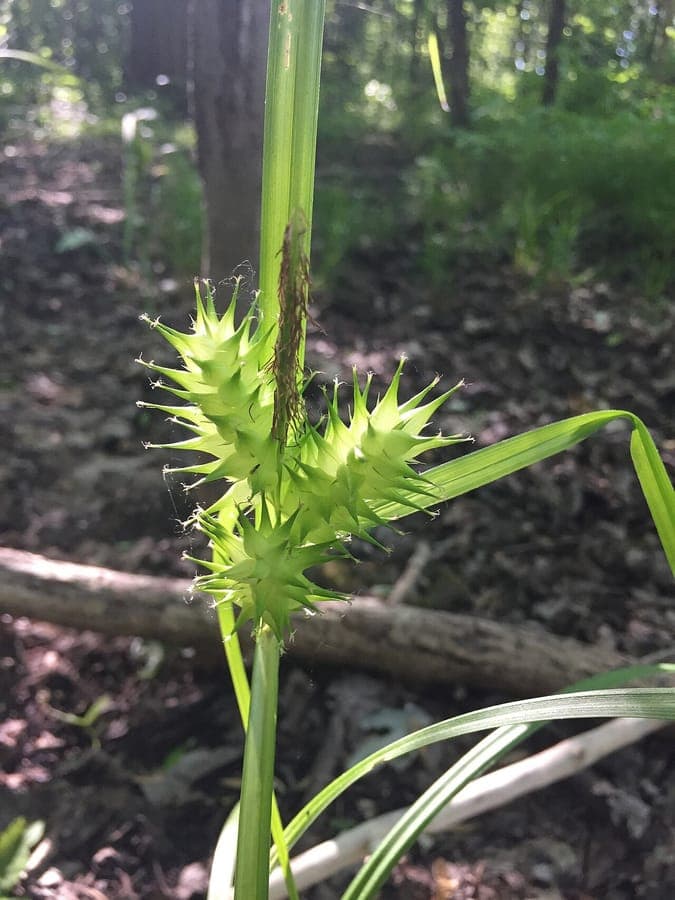
Hop sedge forms dense, upright clumps reaching 60-90 cm in height - larger than many other carex species. The leaves are lustrous green and relatively broad, giving the plant a robust, structural quality. The spectacular feature arrives in June-July when the very distinctive seed heads appear. These are unmistakably hop-like in appearance, yellow-green to brown, and completely covered with net-like patterns. The seed heads are densely packed and persist on the plant for months, providing extended ornamental interest from mid-summer through autumn.
Ideal Location
Hop sedge thrives in wet areas, along stream banks, in boggy depressions, and on poorly drained sites where water regularly collects. The plant accepts both partial shade and open sun positions provided adequate moisture is maintained. This sedge is perfect for rain gardens, natural wet areas, and alongside streams and ponds where water level fluctuation is expected.
Soil
Hop sedge thrives in moist to wet, organically rich soil. This sedge is highly adaptable to various soil types - clay, sand, silt - provided consistent moisture is guaranteed. Incorporate rich compost at planting. This carex feels at home in nutrient-rich, waterlogged soils and can tolerate permanently wet conditions that would kill many plants.
Free design
Want to see Hop sedge: complete guide in your garden? Make a free design now.
Watering
Maintain permanently moist to wet soil throughout the growing season. This sedge tolerates regular inundation and thrives in semi-boggy environments. Water deeply after planting and ensure consistent moisture. Mature plants tolerate wet roots better than dry soil; never allow the soil to dry completely during the growing season.
Pruning
Minimal pruning is required. In early spring (April-May), gently remove dead foliage by hand. Allow ripening seed heads to remain intact for full ornamental value. Comb out the clumps with a rake to remove accumulated dead material, but take care not to damage the spectacular fruits.
Maintenance Calendar
April-May: Remove winter-damaged foliage. June-July: Enjoy spectacular hop fruit display at peak. August-October: Seed heads ripen and dry; remain highly decorative. October-March: Dormant period; dried heads provide winter interest and can be left standing.
Winter Hardiness
Hop sedge is hardy to USDA zone 4 (-30 degrees Celsius / -22 degrees Fahrenheit). Established plants withstand harsh winters without problems. The dried seed heads provide winter interest and can remain standing through the dormant season for natural beauty.
Companion Plants
Hop sedge combines beautifully with other wetland specialists such as iris, joe-pye-weed, vernonia, and other moisture-loving sedges. The upright structure and hop-like fruits work well with other vertical elements. Plant it alongside other wetland specialists for full seasonal interest in wet areas. Pair with plants that bloom earlier in the season for continuous color and form.
Closing Thoughts
Carex lupulina is not merely a wetland sedge - it is a genuine showstopper for gardeners solving moisture problems. The spectacular hop fruits provide months of visual interest while the plant grows gracefully and elegantly. This native sedge delivers real dramatic impact to difficult sites. Find Carex lupulina at wetland nurseries and botanical gardens specializing in moisture-loving plants. Create your ideal wet garden with expert guidance on gardenworld.app - plant recommendations tailored to truly moist conditions await.
Want to see Hop sedge: complete guide in your garden? Make a free design now.
Upload a photo, pick a style, and get a photorealistic design with plant list in under a minute.
No credit card required


Similar plants
Flat-stemmed club-rush: complete guide
Bolboschoenus planiculmis
Everything about Bolboschoenus planiculmis: growing conditions, watering, care, and use as a pond margin or wetland plant in garden design.
Great Plains flatsedge: complete guide
Cyperus lupulinus
Everything about Great Plains flatsedge (Cyperus lupulinus): growing conditions, care, garden uses, and ecological value. Tips for pond margins and dry sandy soils.
Golden beak sedge: complete guide
Rhynchospora corymbosa
Everything about golden beak sedge (Rhynchospora corymbosa): a dramatic tropical marginal for pond edges, bog gardens, and wet habitats.