
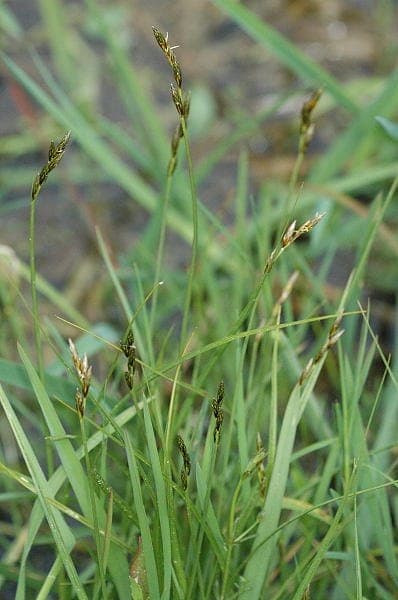
James K. Lindsey / CC BY-SA 3.0, via Wikimedia Commons
Oval sedge: complete guide
Carex leporina
Want to see Oval sedge: complete guide in your garden?
1 minute, no credit card
Overview
Oval sedge, or Carex leporina, isn't the kind of plant that shouts for attention. It won't blind you with colour or perfume the air, but what it lacks in flash it makes up for in reliability and quiet charm. Native to much of Europe, including the UK and northern regions of North America, this perennial sedge thrives in damp, partly shaded areas where other plants struggle. It forms neat clumps of fine-textured foliage, reaching 40–60 cm in height and spreading 30–40 cm wide.
Hardy in USDA zones 5–9, it's a solid performer through winter, staying evergreen in milder climates. In colder areas, the foliage may die back slightly but regrows vigorously in spring. Its natural habitat includes woodland edges, wet meadows, and ditches-clues to where it'll do best in your garden.
On gardenworld.app, you can design a planting scheme that highlights Oval sedge in damp border areas, using its texture to contrast with bolder leaf shapes.
Appearance & bloom cycle
The leaves are narrow, soft, and light green, growing in arching tufts from the base. They typically reach 20–40 cm in length and stay flexible without sharp edges. The real feature comes in spring, from April to May, when the plant sends up slender stalks topped with oval, 1–2 cm-long seed heads. These start greenish and mature to a pale brown, lasting well into summer.
No petals, no fragrance-just a subtle, grassy elegance. The seed heads resemble a hare's foot, which explains some of its common names. While it doesn't flower in the traditional sense, the structural interest it adds is invaluable in naturalistic designs.
Ideal location
Choose a spot with partial shade-3 to 5 hours of morning or dappled sunlight is ideal. Full sun can scorch the leaves in hot summers, especially if the soil dries out. Under deciduous trees, along stream banks, or in low-lying garden areas where water collects, Oval sedge will thrive.
Avoid hot, dry borders. This is a plant for cool, moist microclimates. If you're designing a woodland edge or bog garden, it's a natural fit. On gardenworld.app, you can simulate light patterns and moisture zones to find the perfect spot for this sedge in your layout.
Soil requirements
Oval sedge prefers consistently moist to wet soil. Ideal conditions include humus-rich, loamy soils with plenty of organic matter. A mix of garden soil, compost, and a touch of clay works well. Sandy soils are too free-draining unless amended regularly with compost to retain moisture.
The pH should be slightly acidic to neutral (5.5–7.0). If your soil is alkaline, consider mulching with pine needles or adding ericaceous compost to gently lower the pH. Avoid heavy compaction-this sedge likes breathable, open soil.
Free design
Want to see Oval sedge: complete guide in your garden? Make a free design now.
Watering
Keep the soil evenly moist, especially during the first growing season. Water weekly during dry spells, using rainwater when possible to avoid lime buildup. Once established, Oval sedge handles short dry periods better, but prolonged drought will cause leaf browning and stunted growth.
Mulch with organic material like leaf mould or composted bark to conserve moisture and suppress weeds. Don't let the root zone dry out completely-this plant is not drought-tolerant.
Pruning
Minimal pruning needed. In late winter or early spring (February to March), cut back old, damaged, or discoloured foliage to about 10 cm above ground level. Use sharp shears to avoid tearing. This encourages fresh growth and keeps the clump tidy.
Leave the seed heads through winter-they add visual interest and shelter for overwintering insects. Only remove them during your spring tidy-up.
Maintenance calendar
- January: Check for damage; maintain mulch layer
- February: Begin cutting back old leaves
- March: Complete spring clean-up; apply a thin layer of compost
- April: Seed heads emerge; monitor soil moisture
- May: Peak flowering time; keep soil damp
- June–August: Watch for dry spells; water as needed
- September: Reduce watering; prepare for dormancy
- October: Top up mulch; no feeding
- November–December: Leave standing; no winter protection needed
Winter hardiness
Oval sedge is fully hardy in USDA zones 5–9 (-20°C to -1°C). It remains evergreen in milder zones but may look tattered after harsh winters. In colder areas, foliage dies back but returns reliably in spring. No protective coverings are required.
In regions with dry winters (no snow cover), add an extra layer of mulch to prevent root desiccation.
Companion plants
Pair Oval sedge with other moisture-loving, shade-tolerant plants:
- Carex vulpinoidea – for contrasting seed head shape
- Tellima grandiflora – delicate green flowers in spring
- Astilbe simplicifolia – feathery plumes, loves damp soil
- Osmunda regalis – royal fern, great for wet shade
- Lysimachia clethroides – white spires, summer interest
Avoid drought-loving plants like lavender or sedum. They won't survive the wet conditions this sedge requires. Use gardenworld.app to preview how these combinations look in a layered planting design.
Closing
Oval sedge is a quiet achiever in the garden. It won't wow visitors, but it'll never let you down. Perfect for tricky damp spots, it adds texture, structure, and year-round presence. Low maintenance and ecologically valuable, it's a smart choice for naturalistic gardens. You'll find it at garden centres across the UK and North America, often near water plants or ornamental grasses. Plant in groups of 3–5 for a soft, flowing effect. Let it grow where it wants-this sedge knows exactly what it's doing.
Want to see Oval sedge: complete guide in your garden? Make a free design now.
Upload a photo, pick a style, and get a photorealistic design with plant list in under a minute.
No credit card required


Similar plants
Flat-stemmed club-rush: complete guide
Bolboschoenus planiculmis
Everything about Bolboschoenus planiculmis: growing conditions, watering, care, and use as a pond margin or wetland plant in garden design.
Great Plains flatsedge: complete guide
Cyperus lupulinus
Everything about Great Plains flatsedge (Cyperus lupulinus): growing conditions, care, garden uses, and ecological value. Tips for pond margins and dry sandy soils.
Golden beak sedge: complete guide
Rhynchospora corymbosa
Everything about golden beak sedge (Rhynchospora corymbosa): a dramatic tropical marginal for pond edges, bog gardens, and wet habitats.