
Superior National Forest / CC BY 2.0, via Wikimedia Commons
Greater bladder sedge: complete guide
Carex intumescens
Want to see Greater bladder sedge: complete guide in your garden?
1 minute, no credit card
Overview
Carex intumescens, commonly known as greater bladder sedge, is a native ornamental grass from the Cyperaceae family that thrives in moist, shaded environments. Originally found in wet woodlands and along stream banks across the eastern United States - from Alabama to Connecticut - this graminoid brings subtle texture and year-round presence to damp garden corners. For UK and US gardeners struggling with soggy soil, Carex intumescens is a smart, resilient choice.
It doesn't spread aggressively but forms tight clumps over time, stabilizing loose or waterlogged ground. Unlike flashy perennials, it shines in quiet elegance - perfect for naturalistic planting schemes. On gardenworld.app, you can design a planting plan that integrates Carex intumescens into rain gardens or shaded borders where moisture is consistent.
Appearance & bloom cycle
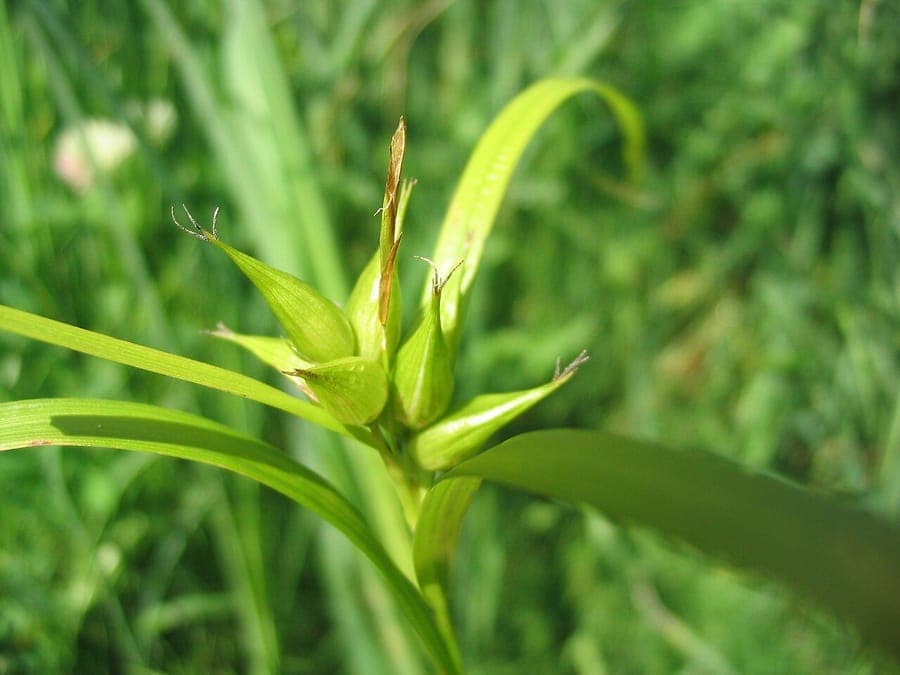
Greater bladder sedge reaches 16 to 28 inches (40–70 cm) in height, with narrow, arching blades of dark green foliage. The leaves are finely textured, up to 0.2 inches (5 mm) wide, and taper to a sharp point. What truly sets this sedge apart is its unique flowering structure. From May to June, the female flowers develop into inflated, translucent sacs called perigynia. These swollen green capsules rise slightly above the foliage, giving the plant a distinctive 'bladdery' look - hence the name.
The perigynia persist into late summer, gradually turning tan, adding visual interest even as the plant enters dormancy. There's no floral scent, and pollination is wind-driven. Seed dispersal is limited, and spread occurs slowly via short rhizomes. This makes it manageable in mixed borders without becoming invasive.
Ideal location
Carex intumescens performs best in partial to full shade. In full sun, it requires consistently wet soil, which is hard to maintain without constant irrigation. Choose a spot under deciduous trees, along a pond margin, or in a low-lying area that collects water. In southern regions (USDA zones 7–8), full shade is recommended to prevent scorching during summer heat.
Avoid hot, reflective surfaces like south-facing walls or paved areas. In urban gardens with heavy shade from buildings, this sedge can still thrive - as long as the soil doesn't dry out. Use gardenworld.app to map microclimates in your garden, helping you pinpoint exactly where moisture and shade align for optimal sedge growth.
Soil requirements
This sedge prefers acidic to slightly acidic soils with a pH range of 4.8–6.9. It grows well in loamy or clay-loam soils rich in organic matter. Amend sandy soils with compost or leaf mould to improve water retention. Avoid chalky or alkaline soils, as they can cause chlorosis and stunted growth.
If your soil is too alkaline, consider adding peat moss or elemental sulphur to lower the pH. A simple soil test kit, available at most garden centres, can help you assess your starting conditions before planting.
Free design
Want to see Greater bladder sedge: complete guide in your garden? Make a free design now.
Watering
Consistent moisture is non-negotiable. This sedge cannot tolerate drought for more than 10–14 days, especially in warm months. In dry spells (July–August), water weekly with 3–5 gallons (10–15 litres) per clump. Container-grown plants need daily checks - the root ball dries quickly.
Use rainwater when possible to avoid lime buildup. If using tap water, let it sit for 24 hours to allow chlorine to dissipate. Watch for browning leaf tips - a clear sign of underwatering or low humidity.
Pruning
Pruning is minimal. In early March, cut back old foliage to make way for fresh spring growth. Use sharp shears and remove only dead or damaged leaves. Avoid cutting into the crown. Leave the spent flower stalks over winter - they add structure and shelter for overwintering insects.
Do not shear the plant heavily; its natural form is part of its appeal. Light grooming is all it needs.
Maintenance calendar
- January: Check for frost damage, leave old foliage for insulation
- February: Prepare tools for spring cleanup
- March: Cut back dead foliage, apply thin compost layer
- April: Monitor for weeds around young clumps
- May: Bloom begins, watch soil moisture
- June: Peak bloom, swollen perigynia visible
- July: Water weekly during dry spells
- August: Continue watering, avoid wetting leaves
- September: Reduce watering gradually
- October: Let plant enter dormancy
- November: Leave foliage intact for winter interest
- December: Minimal care, protect young plants in containers
Winter hardiness
Carex intumescens is hardy in USDA zones 5–8. In the UK (equivalent to zone 8), it survives winter with no protection. The foliage may turn bronze or brown but remains standing, offering texture in the winter garden. Young plants in pots should be moved to a sheltered spot or wrapped to prevent root freeze.
Companion plants
Pair this sedge with moisture-loving perennials like Athyrium filix-femina (lady fern), Eutrochium maculatum (spotted joe-pye weed), and Packera aurea (golden ragwort). These combinations create a layered, woodland edge effect. Avoid invasive spreaders like Japanese knotweed or aggressive grasses.
Early spring bulbs such as Anemone nemorosa or Trillium grandiflorum work well - they bloom before the sedge fills out and die back naturally.
Closing
Carex intumescens is a quiet hero for wet, shady gardens. It asks little and gives much: stability, texture, and seasonal interest. Find it at garden centres across the UK and US, especially those specialising in native or wetland plants. In the US, try local native plant nurseries; in the UK, check with online suppliers or specialty growers. When planted in the right spot - moist, shaded, and slightly acidic - it becomes a reliable garden staple for years. With thoughtful design, Carex intumescens can be the backbone of a resilient, low-maintenance planting scheme.
Want to see Greater bladder sedge: complete guide in your garden? Make a free design now.
Upload a photo, pick a style, and get a photorealistic design with plant list in under a minute.
No credit card required


Similar plants
Flat-stemmed club-rush: complete guide
Bolboschoenus planiculmis
Everything about Bolboschoenus planiculmis: growing conditions, watering, care, and use as a pond margin or wetland plant in garden design.
Great Plains flatsedge: complete guide
Cyperus lupulinus
Everything about Great Plains flatsedge (Cyperus lupulinus): growing conditions, care, garden uses, and ecological value. Tips for pond margins and dry sandy soils.
Golden beak sedge: complete guide
Rhynchospora corymbosa
Everything about golden beak sedge (Rhynchospora corymbosa): a dramatic tropical marginal for pond edges, bog gardens, and wet habitats.