
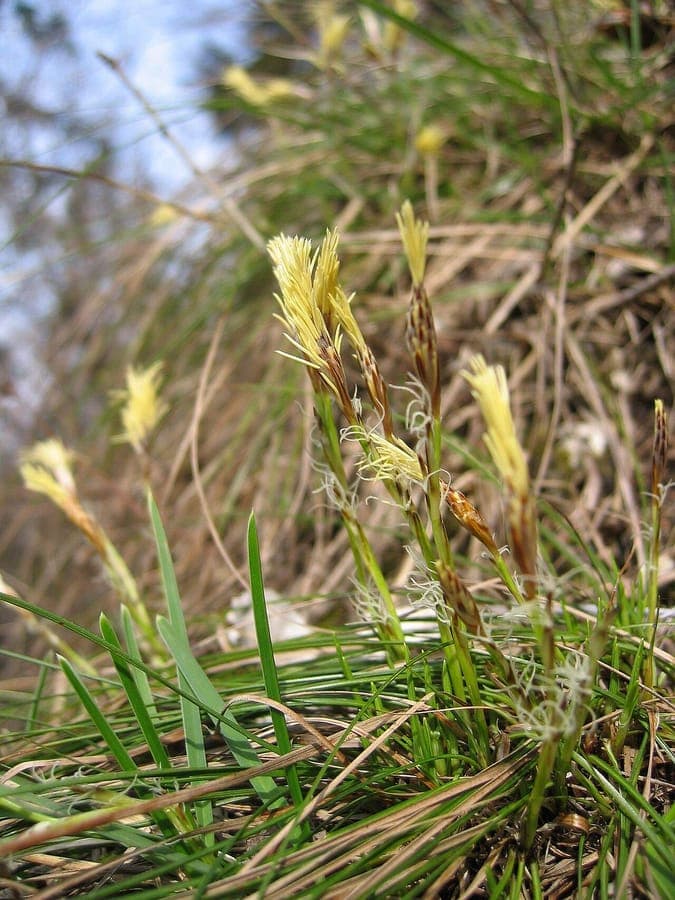
Wikimedia Commons / CC BY-SA 3.0, via Wikimedia Commons
Dwarf sedge: complete guide
Carex humilis
Want to see Dwarf sedge: complete guide in your garden?
1 minute, no credit card
Overview
Carex humilis, commonly known as dwarf sedge, is a subtle yet invaluable plant for the UK and North American garden. Native to regions stretching from central Europe to northern China, this member of the Cyperaceae family thrives in cool, shaded woodlands and forest edges. It forms tight, grass-like clumps that stay green through winter, offering structure when many other perennials have died back.
Dwarf sedge is gaining popularity among gardeners looking for reliable ground cover in challenging shady areas. It doesn't demand attention, but once established, it delivers consistent texture and resilience. On gardenworld.app, you can design a planting scheme that highlights its soft, arching foliage alongside spring ephemerals like bloodroot or wood anemone.
Appearance & bloom cycle
This sedge reaches 10–25 cm in height, with a spread of about 30 cm. The narrow, bright green leaves are only 2–3 mm wide, forming dense, fountain-like tufts. It's evergreen in milder climates, though leaves may turn brown in harsh winters or extended dry spells.
From April to June, inconspicuous greenish-brown flower spikes rise slightly above the foliage. These aren't showy, but they support pollinators and add subtle seasonal interest. The plant spreads slowly via rhizomes, forming small colonies over time without becoming invasive.
Ideal location
Dwarf sedge performs best in partial to full shade. It's perfect under deciduous trees - think oaks, maples, or birches - where dappled light filters through in spring before the canopy closes. Avoid hot, south-facing beds; direct sun, especially in summer, leads to scorching and moisture stress.
It's an excellent choice for naturalising along woodland paths, under shrubs, or as a soft edging plant. Use it to transition between lawn and wilder areas. On gardenworld.app, you can visualise how dwarf sedge integrates into shaded garden zones, combining well with ferns or epimediums for layered texture.
Soil requirements
Carex humilis prefers moist, well-drained loam or clay-loam soils. It tolerates slightly acidic to neutral pH (5.5–7.0). Sandy soils work only if amended with organic matter like compost or leaf mould to improve water retention. Avoid waterlogged conditions - while the plant likes consistent moisture, it won't survive in stagnant, anaerobic soil.
If your soil is heavy clay, mix in sharp sand or grit to improve aeration. A top dressing of compost in early spring boosts fertility and moisture-holding capacity without overfeeding.
Free design
Want to see Dwarf sedge: complete guide in your garden? Make a free design now.
Watering
During the first growing season, water weekly during dry spells. Once established, dwarf sedge is moderately drought-tolerant but performs best with consistent moisture. Water deeply every 7–10 days in prolonged dry weather, especially under tree canopies where competition for water is high.
Use rainwater when possible. Tap water high in lime can cause browning leaf tips. Water at the base to keep foliage dry and reduce fungal risks.
Pruning
Pruning isn't necessary. In late winter or early spring (February–March), gently rake out old or damaged foliage with your fingers or a hand fork to make way for fresh growth. Don't cut the plant back hard - this can damage emerging shoots and disrupt its natural evergreen habit.
Maintenance calendar
- Jan: Check for winter damage. Water during dry, frost-free periods.
- Feb: Remove old leaves. No feeding required.
- Mar: Divide clumps if needed. Add compost to poor soils.
- Apr: New growth begins. Watch for slug damage.
- May: Flower spikes emerge. Maintain soil moisture.
- Jun: Peak bloom. Monitor for pests.
- Jul: Reduce watering if rainfall is adequate. Avoid waterlogging.
- Aug: Keep an eye on drought stress, especially under trees.
- Sep: Growth slows. Leave foliage intact for winter protection.
- Oct: No action. Let fallen leaves provide natural mulch.
- Nov: Dormancy begins. No maintenance needed.
- Dec: Protect from dry frost with a light mulch if needed.
Winter hardiness
Dwarf sedge is hardy in USDA zones 5–9 (-20°C to -1°C). In the UK (zone 8–9) and most of the northeastern US, it overwinters reliably. Foliage may scorch or brown in harsh conditions but typically rebounds in spring. In areas with little snow cover and frequent freeze-thaw cycles, a light mulch of leaf litter helps protect shallow roots.
Companion plants
Pair Carex humilis with:
- Epimedium spp. (barrenwort)
- Ferns (dryopteris, polystichum)
- Tiarella cordifolia (foamflower)
- Heuchera cultivars
- Pulmonaria (lungwort)
These combinations create depth and contrast in shade gardens. The fine texture of the sedge complements bolder leaves of hostas or heucheras. Use natural stone or driftwood to define edges and enhance the woodland feel.
Closing
Dwarf sedge won't grab headlines, but it's a quietly dependable performer in any shade garden. It's tough, unobtrusive, and fills gaps where little else grows. Available at garden centres across the UK and North America, including independent nurseries and chains, it's a smart choice for low-effort, high-reward planting. For gardeners seeking a natural, flowing look under trees or along shaded borders, Carex humilis is worth a try. Check availability at local garden centres and plan your layout using gardenworld.app for best results.
Want to see Dwarf sedge: complete guide in your garden? Make a free design now.
Upload a photo, pick a style, and get a photorealistic design with plant list in under a minute.
10,000+ gardens designed already
No credit card required


Similar plants
Flat-stemmed club-rush: complete guide
Bolboschoenus planiculmis
Everything about Bolboschoenus planiculmis: growing conditions, watering, care, and use as a pond margin or wetland plant in garden design.
Great Plains flatsedge: complete guide
Cyperus lupulinus
Everything about Great Plains flatsedge (Cyperus lupulinus): growing conditions, care, garden uses, and ecological value. Tips for pond margins and dry sandy soils.
Golden beak sedge: complete guide
Rhynchospora corymbosa
Everything about golden beak sedge (Rhynchospora corymbosa): a dramatic tropical marginal for pond edges, bog gardens, and wet habitats.