
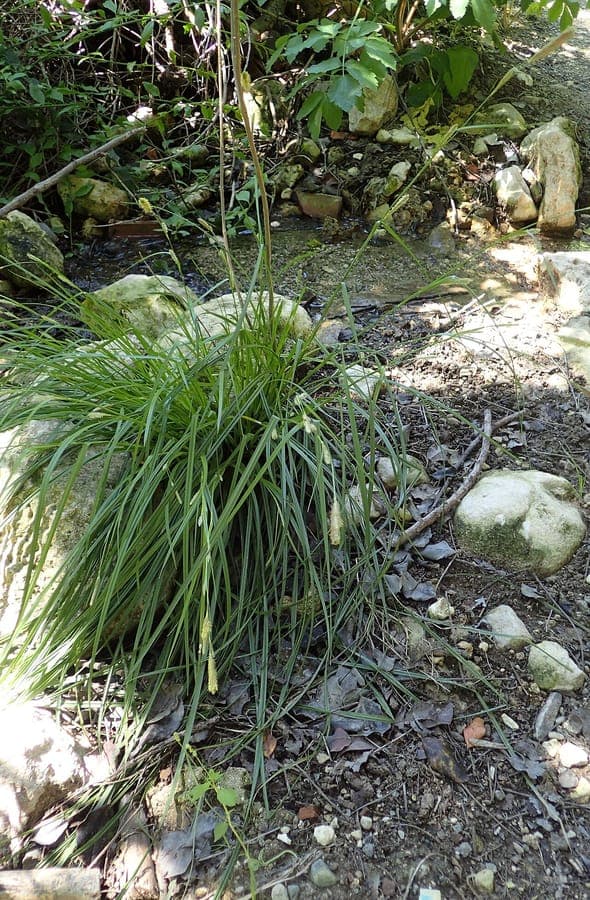
Krzysztof Ziarnek, Kenraiz / CC BY-SA 4.0, via Wikimedia Commons
Carex hispida: complete guide
Carex hispida
Want to see Carex hispida: complete guide in your garden?
1 minute, no credit card
Overview
Carex hispida, commonly called bristly sedge or hairy sedge, is a distinctive Mediterranean native plant from the Cyperaceae family. This species flourishes throughout Mediterranean regions including southern France, Italy, Spain, Greece, Turkey, and North Africa, demonstrating remarkable adaptability to hot, dry conditions typical of these landscapes. The plant forms compact, slowly-spreading tufts with fine, somewhat stiffer leaves than many related Carex species, earning its scientific epithet "hispida" from the hairiness of its seed heads. Carex hispida is celebrated among xeriscaping specialists and Mediterranean garden designers for its exceptional drought tolerance combined with elegant ornamental structure. Despite being less well-known than some sedge species, it deserves significantly greater recognition from gardeners seeking distinctive, cold-hardy plants that thrive where traditional grasses struggle.
Appearance and Bloom
Carex hispida develops compact, slowly-expanding tufts with finer, slightly stiffer foliage than many competing Carex species - a characteristic that makes it distinctly recognizable in Mediterranean landscapes. Leaves typically attain heights of 15-30 cm with soft green to grayish-green coloration, lending the plant subtle beauty in arid gardens and Mediterranean compositions. The plant exhibits dioecious reproduction, meaning male and female flowers develop on separate plants, though both forms display ornamental value. The fruits are notably hairy or bristly - from which the botanical name "hispida" derives, literally meaning "hairy" - with tiny hook-like structures facilitating seed dispersal through animal vectors. The blooming period extends from May through July, producing attractive, brown seed head clusters that remain decorative throughout autumn months.
Ideal Location
Carex hispida thrives in full sun to part shade conditions, though this sedge clearly prefers sunny, warm locations where intense light and heat present no challenges. This plant is genuinely drought-loving, performing significantly better with minimal supplemental water compared to regular irrigation regimens. In very hot climates, some afternoon shade may prevent leaf-tip desiccation, but in temperate zones, full sun produces optimal growth and coloration. Carex hispida excels in rock gardens, Mediterranean borders, dry creek beds, green roofs and other water-restricted garden settings. The plant demonstrates excellent wind tolerance, even thriving in coastal and windswept alpine positions better than many competing ornamental grasses. This characteristic makes it particularly valuable for seaside gardens or persistently windy locations where exposed plants typically suffer.
Soil
Unlike most Carex species preferring moist substrates, Carex hispida is exceptionally drought-tolerant and performs optimally in very well-draining, even poor soils. Sandy or rocky substrates are actually preferable to rich, moisture-retentive soils. The plant accepts neutral to alkaline pH ranges, though it also succeeds in slightly acidic conditions. No supplemental fertilization is necessary - excess nutrients may actually encourage overly-lush growth that compromises the plant's naturally compact form. Heavy clay soils require substantial amendment with sand, gravel or drainage material before planting Carex hispida. Once established, this species demands minimal soil adjustment and flourishes in locations where competing plants typically struggle. The plant genuinely prefers poor, unimproved conditions where careful gardeners might otherwise consider soil enhancement unnecessary.
Free design
Want to see Carex hispida: complete guide in your garden? Make a free design now.
Watering
Carex hispida demonstrates extraordinary drought tolerance and requires minimal irrigation once established. During the first two years following planting, provide moderate, regular moisture while the root system develops, then reduce supplemental watering substantially. The principle becomes: less water is more when cultivating this remarkable sedge. In Mediterranean climates, Carex hispida thrives without supplemental irrigation during normal growing periods, relying on regular winter rainfall for water supply. In very arid climates or during exceptionally dry summers, occasional deep watering may prove helpful, but generally this plant is extraordinarily self-sufficient. Container-grown specimens may require slightly more frequent watering since soil in containers dries more rapidly, but even here the principle applies: drier is better than waterlogged. This sedge actually benefits from water stress, which reinforces its compact, attractive form.
Pruning
Carex hispida demands remarkably minimal pruning compared to typical garden plants, considerably less maintenance than most competing ornamentals. In early spring, carefully remove old, dead foliage from the plant base, extracting any seriously damaged or yellowed leaves from the plant crown. For gardeners appreciating neater appearance, cutting the entire plant back to 5-8 cm above soil level in March stimulates vigorous new growth. This drastic cutting need occur only once annually. Many gardeners leave this plant unpruned entirely, developing a more natural, wild appearance perfectly suited to naturalistic or Mediterranean garden designs. Decorative seed head clusters can remain throughout autumn unless they begin shattering or visibly deteriorating, adding architectural interest to dormant-season garden compositions.
Maintenance Calendar
March: Check for winter damage. Remove dead foliage selectively. Cutback to 8 cm if desired. April-June: Enjoy growth and flowering displays. Minimal watering. July-September: Monitor carefully for extreme drought stress. October-February: Virtually no maintenance needed. Enjoy the structural display of maturing seed heads.
Winter Hardiness
Carex hispida shows winter hardiness to USDA Zones 6-7 depending on specific plant origin. In colder climates (Zone 5), supplementary winter protection may prove beneficial, though many gardeners report surprising resilience in harsh conditions. In very warm-winter climates (zones 9-10), this plant retains attractive foliage year-round. In zones 7-8, minimal frost protection usually suffices. As precaution in severe winter climates, apply light mulch of approximately 5-10 cm around the plant base in November, ensuring the plant crown itself remains exposed. Remove this protective mulch in March as temperatures warm.
Companion Planting
Carex hispida combines beautifully with Mediterranean specialists, particularly Rosmarinus officinalis (rosemary), Santolina chamaecyparissus (cotton lavender), and Stachys byzantina (lamb's ears). Plant groups of three to five against stonework for naturalistic effect, spacing approximately 25-30 cm apart. For authentic Mediterranean color composition, associate with Iris pumila, Dianthus carthusianorum and small Allium species. In rock gardens, this sedge combines excellently with hardy Sempervivum, Sedum species and climbing Hedera helix (English ivy). In container culture, this plant becomes increasingly attractive when paired with trailing Nemesia or peachy-toned annual Penstemons for seasonal color contrast.
Conclusion
Carex hispida represents an excellent priority choice for gardeners in Mediterranean and drought-conscious landscapes seeking an elegant, low-maintenance sedge with authentic Mediterranean character. With exceptional drought and heat tolerance, minimal pruning requirements and ability to flourish in nearly any condition, this plant offers ideal solutions where water conservation and effortless cultivation are priorities. Source this distinctive species from quality garden centers, Mediterranean plant specialists or gardenworld.app for your next Mediterranean garden project.
Want to see Carex hispida: complete guide in your garden? Make a free design now.
Upload a photo, pick a style, and get a photorealistic design with plant list in under a minute.
No credit card required


Similar plants
Flat-stemmed club-rush: complete guide
Bolboschoenus planiculmis
Everything about Bolboschoenus planiculmis: growing conditions, watering, care, and use as a pond margin or wetland plant in garden design.
Great Plains flatsedge: complete guide
Cyperus lupulinus
Everything about Great Plains flatsedge (Cyperus lupulinus): growing conditions, care, garden uses, and ecological value. Tips for pond margins and dry sandy soils.
Golden beak sedge: complete guide
Rhynchospora corymbosa
Everything about golden beak sedge (Rhynchospora corymbosa): a dramatic tropical marginal for pond edges, bog gardens, and wet habitats.