
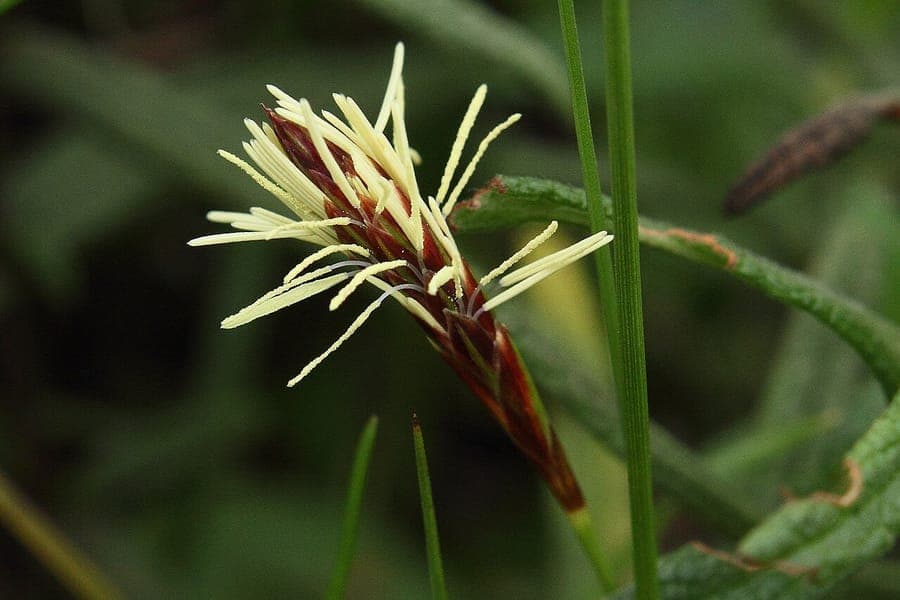
Luis nunes alberto / CC BY-SA 4.0, via Wikimedia Commons
Haller's sedge: complete guide
Carex halleriana
Want to see Haller's sedge: complete guide in your garden?
1 minute, no credit card
Overview
Carex halleriana, commonly known as Haller's sedge, is a compact, evergreen sedge that thrives in shady, moist areas of the garden. Native to rocky slopes and woodland edges across southern Europe and the Mediterranean - including Albania, Corsica, and the Balearic Islands - this tough little plant is gaining popularity among gardeners for its resilience and understated beauty. It forms tight, cushion-like clumps, making it ideal for filling gaps under shrubs, along shaded pathways, or in rock gardens.
At gardenworld.app, you can design a planting scheme that highlights the structural role of Haller's sedge, especially in partially shaded borders. It performs best when planted in groups of five to ten, creating a soft, continuous carpet that stays green all year.
Appearance & bloom cycle
Haller's sedge features narrow, bright green leaves that arch gently and reach 15–25 cm in height. The foliage has a soft, almost feathery texture, adding a delicate contrast to coarser-leaved plants. From March through June, dark brown to nearly black flowering stems rise just above the leaf mound. While not showy in the traditional sense, these blooms add subtle structure and attract tiny pollinators.
The flowers persist for several weeks, slowly fading as seeds form. Even after flowering, the plant retains visual interest due to its evergreen nature. In mild winters, the leaves remain fully green; in harsher conditions, tips may yellow or brown slightly but recover quickly in spring.
Ideal location
This sedge prefers partial to full shade. It excels under deciduous trees, on north-facing slopes, or in east-facing borders where it gets morning light but avoids hot afternoon sun. Full sun is tolerable only if the soil remains consistently moist. In dry, sunny spots, the leaves will scorch and the plant may struggle to spread.
Plant at a density of 7–9 per square metre for full coverage. It works well in woodland gardens, shaded rockeries, or as an edging plant in modern, low-maintenance designs. Pair it with structural companions like Heuchera or Epimedium for a layered effect. Use gardenworld.app to visualise these combinations in your own garden layout.
Soil requirements
The soil should be moist, well-drained, and rich in organic matter. A humus-rich loam or garden soil amended with compost works best. Heavy clay is acceptable if it doesn't stay waterlogged. Sandy soils need improvement with compost or leaf mould to retain moisture. The ideal pH range is slightly acidic to neutral (5.5–7.0).
Avoid dry, compacted, or highly alkaline soils. If the ground dries out too quickly, the sedge will go dormant and lose vigour.
Watering
Haller's sedge has moderate to high water needs. From March to September, keep the soil evenly moist - never soggy, but never bone dry. During dry summers, water deeply once a week, especially for young or newly planted specimens. Rainwater is preferred, as tap water high in lime can discolour the foliage over time.
Mulch with 5 cm of bark or compost in spring to conserve moisture and suppress weeds. Avoid peat-based mulches in the long term due to environmental concerns; coir or leaf compost are better alternatives.
Free design
Want to see Haller's sedge: complete guide in your garden? Make a free design now.
Pruning
Pruning is minimal. In early spring (March), remove any damaged, browned, or tatty leaves with sharp, clean scissors. Cut back only the worst-affected foliage, leaving healthy growth intact. A full chop-down to 5 cm is rarely needed, as the plant naturally renews itself.
Avoid cutting in autumn - evergreen sedges like this one rely on their foliage to photosynthesise through winter.
Maintenance calendar
- Jan: check for slug damage, ensure mulch is still in place
- Feb: inspect for fungal spots, remove any dead material
- Mar: prune lightly, watch for new growth
- Apr: apply a thin layer of compost around the base
- May: maintain moisture, watch for drying edges
- Jun: flowering stems visible, no feeding required
- Jul: monitor during heatwaves, water if needed
- Aug: continue watering, no pruning
- Sep: leave undisturbed, natural dieback minimal
- Oct: check leaf condition, top up mulch if eroded
- Nov: leave standing, no action required
- Dec: tolerate cold; plant remains green in milder zones
Winter hardiness
Haller's sedge is hardy to at least -15 °C, making it suitable for USDA zones 7–9. In the UK, Ireland, and most of Western Europe (zones 7b–8a), it survives winter without protection. Young plants in exposed sites may benefit from a light mulch of dry leaves or horticultural fleece during prolonged frost.
Its evergreen habit is a major asset in winter gardens, providing colour and texture when most perennials are dormant. In colder zones, foliage may yellow slightly but recovers fast in spring.
Companion plants
Pair Haller's sedge with shade-tolerant perennials such as Helleborus niger, Lamium maculatum, Tiarella cordifolia, and Alchemilla mollis. These create a naturalistic, layered planting that thrives in cool, moist conditions.
Avoid aggressive spreaders like mint or ground elder, which can overwhelm the sedge. Instead, use slow-forming, structural plants like Hosta 'Halcyon' or Geranium macrorrhizum for contrast and stability.
Closing
Haller's sedge is a quiet achiever - not flashy, but dependable. It's perfect for gardeners who want low-effort, high-impact ground cover in tricky shady spots. With its fine texture, year-round presence, and easy care, it's a smart choice for modern and traditional gardens alike.
You can find Carex halleriana at garden centres across the UK and Europe. Look for healthy, moist root balls in 1-litre pots. Reputable retailers like garden centres nationwide stock it seasonally. With proper planting and care, Haller's sedge will slowly expand into a lush, weed-suppressing carpet. At gardenworld.app, you can plan your ideal planting scheme around this versatile sedge.
Want to see Haller's sedge: complete guide in your garden? Make a free design now.
Upload a photo, pick a style, and get a photorealistic design with plant list in under a minute.
No credit card required


Similar plants
Flat-stemmed club-rush: complete guide
Bolboschoenus planiculmis
Everything about Bolboschoenus planiculmis: growing conditions, watering, care, and use as a pond margin or wetland plant in garden design.
Great Plains flatsedge: complete guide
Cyperus lupulinus
Everything about Great Plains flatsedge (Cyperus lupulinus): growing conditions, care, garden uses, and ecological value. Tips for pond margins and dry sandy soils.
Golden beak sedge: complete guide
Rhynchospora corymbosa
Everything about golden beak sedge (Rhynchospora corymbosa): a dramatic tropical marginal for pond edges, bog gardens, and wet habitats.