
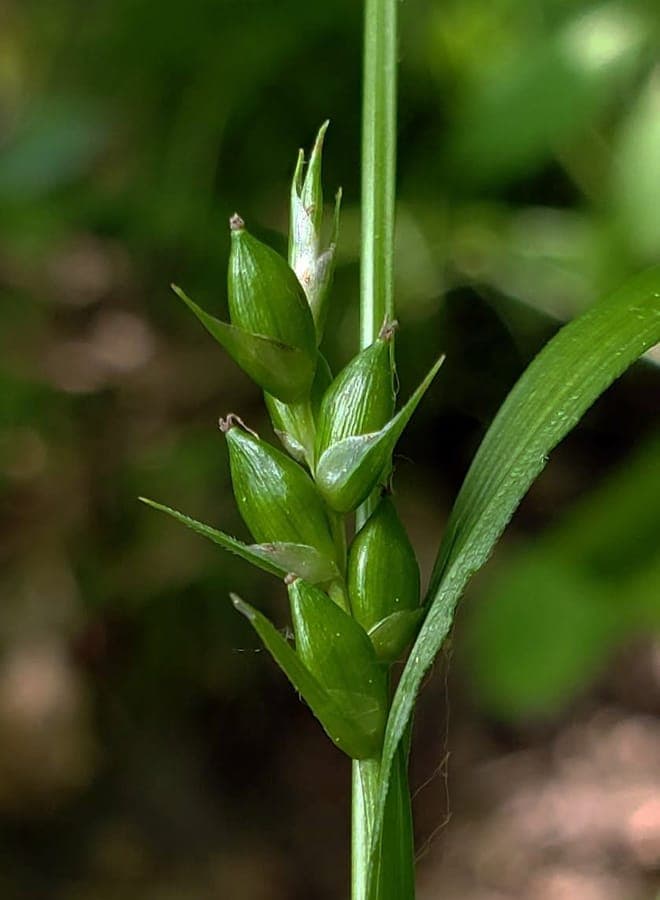
aarongunnar / CC BY 4.0, via Wikimedia Commons
Carex grisea: complete guide
Carex grisea
Want to see Carex grisea: complete guide in your garden?
1 minute, no credit card
Carex grisea, commonly called grey sedge or inflated narrow-leaf sedge, stands out for its spectacular, distinctive inflated fruits. This North American sedge offers robust structure, exceptional ornamental interest, and the reliability that gardeners require in challenging wet sites. If you seek a native sedge that commands attention while solving drainage problems, greyish sedge delivers in abundance.
Overview
Carex grisea belongs to the Cyperaceae family and occurs naturally from eastern Canada through the central and eastern United States. This sedge is instantly recognizable by its distinctive, prominently inflated fruitbodies that create a unique visual signature. Unlike many subtle sedges, grey sedge makes a bold statement in the garden with its conspicuous, hoppy-looking seed heads.
Appearance and Bloom
Grey sedge forms dense, upright clumps reaching 45-60 cm in height. The narrow, greyish-green leaves give the plant its common name and create a refined upright structure. However, the true spectacle arrives in June-July when the distinctively inflated fruits emerge in dense clusters. These swollen, netted perigyniums range from pale yellow-green to whitish-green and resemble miniature hop cones. The fruits persist through autumn, maintaining ornamental interest long after flowers fade. This extended display transforms the garden from mid-summer through frost.
Ideal Location
Grey sedge thrives in partial shade to open sun positions with consistently moist soil. Plant it along stream banks, in rain gardens, at the margins of wet woodlands, and in poorly drained depressions where water collects. The plant accepts drier conditions than many sedges, but truly excels when roots remain consistently moist. Position it where the distinctive fruits catch afternoon light to maximize visual impact.
Soil
This sedge prefers moist to wet, humus-enriched soil. It tolerates clay, silt, and sandy substrates with equal aplomb, provided adequate moisture is maintained. Incorporate 8-10 cm of compost or composted leaf litter at planting to establish optimal growing conditions. Grey sedge shows particular vigor in nutrient-rich, woodland-type soils with abundant organic matter. Slightly acidic to neutral pH (5.5-7.5) suits this species.
Free design
Want to see Carex grisea: complete guide in your garden? Make a free design now.
Watering
Maintain consistent moisture from April through October. This sedge genuinely prefers semi-wet conditions and tolerates regular inundation. Water deeply after planting and continue regular watering until establishment occurs (2-3 seasons). Mature specimens require less supplemental water during normal years but appreciate additional moisture during drought periods. This sedge excels in rain gardens where periodic flooding is expected.
Pruning
Minimal pruning is required. In early spring (April), gently remove dead foliage by hand or with a flat rake. Do not cut back the entire plant; selectively remove only dead material. Allow the ripening seed heads to persist through their display period. Simply combing out accumulated dead material keeps this sedge tidy without diminishing its ornamental assets.
Maintenance Calendar
April: Remove winter-damaged foliage and monitor for sprouting. May-June: Provide consistent moisture as growth accelerates. June-August: Enjoy spectacular fruit display and provide staking if needed for heavy seed loads. September-October: Reduce watering as growth slows. November-March: Dormant period; seed heads provide winter interest before cleanup.
Winter Hardiness
Grey sedge is reliably hardy to USDA zone 4 (-30 degrees Celsius / -22 degrees Fahrenheit). Established plants withstand harsh winter conditions throughout most of North America and northern Europe. The dried seed heads provide winter structure and interest in the dormant garden. No special protection is required in most regions.
Companion Plants
Grey sedge pairs beautifully with tall hosta varieties, ferns, helleborus, and other moisture-loving perennials. The distinctive fruits provide wonderful contrast alongside broad-leaved plants like rodgersia or large-leaved hosta. Combine with early-season bloomers like trillium or Aquilegia for extended seasonal interest. The upright structure works well at the garden's midground, where the fruit display is clearly visible.
Closing Thoughts
Carex grisea is not just a sedge for wet places; it is a spectacular specimen plant that brings natural vigor and distinctive beauty to challenging sites. The remarkable inflated fruits provide months of ornamental interest while the plant quietly solves drainage problems. For gardeners seeking native solutions with genuine visual impact, grey sedge is an essential choice. Find Carex grisea at specialty nurseries and garden centres. Create your ideal wet garden with expert guidance on gardenworld.app - plant recommendations tailored to your space await.
Want to see Carex grisea: complete guide in your garden? Make a free design now.
Upload a photo, pick a style, and get a photorealistic design with plant list in under a minute.
No credit card required


Similar plants
Flat-stemmed club-rush: complete guide
Bolboschoenus planiculmis
Everything about Bolboschoenus planiculmis: growing conditions, watering, care, and use as a pond margin or wetland plant in garden design.
Great Plains flatsedge: complete guide
Cyperus lupulinus
Everything about Great Plains flatsedge (Cyperus lupulinus): growing conditions, care, garden uses, and ecological value. Tips for pond margins and dry sandy soils.
Golden beak sedge: complete guide
Rhynchospora corymbosa
Everything about golden beak sedge (Rhynchospora corymbosa): a dramatic tropical marginal for pond edges, bog gardens, and wet habitats.