
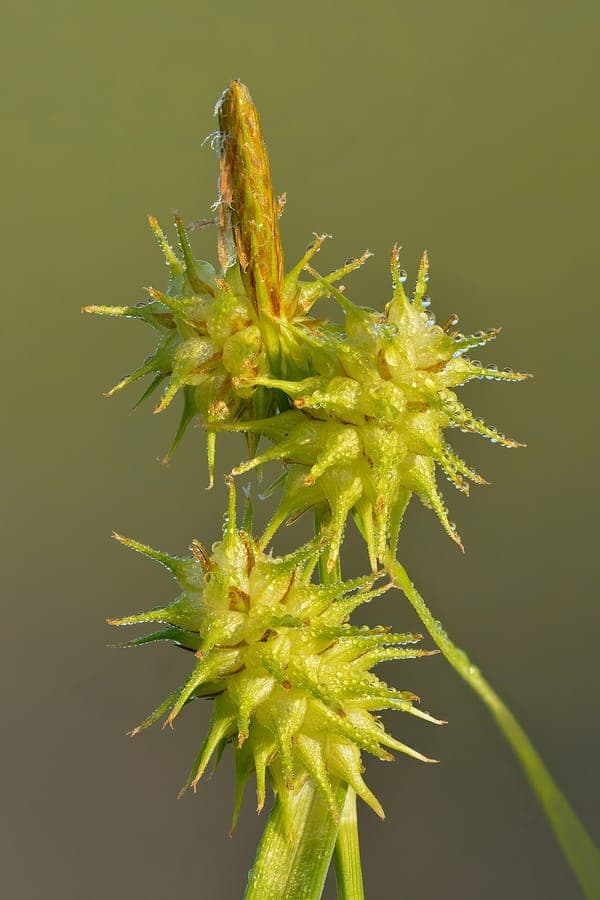
Ivar Leidus / CC BY-SA 4.0, via Wikimedia Commons
Large yellow sedge: complete guide
Carex flava
Want to see Large yellow sedge: complete guide in your garden?
1 minute, no credit card
Overview
Carex flava, commonly known as Large yellow sedge, is a bold, clump-forming perennial sedge that thrives in consistently moist to wet soils. Native across much of Europe, northern Africa, and parts of North America-from Alaska to Alberta and central Russia-it's a reliable choice for wetland gardens, pond margins, and poorly drained areas. This member of the Cyperaceae family grows 60 to 90 cm tall and spreads slowly via rhizomes, forming dense tussocks over time. It's not aggressive, but it does fill out well, making it ideal for naturalistic planting schemes.
Large yellow sedge is semi-evergreen in milder climates, meaning it holds most of its foliage through winter, especially in USDA zones 5-8. It's an excellent option for gardeners dealing with soggy corners or seasonal flooding. Its upright, grass-like form brings vertical rhythm to planting beds, and it pairs beautifully with other moisture-loving perennials.
On gardenworld.app, you can design a custom planting plan that matches Carex flava's moisture needs and growth habit with complementary species.
Appearance & bloom cycle
This sedge stands out with its bright yellow-green, strap-like leaves that are 3 to 6 mm wide and arch slightly at the tips. The foliage emerges in early spring and maintains good colour through the season, turning a soft straw brown in late autumn and winter. In summer-typically from June to August-flowering stems rise slightly above the foliage, bearing 3 to 5 spikelets each. The spikelets are initially greenish, maturing to a dull olive or light brown.
While not showy like garden flowers, the seed heads add texture and movement, especially when backlit by low sun. The plant's narrow, upright form provides year-round structure, making it a valuable asset in naturalistic or rain garden designs. It doesn't produce showy petals-like all sedges, it's wind-pollinated and relies on form rather than fragrance or colour for appeal.
Ideal location
Large yellow sedge grows best in full sun to light shade (around 7 on the light scale, where 10 is full sun). Full sun brings out the brightest yellow-green tones in the foliage, while shade results in deeper green, less vibrant growth. However, sun exposure must be balanced with constant soil moisture-dry soil, especially in full sun, leads to scorched leaf tips and stunted growth.
This plant excels at pond edges, in bog gardens, or in low-lying areas that collect water after rain. It's also suitable for rain gardens, swales, or damp borders. Avoid planting in dry, sandy soils or dense shade under thick tree canopies.
Soil requirements
Carex flava prefers moist, humus-rich clay or loam soils with a pH between 4.5 and 5.0. It tolerates mildly acidic conditions well but struggles in alkaline or calcareous soils, where iron deficiency (chlorosis) can occur-visible as yellowing between the leaf veins. To improve heavy clay soils, mix in compost or well-rotted leaf mould at planting time. For sandy soils, amend with organic matter to boost water retention.
The key is consistent moisture. The soil should never dry out completely, but it doesn't need to be waterlogged. If planting in a pond margin, keep the crown just above water level-no more than 5 cm submerged, and only temporarily.
Free design
Want to see Large yellow sedge: complete guide in your garden? Make a free design now.
Watering
Keep the soil consistently moist, especially during the first growing season. In dry summers, water weekly or more if the top few centimetres of soil start to dry. Established plants are more resilient but still depend on regular moisture. Avoid letting the plant sit in dry soil for more than a few days, particularly in full sun.
Young plants benefit from a 5–7 cm mulch layer of wood chips or straw to conserve moisture and suppress weeds. Replenish the mulch annually in spring.
Pruning
Pruning is minimal. In late winter or early spring (February to March), cut back old, damaged, or tattered foliage to about 10–15 cm above ground level. Use sharp shears for clean cuts. Avoid cutting too early in winter, as the old leaves provide frost protection for the crown.
If the clump becomes sparse in the centre after several years, divide the plant in early spring. Replant the outer, vigorous sections and discard the woody core. This rejuvenates growth and maintains a tidy appearance.
Maintenance calendar
- January: Check for frost damage; leave old growth intact.
- February: Begin cleanup; remove loose debris.
- March: Cut back old foliage; divide if needed.
- April: Monitor for new growth; check soil moisture.
- May: Growth accelerates; no special care required.
- June–August: Blooming period; ensure consistent moisture.
- September: Reduce watering slightly, but maintain damp soil.
- October: Leave foliage in place for winter protection.
- November: Check drainage; prevent prolonged waterlogging.
- December: Protect young plants with mulch in harsh winters.
Winter hardiness
Large yellow sedge is fully hardy in USDA zones 4–8, tolerating winter lows down to -30°C. It remains semi-evergreen in milder zones, providing winter interest. Old foliage insulates the crown, so don't cut it back too early. In exposed sites or severe winters, a light mulch of pine needles or leaf litter helps protect the base.
Companion plants
Pair Carex flava with other moisture-loving plants like Iris pseudacorus, Filipendula ulmaria, Molinia caerulea, and Caltha palustris. For contrast, combine with dark-leaved ferns or purple-tinged sedges like Carex elata 'Aurea'. It also works well near water with Mentha aquatica or Lysimachia nummularia.
Plant in groups of 5–7 for impact. On gardenworld.app, you can map out a planting scheme that includes spacing, seasonal colour, and care reminders for each plant.
Closing
Large yellow sedge is a tough, attractive, and low-maintenance choice for wet areas in the garden. It brings structure, texture, and year-round presence without demanding much. Whether you're tackling a soggy corner or designing a naturalistic pond edge, Carex flava delivers. Just give it sun to light shade, acidic moist soil, and a little patience in the first season. Find it at garden centres like those in the UK, and trust it to thrive where other grasses struggle.
Want to see Large yellow sedge: complete guide in your garden? Make a free design now.
Upload a photo, pick a style, and get a photorealistic design with plant list in under a minute.
No credit card required


Similar plants
Flat-stemmed club-rush: complete guide
Bolboschoenus planiculmis
Everything about Bolboschoenus planiculmis: growing conditions, watering, care, and use as a pond margin or wetland plant in garden design.
Great Plains flatsedge: complete guide
Cyperus lupulinus
Everything about Great Plains flatsedge (Cyperus lupulinus): growing conditions, care, garden uses, and ecological value. Tips for pond margins and dry sandy soils.
Golden beak sedge: complete guide
Rhynchospora corymbosa
Everything about golden beak sedge (Rhynchospora corymbosa): a dramatic tropical marginal for pond edges, bog gardens, and wet habitats.