
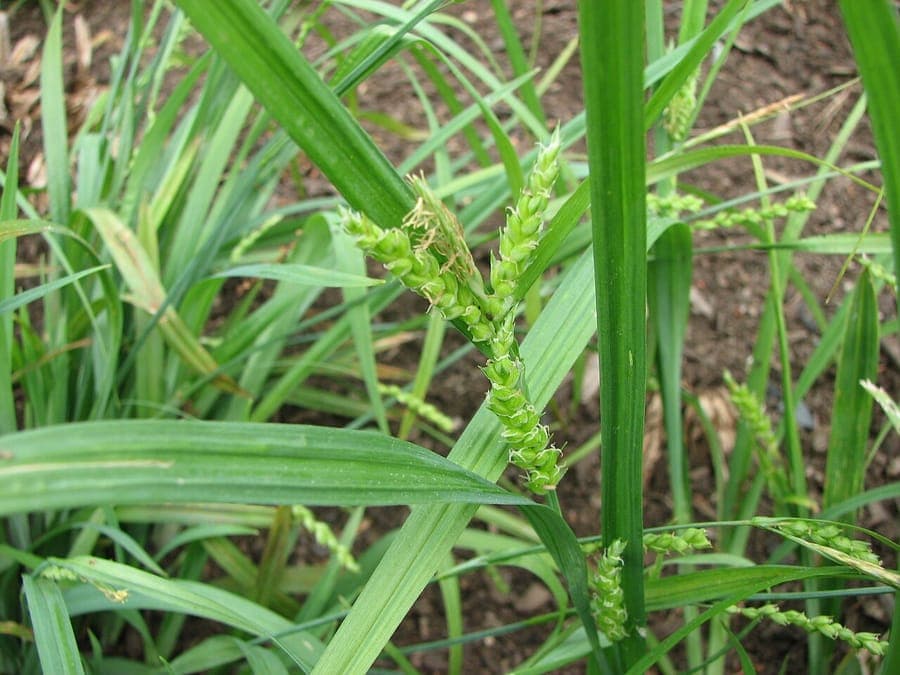
Choess / CC BY-SA 3.0, via Wikimedia Commons
Carex flaccosperma: complete guide
Carex flaccosperma
Want to see Carex flaccosperma: complete guide in your garden?
1 minute, no credit card
Overview
Carex flaccosperma, commonly known as Thinfruit sedge, is an elegant ornamental grass native to central and southeastern North America. This refined plant belongs to the Cyperaceae family and is distinguished by its fine, delicate foliage structure. Growing naturally in moist pockets and woodland margins, it adapts gracefully to variable conditions.
In temperate gardens, Carex flaccosperma excels in shaded locations where many plants struggle. Its slender growth habit adds architectural interest without dominance, making it perfect for integration into existing borders and woodland schemes.
Appearance and Bloom
Carex flaccosperma forms an elegant, compact fountain of fine, ribbon-like foliage in yellow-green to mid-green tones. The plant reaches heights of 30 to 50 centimeters and maintains a rounded, refined silhouette. The exceptionally thin leaves distinguish it from many other sedge species, creating a particularly refined appearance.
Flowering occurs late spring through early summer, though the blooms are subtle rather than ornamental. True beauty lies in the continuous architectural leaf structure throughout the growing season. This persistent form makes it invaluable as a structural element in the garden.
Ideal Location
Carex flaccosperma thrives in part shade to full shade conditions. Direct sun exposure can scorch the foliage, particularly during hot spells. The plant appreciates sheltered positions beneath deciduous trees or on the north and east-facing sides of buildings.
This sedge suits woodland borders, pond-side plantings, and shaded garden rooms beautifully. Use it to soften empty corners and as a sophisticated backdrop for colorful flowering companions. Combine with hostas, ferns, and other woodland specimens for cohesive shade schemes.
Soil
Ideal soil for Carex flaccosperma is consistently moist yet well-draining. A clay-based soil rich in organic matter works excellently. Ensure water does not stagnate, as prolonged waterlogging causes root rot.
Amend sandy soils with compost or peat to improve water retention. A pH between 5.5 and 7.5 is optimal, though this species tolerates moderate variation. Avoid extremely acidic or alkaline extremes.
Free design
Want to see Carex flaccosperma: complete guide in your garden? Make a free design now.
Watering
Carex flaccosperma requires regular moisture, especially during spring and summer growth periods. The soil surface should never completely dry out, nor should it remain waterlogged. Water when the top 2 to 3 centimeters feel dry to touch.
Rainy periods typically eliminate supplemental watering needs. During dry summers, check soil daily and irrigate if necessary. Mulching around the plant base improves moisture retention and temperature regulation.
Pruning
Carex flaccosperma demands minimal pruning. Remove dead or yellowed leaves in early spring before new growth emerges. This maintains neatness and encourages vigorous new shoots.
Use sharp, disinfected pruning tools. This sedge grows compact and tidy without aggressive cutting, making maintenance straightforward.
Maintenance Calendar
Spring (March-May): Remove winter damage, apply compost, ensure consistent moisture. Summer (June-August): Water regularly during dry spells, monitor for disease. Autumn (September-November): Reduce maintenance as growth slows. Winter (December-February): No supplemental watering needed during frost periods.
Winter Hardiness
Carex flaccosperma is completely winter hardy to -15 to -18 degrees Celsius. It overwinters reliably in temperate regions without special protection. Foliage may discolor slightly in harsh winters, which is purely cosmetic and resolves when growth resumes.
In extreme cold, a light mulch around the plant provides root zone insulation. Remove this mulch as spring approaches to restore air circulation.
Companion Plants
Carex flaccosperma pairs beautifully with fellow shade-lovers including Astilbe, Hosta, Polystichum (winter fern), and Liriope. It provides elegant scaffolding for flowering groundcovers and complementary structural plants.
Excellent companions include Brunnera, Tiarella, and compact fuchsia varieties. The sedge's fine texture contrasts wonderfully with larger, sculptural foliage forms.
Closing
Carex flaccosperma is an underrated gem for shaded garden cultivation. Its refined elegance and low-maintenance nature suit contemporary designs beautifully. With attention to moisture and positioning, this sedge becomes a continuously valuable element rewarding year-round garden interest.
Source Carex flaccosperma from quality garden retailers. Visit gardenworld.app for more plant guides and integrate this refined sedge into your outdoor space.
Want to see Carex flaccosperma: complete guide in your garden? Make a free design now.
Upload a photo, pick a style, and get a photorealistic design with plant list in under a minute.
No credit card required


Similar plants
Flat-stemmed club-rush: complete guide
Bolboschoenus planiculmis
Everything about Bolboschoenus planiculmis: growing conditions, watering, care, and use as a pond margin or wetland plant in garden design.
Great Plains flatsedge: complete guide
Cyperus lupulinus
Everything about Great Plains flatsedge (Cyperus lupulinus): growing conditions, care, garden uses, and ecological value. Tips for pond margins and dry sandy soils.
Golden beak sedge: complete guide
Rhynchospora corymbosa
Everything about golden beak sedge (Rhynchospora corymbosa): a dramatic tropical marginal for pond edges, bog gardens, and wet habitats.