
Krzysztof Ziarnek, Kenraiz / CC BY-SA 4.0, via Wikimedia Commons
Elongated sedge: complete guide
Carex elongata
Want to see Elongated sedge: complete guide in your garden?
1 minute, no credit card
Overview
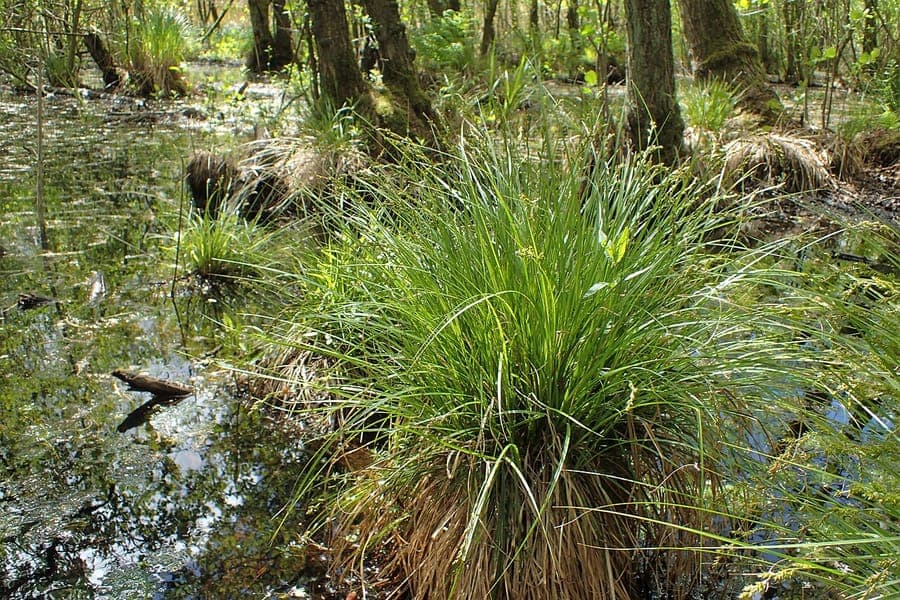
Carex elongata, commonly known as elongated sedge, is a graceful perennial grass-like plant from the Cyperaceae family. Native to wet woodlands and stream banks across Central and Northern Europe - including Austria, Finland, the Baltic States, and parts of Russia - it thrives in consistently moist soils and partial shade. This sedge reaches 60–90 cm in height and forms dense, upright clumps with narrow, soft-textured green foliage that adds vertical interest without overwhelming neighbouring plants.
One of the standout traits of elongated sedge is its resilience in wet areas where many garden plants struggle. It's ideal for rain gardens, pond margins, or low-lying spots that collect water. It's hardy in USDA zones 5 to 9, meaning it tolerates winter temperatures down to -20°C. Unlike flashy ornamentals, its beauty lies in subtlety - clean lines, sustained presence, and structure through the seasons.
On gardenworld.app, you can design a planting scheme that highlights elongated sedge in damp or shaded areas, pairing it with compatible moisture-loving species.
Appearance & bloom cycle
The foliage of Carex elongata is bright to medium green, with blades 2–4 mm wide and up to 80 cm long. They grow in tight basal tufts, creating a fountain-like form. From April through June, slender flowering stems rise 10–20 cm above the leaves, bearing narrow, cylindrical brown inflorescences. These aren't showy in the traditional sense, but their elongated shape and texture add quiet elegance.
The brown spikes persist into late summer and even winter, providing visual interest when many perennials have died back. In frosty conditions, the dried stems take on a silvery hue, contrasting beautifully with snow or frozen ground. While not a nectar source for pollinators, the seeds may attract finches and other small birds in autumn.
Ideal location
Elongated sedge prefers partial shade, rated at 4 out of 10 on the light scale (where 10 is full sun). It performs best under deciduous trees, on the north side of structures, or in areas that receive only morning or late afternoon sun. Avoid hot, direct midday sun, especially in southern regions, as this can scorch the leaves and dry out the soil too quickly.
It's an excellent choice for wet or poorly drained areas. Plant it along pond edges, in rain gardens, or in shaded depressions where water collects. It will struggle in dry, sandy soils unless amended heavily with organic matter.
Soil requirements
The ideal soil pH for elongated sedge is neutral to slightly alkaline, between 7.0 and 7.5. The soil should be rich in organic matter, consistently moist, and well-aerated without being waterlogged for extended periods (unless in a true bog setting). Clay or loamy soils work well, especially if enriched with compost at planting time.
If planting in sandy soil, mix in generous amounts of compost or leaf mould to improve water retention. Mulching with bark or straw in spring helps maintain moisture and suppress weeds.
Free design
Want to see Elongated sedge: complete guide in your garden? Make a free design now.
Watering
Consistent moisture is key. From March to October, ensure the soil never fully dries out. During dry spells, water deeply once a week - more often in containers or exposed sites. In naturally wet areas, supplemental irrigation is usually unnecessary.
If grown in pots, use a moisture-retentive potting mix and check daily in summer. Elevate containers slightly to avoid root rot from standing water, but don't let them dry out completely.
Pruning
Elongated sedge requires minimal pruning. In late winter or early March, cut back old, damaged, or tattered foliage to about 10–15 cm above the ground. This encourages fresh, upright growth and keeps the clump looking tidy. Avoid cutting too early in winter, as the old leaves provide some frost protection.
Leave flower stems intact through autumn and early winter to support wildlife and add winter texture. Remove them when cleaning up in early spring.
Maintenance calendar
- January: Monitor for frost damage; leave foliage in place.
- February: Prepare for spring; begin light cleanup.
- March: Cut back old growth to 10–15 cm; check soil moisture.
- April: New growth emerges; watch for slugs.
- May: Bloom period begins; keep soil moist.
- June: In full bloom; no feeding required.
- July–August: Monitor for drought stress; water as needed.
- September: Reduce watering; allow seeds to develop.
- October: Apply mulch; no major tasks.
- November–December: Dormant; no maintenance needed.
Winter hardiness
Hardy in USDA zones 5–9, elongated sedge withstands winter lows of -20°C. The plant remains semi-evergreen in milder climates, with some foliage staying green or turning light brown. In colder zones, top growth may collapse under snow or ice, but the crown survives underground.
No special winter protection is needed. Avoid heavy mulching directly over the crown, which can encourage rot. A light leaf litter layer is sufficient.
Companion plants
Pair elongated sedge with other moisture-loving perennials like royal fern (Osmunda regalis), lady's mantle (Alchemilla mollis), or Japanese snakebones (Lysimachia clethroides). It also works well with hostas, astilbes, and shade-tolerant sedges like Carex3300 or Carex vulpinoidea.
For contrast, combine with bold-leaved plants like rodgersia or gunnera in large-scale designs, or use it as a soft backdrop for white-flowering anemones. Avoid pairing with drought-tolerant species like lavender or sedum.
On gardenworld.app, use the companion planting tool to build a moisture-rich border that includes elongated sedge and its ideal partners.
Closing
Carex elongata is a low-maintenance, reliable sedge for damp, shady corners where few plants thrive. Its elegant form, seasonal persistence, and wildlife value make it a smart choice for naturalistic gardens. With proper siting and consistent moisture, it will grow for years with little intervention. Look for it at garden centres across the UK and US, or in Europe at retailers like OBI and Truffaut. Plant in spring or early autumn for best establishment. Once settled, it asks for little but gives much in return.
Want to see Elongated sedge: complete guide in your garden? Make a free design now.
Upload a photo, pick a style, and get a photorealistic design with plant list in under a minute.
No credit card required


Similar plants
Flat-stemmed club-rush: complete guide
Bolboschoenus planiculmis
Everything about Bolboschoenus planiculmis: growing conditions, watering, care, and use as a pond margin or wetland plant in garden design.
Great Plains flatsedge: complete guide
Cyperus lupulinus
Everything about Great Plains flatsedge (Cyperus lupulinus): growing conditions, care, garden uses, and ecological value. Tips for pond margins and dry sandy soils.
Golden beak sedge: complete guide
Rhynchospora corymbosa
Everything about golden beak sedge (Rhynchospora corymbosa): a dramatic tropical marginal for pond edges, bog gardens, and wet habitats.