
A.Poirel / CC BY-SA 2.0 fr, via Wikimedia Commons
Divided sedge: complete guide
Carex divisa
Want to see Divided sedge: complete guide in your garden?
1 minute, no credit card
Overview
Carex divisa, commonly known as divided sedge, is a resilient and understated ornamental grass-like plant that brings year-round structure to shaded, damp areas of the garden. Native to parts of Europe and Western Asia, it thrives in conditions where many other perennials struggle. As a member of the Cyperaceae family, it's not a true grass but shares a similar growth habit. It's perfect for gardeners looking to add texture without high maintenance.
On gardenworld.app, you can design a garden layout that makes the most of Carex divisa's preference for moist, shaded spots. Whether you're dealing with a wet corner near a downpipe or a shady bank under trees, this plant fits right in.
Appearance & bloom cycle
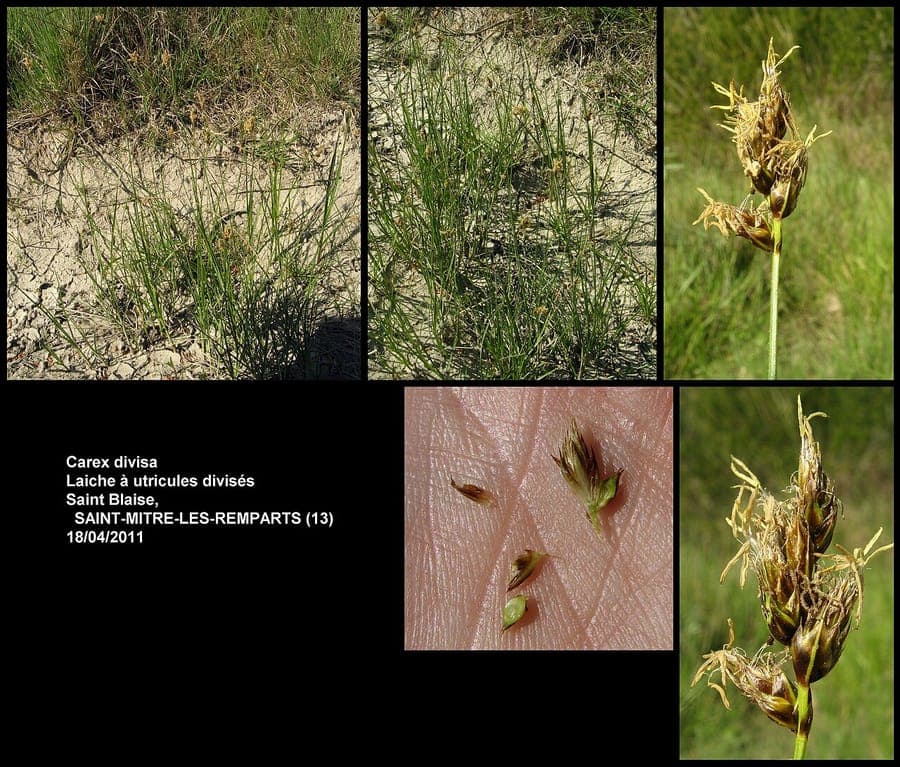
Divided sedge forms dense, tufted clumps reaching 20–30 cm in height, with narrow, tapering leaves that arch gently outward. The foliage is a rich dark green, sometimes with a bronze tinge in cooler months. From April to May, it produces slender, inconspicuous flowering stems topped with small greenish-brown spikelets. These aren't showy, but they add subtle interest and support pollinators.
The fruit is a tiny achene enclosed in a distinctive bifid utricle-hence the name "divisa." While not a flowering star, its evergreen nature ensures visual presence throughout winter, especially in milder climates. In colder zones, tips may brown but the plant rebounds quickly in spring.
Ideal location
Carex divisa prefers partial to full shade. It does well under deciduous trees, along pond margins, or in woodland gardens. While it can tolerate light morning sun, avoid hot afternoon exposure, which can dry out the soil too quickly. South- and west-facing beds are only suitable if moisture is consistently maintained.
Avoid dry, sandy, or overly exposed sites. This sedge isn't drought-tolerant. If you're unsure about light conditions in your garden, use gardenworld.app to map sun exposure and moisture levels before planting.
Soil requirements
It thrives in moist, well-drained soils rich in organic matter. Ideal pH ranges from 5.5 to 7.0 (slightly acidic to neutral). In sandy soils, amend with compost or leaf mould to improve water retention. In clay soils, ensure good drainage to prevent winter waterlogging.
Avoid heavy fertilisation. This plant grows naturally in nutrient-poor conditions and responds poorly to excess nitrogen, which can lead to floppy, leggy growth. A light mulch of compost in early spring is sufficient.
Watering
Consistent moisture is key. Water weekly during dry spells from April to September, especially in the first year. Young plants need more frequent watering-every 2–3 days during prolonged drought. Use rainwater when possible, as tap water with high lime content can affect long-term health.
Reduce watering in autumn and winter, but never let the soil dry out completely. In freezing conditions, a thin layer of mulch helps protect the crown.
Free design
Want to see Divided sedge: complete guide in your garden? Make a free design now.
Pruning
Minimal pruning is required. In late winter or early spring (February to March), trim back any dead, damaged, or unsightly foliage with sharp shears. Cut to about 5–10 cm above the crown, taking care not to damage new shoots. Avoid cutting too low, as this delays regrowth.
If the center of the clump becomes sparse after 4–5 years, divide the plant in early spring. Lift the clump and split into sections of at least 10 cm diameter using a sharp spade or knife. Replant immediately.
Maintenance calendar
- January: Check for frost damage, apply mulch if needed
- February: Remove dead leaves, inspect for pests
- March: Divide overcrowded clumps, final tidy-up
- April: Begin regular watering, monitor soil moisture
- May: No feeding, watch for weed competition
- June: Water during dry periods, check for fungal issues
- July: Maintain moisture, avoid waterlogging
- August: Continue watering in droughts, no pruning
- September: Gradually reduce irrigation
- October: Leave foliage for winter protection
- November: Ensure good drainage, no active care
- December: Protect young plants with leaf litter if severe frost expected
Winter hardiness
Carex divisa is hardy in USDA zones 6–8, surviving temperatures down to -20°C. In zone 6, a light mulch helps protect the root zone during prolonged freezes. While the foliage may yellow or brown in harsh winters, the plant reliably renews itself in spring.
It holds its shape well and provides winter texture, making it a valuable addition to off-season gardens.
Companion plants
Pair divided sedge with other moisture-loving, shade-tolerant perennials like Hosta, Ferns (Dryopteris spp.), Astilbe, or Tellima grandiflora. These share similar soil and light needs and create layered, naturalistic plantings.
Avoid invasive spreaders like mint or bamboo. Under shrubs like Fatsia japonica or Cornus alba, Carex divisa adds a soft, ground-hugging contrast. Plant in groups of 5–7 for best visual impact.
Closing
Divided sedge may not grab attention like a blooming perennial, but its quiet reliability and structural presence make it a garden essential. It solves tricky damp, shady spots with ease and requires little upkeep. Once established, it's virtually carefree.
You can find Carex divisa at garden centres across the UK and Ireland. Look for healthy, moisture-retentive root balls without signs of drying. Plant in spring or early autumn for best results. Use gardenworld.app to visualise how it fits into your overall garden design and to explore companion planting ideas.
Want to see Divided sedge: complete guide in your garden? Make a free design now.
Upload a photo, pick a style, and get a photorealistic design with plant list in under a minute.
No credit card required


Similar plants
Flat-stemmed club-rush: complete guide
Bolboschoenus planiculmis
Everything about Bolboschoenus planiculmis: growing conditions, watering, care, and use as a pond margin or wetland plant in garden design.
Great Plains flatsedge: complete guide
Cyperus lupulinus
Everything about Great Plains flatsedge (Cyperus lupulinus): growing conditions, care, garden uses, and ecological value. Tips for pond margins and dry sandy soils.
Golden beak sedge: complete guide
Rhynchospora corymbosa
Everything about golden beak sedge (Rhynchospora corymbosa): a dramatic tropical marginal for pond edges, bog gardens, and wet habitats.