
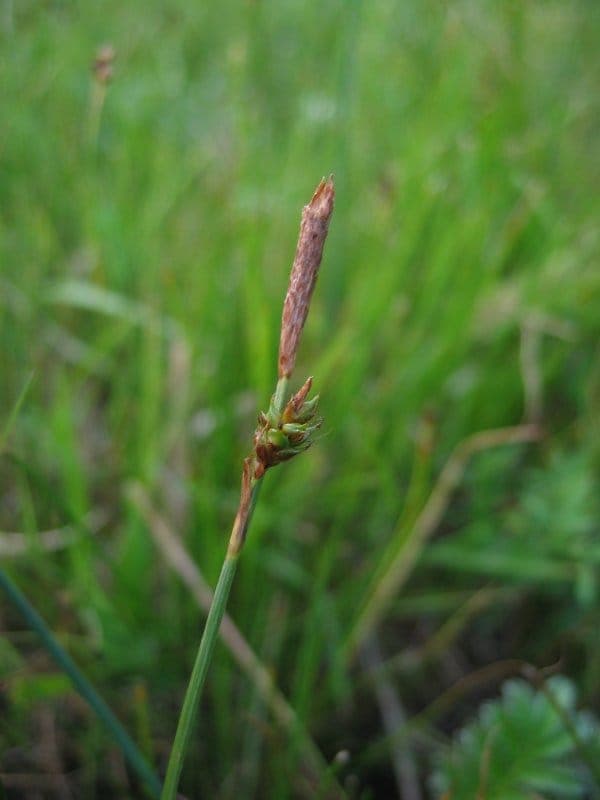
Kristian Peters -- Fabelfroh 16:20, 8 July 2006 (UTC) / CC BY-SA 3.0, via Wikimedia Commons
Distant sedge: complete guide
Carex distans
Want to see Distant sedge: complete guide in your garden?
1 minute, no credit card
Overview
Carex distans, commonly known as distant sedge, is a refined, clump-forming perennial that brings subtle elegance to moist garden areas. A member of the Cyperaceae family, it's native to regions across Central and Western Europe, including Austria, Belgium, the Baltic States, and parts of Eastern Europe. Unlike aggressive grasses, this sedge spreads slowly, forming neat mounds 30 to 50 cm tall and wide. It's ideal for naturalistic planting schemes, pond edges, damp woodland borders, or shaded corners where other plants struggle.
Distant sedge isn't about bold color or dramatic blooms - it's about texture, movement, and year-round presence. It stays semi-evergreen in milder climates, keeping some foliage through winter, which adds structure when the garden is otherwise dormant. On gardenworld.app, you can design a planting plan that integrates Carex distans seamlessly into a moisture-rich, shade-tolerant garden layout.
Appearance & bloom cycle
The foliage of Carex distans is narrow, arching, and a soft light green, growing in a fountain-like habit from a central crown. Leaves reach 20–40 cm in length and remain slender and flexible. From May to July, delicate, widely spaced flower spikes emerge, rising up to 50 cm above the foliage. These inflorescences are pale brown or beige, not flashy, but they catch the light beautifully and sway gently in the breeze, adding a sense of airiness.
There's no colorful petal display, but the plant's appeal lies in its fine texture and subtle seasonal shifts. In autumn, the leaves may take on a golden-green hue, slowly browning in colder zones. Still, even in winter, the upright form and persistent blades provide visual interest.
Ideal location
This sedge thrives in partial shade - think dappled light under deciduous trees or along the north-facing edge of shrubbery. It can tolerate full sun, but only if the soil remains consistently moist. In dry, sunny spots, leaf tips will scorch and turn brown. Aim for 3–6 hours of indirect sunlight daily.
It's an excellent candidate for rain gardens, wet meadows, or the margins of ponds and streams. Container growing is possible, provided you water regularly. Avoid hot, dry south-facing borders unless you're committed to irrigation.
Soil requirements
Use moist, humus-rich, well-drained soil. Heavy clay can work if it doesn't become waterlogged; silt or loam is ideal. Sandy soils are too fast-draining unless amended with compost or leaf mould to retain moisture. The pH should be slightly acidic to neutral (5.5–7.0).
When planting, mix in generous amounts of organic matter - composted manure or leaf compost works well. A spring mulch of compost helps retain moisture and suppress weeds without smothering the crown.
Free design
Want to see Distant sedge: complete guide in your garden? Make a free design now.
Watering
Keep the soil consistently moist, especially in the first growing season. Young plants need watering every few days during dry spells. Mature clumps are somewhat drought-tolerant but perform best with regular moisture. During hot, dry summers, deep watering once a week is better than daily sprinkling.
Rainwater is preferred - distant sedge can show leaf tip burn when irrigated with hard tap water due to lime sensitivity.
Pruning
Pruning is minimal. In late winter or early spring (February to March), gently comb through the clump by hand to remove old, damaged, or browned foliage. Avoid cutting the entire plant back - it can delay new growth. Removing dead material improves airflow and reduces fungal risk.
Spent flower spikes can be left in place for winter texture and to support overwintering insects. Remove only if you prefer a tidier appearance.
Maintenance calendar
- January: Check clumps for frost heave or damage. Keep area clear of heavy snow.
- February: Begin cleanup - remove dead leaves.
- March: Complete foliage cleanup. Apply light organic feed if desired.
- April: Growth resumes. Monitor soil moisture.
- May: Flower spikes emerge. No extra care needed.
- June: Peak flowering. Maintain moisture.
- July: Blooming ends. Continue regular watering.
- August: Watch for drought stress. Increase watering in heatwaves.
- September: Growth slows. Prepare for dormancy.
- October: Mulch with compost to retain moisture and insulate roots.
- November: No action required.
- December: Final check for winter protection in harsh zones.
On gardenworld.app, you can generate a custom care calendar based on your local climate and planting zone.
Winter hardiness
Carex distans is hardy to USDA zone 5 (-20°C). In most of the UK, Ireland, and northern Europe, it survives winter without protection. In areas with severe freezes or repeated freeze-thaw cycles, a 5 cm layer of mulch (leaf mould or bark chips) can prevent root disturbance. Avoid plastic covers - the plant needs air circulation.
Companion plants
Pair distant sedge with other moisture-loving perennials like Astilbe, Ligularia, or Iris versicolor. For contrast, try white-flowered Anemone nemorosa or the silver foliage of Lamium maculatum. Ferns such as Dryopteris affinis add depth and share similar growing conditions.
Avoid pairing with drought-tolerant plants like lavender or sedum - their needs clash too much.
Closing
Distant sedge won't grab attention, but it creates atmosphere. It's the quiet backbone of a natural garden - soft, structural, and resilient. Perfect for low-maintenance designs with a wild, ecological feel. Available at garden centres across the UK and online. Look for healthy, green clumps without browning tips. Retailers like garden centres often stock it in spring, or you can order through platforms that support native wetland species.
Want to see Distant sedge: complete guide in your garden? Make a free design now.
Upload a photo, pick a style, and get a photorealistic design with plant list in under a minute.
No credit card required


Similar plants
Flat-stemmed club-rush: complete guide
Bolboschoenus planiculmis
Everything about Bolboschoenus planiculmis: growing conditions, watering, care, and use as a pond margin or wetland plant in garden design.
Great Plains flatsedge: complete guide
Cyperus lupulinus
Everything about Great Plains flatsedge (Cyperus lupulinus): growing conditions, care, garden uses, and ecological value. Tips for pond margins and dry sandy soils.
Golden beak sedge: complete guide
Rhynchospora corymbosa
Everything about golden beak sedge (Rhynchospora corymbosa): a dramatic tropical marginal for pond edges, bog gardens, and wet habitats.