
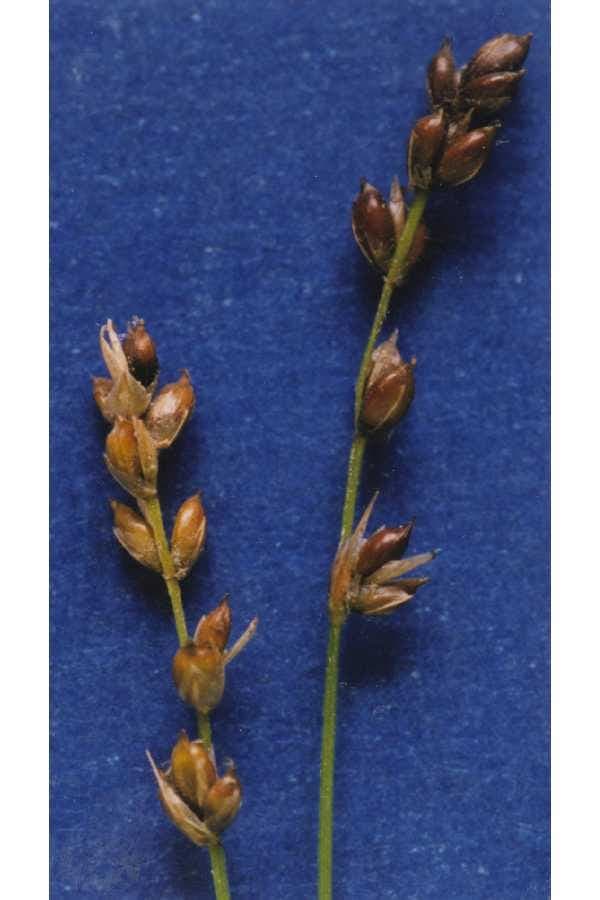
Hurd, E.G., N.L. Shaw, J. Mastrogiuseppe, L.C. Smithman, and S. Goodrich. / Public domain, via Wikimedia Commons
Softleaf sedge: complete guide
Carex disperma
Want to see Softleaf sedge: complete guide in your garden?
1 minute, no credit card
Overview
Carex disperma, commonly known as Softleaf sedge, is a quiet achiever in the world of garden plants. Native to cool forests and wetlands across Alaska, Canada, and parts of northern Europe, it thrives where many other plants struggle. This isn't a flashy plant – no bold flowers or dramatic height – but it brings something rarer: elegance, consistency, and adaptability. If you've got a damp, shady corner that needs greenery, this sedge might be your best bet.
On gardenworld.app, you can design a planting scheme that highlights the subtle beauty of Carex disperma, whether you're filling a woodland edge or softening a pond margin. The app helps you visualise spacing, companion plants, and seasonal changes so you're never guessing.
Appearance & bloom cycle
Softleaf sedge forms loose, arching clumps of fine-textured foliage. The blades are narrow, about 3–6 mm wide, and grow 20–30 cm tall. They're a soft, fresh green with a slight sheen, moving gently in the breeze. In early spring, typically March to May, slender brownish flower spikes rise just above the foliage. They're not showy, but they add a delicate texture to the plant's overall look.
The plant stays evergreen in milder climates (USDA zones 5–8), turning bronze or straw-colored in winter but rarely dying back completely. This persistent presence adds structure when little else is green.
Ideal location
This sedge loves partial to full shade. It's perfect under deciduous trees, along stream banks, or in shaded rain gardens. Avoid hot, dry, south-facing spots – the leaves scorch easily in midday sun, especially if the soil dries out.
The sweet spot is a cool, north- or east-facing area where morning light filters through but the soil stays moist. If you're planting near a water feature, that's even better – the natural humidity suits it perfectly. On gardenworld.app, you can map microclimates in your garden to find the ideal spot for this moisture-loving plant.
Soil requirements
Softleaf sedge prefers rich, humusy, moisture-retentive soil. Think forest floor: high in organic matter, loose, and slightly acidic to neutral (pH 5.5–7.0). It doesn't like sandy or compacted soils that drain too quickly.
Improve poor soil with compost, leaf mold, or well-rotted manure. A 5 cm layer of mulch in spring helps retain moisture and suppress weeds. Avoid synthetic fertilisers – this plant evolved in low-nutrient wetlands and thrives without heavy feeding.
Free design
Want to see Softleaf sedge: complete guide in your garden? Make a free design now.
Watering
Keep the soil consistently moist, especially during the first year. In dry spells, water deeply twice a week. Established plants are more resilient but still need supplemental watering in prolonged droughts.
Rainwater is ideal – this sedge can be sensitive to high calcium levels in tap water. If you're using irrigation, try to water at soil level to prevent fungal issues on the leaves.
Pruning
Pruning is minimal. In late winter or early spring (February–March), trim back any tattered or discolored foliage with clean shears. Don't cut into the crown – just tidy the outer leaves. Every 4–5 years, if the clump gets too dense or starts lifting from the soil, divide it in early spring.
Use a spade to lift and split the root ball, replanting divisions 25–30 cm apart. This reinvigorates growth and prevents die-out in the center.
Maintenance calendar
- Jan: Check for winter damage; leave mulch in place
- Feb: Light cleanup of old foliage
- Mar: Divide if needed; watch for new growth
- Apr: Apply organic mulch; monitor soil moisture
- May: Observe flowering; no feeding required
- Jun: Water regularly during dry periods
- Jul: Maintain moisture; avoid overhead watering
- Aug: Watch for heat stress in dry spells
- Sep: No action; plant prepares for dormancy
- Oct: Leave fallen leaves as natural mulch
- Nov: Final moisture check before winter
- Dec: Minimal care; plant is dormant
Winter hardiness
Carex disperma is hardy in USDA zones 4–8 (-34°C to -12°C). It handles cold winters well, especially with a protective layer of mulch. In zone 4, it may die back more but returns reliably in spring.
Container-grown plants need extra protection – wrap the pot or move it to a sheltered spot. Avoid exposing roots to repeated freeze-thaw cycles.
Companion plants
Pair Softleaf sedge with plants that share its preferences: Hosta, Heuchera, ferns (like Athyrium), and Pulmonaria. These combinations create layered texture and year-round interest.
For wet areas: plant alongside Joe-Pye weed (Eutrochium), Iris versicolor, or other Carex species like C. vulpinoidea. It also works well in formal edges when planted in drifts along pathways.
Closing
Carex disperma won't steal the spotlight, but it holds the garden together. It's reliable, beautiful in a quiet way, and fills challenging spots with grace. Whether you're a beginner or a seasoned gardener, this sedge earns its place in the shade.
Find it at local garden centres or trusted retailers like those listed on gardenworld.app. With a little attention to moisture and shade, Softleaf sedge becomes a dependable part of your garden's backbone for years to come.
Want to see Softleaf sedge: complete guide in your garden? Make a free design now.
Upload a photo, pick a style, and get a photorealistic design with plant list in under a minute.
No credit card required


Similar plants
Flat-stemmed club-rush: complete guide
Bolboschoenus planiculmis
Everything about Bolboschoenus planiculmis: growing conditions, watering, care, and use as a pond margin or wetland plant in garden design.
Great Plains flatsedge: complete guide
Cyperus lupulinus
Everything about Great Plains flatsedge (Cyperus lupulinus): growing conditions, care, garden uses, and ecological value. Tips for pond margins and dry sandy soils.
Golden beak sedge: complete guide
Rhynchospora corymbosa
Everything about golden beak sedge (Rhynchospora corymbosa): a dramatic tropical marginal for pond edges, bog gardens, and wet habitats.