
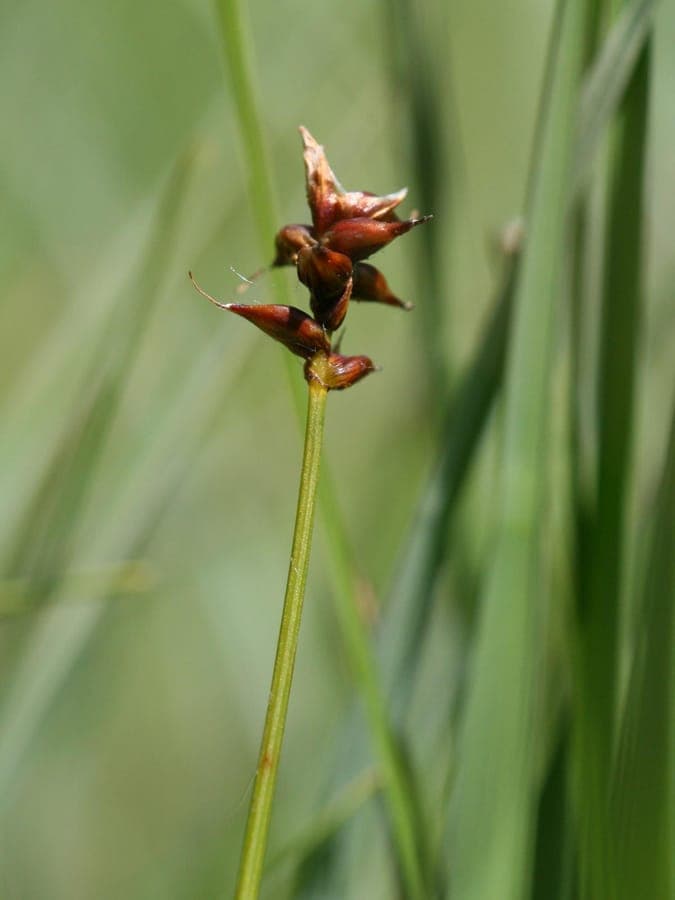
Kristian Peters -- Fabelfroh 14:42, 27 June 2007 (UTC) / CC BY-SA 3.0, via Wikimedia Commons
Dioecious sedge: complete guide
Carex dioica
Want to see Dioecious sedge: complete guide in your garden?
1 minute, no credit card
Overview
Carex dioica, commonly known as dioecious sedge, is a graceful, grass-like perennial that thrives in consistently moist soils across northern and central Europe. What sets it apart is its unique reproductive system-male and female flowers grow on separate plants, a trait reflected in its name. This native sedge is ideal for gardeners looking to add subtle texture and ecological value to wet, sunny corners of the garden. With narrow, arching green foliage and unobtrusive spring blooms, it brings year-round structure without demanding high maintenance.
On gardenworld.app, you can design a planting scheme that integrates dioecious sedge into wetland gardens, helping you match it with compatible moisture-loving species.
Appearance & bloom cycle
Dioecious sedge forms neat, tufted clumps of fine, dark green leaves that reach 20–40 cm in height. The leaves are linear, about 2–3 mm wide, and slightly rough to the touch. From April to June, depending on local climate, male plants produce slender, golden-brown staminate spikes, while female plants develop looser, greenish-brown pistillate inflorescences. After pollination, the female spikes mature into small, dark brown achenes.
The plant remains semi-evergreen through winter, though leaf tips may brown in harsh conditions. Growth is slow and clump-forming via short rhizomes-never invasive. Unlike more aggressive sedges, Carex dioica respects its space and won't take over your borders.
Ideal location
This sedge thrives in full sun to light shade, needing at least 8 hours of direct light daily. It performs best in open, damp areas such as pond margins, rain garden basins, or low-lying spots with high water tables. Avoid dense shade or dry, competitive root zones under large trees. In the UK and northern Europe, it suits coastal meadows, fens, and damp woodland clearings.
For optimal performance, plant in a spot with good air circulation and minimal root competition. It pairs well with other moisture-dependent species in USDA zones 5–8, where winter temperatures rarely drop below -20°C.
Soil requirements
Carex dioica demands consistently moist to wet soil with a neutral to slightly alkaline pH of 7.0–7.5. It prefers loamy or sandy soils rich in organic matter. Avoid acidic, sandy, or drought-prone substrates. If your soil is too acidic, amend it lightly with ground limestone-but avoid over-liming, as pH levels above 7.8 can inhibit nutrient uptake.
In garden beds, incorporate well-rotted compost at planting time to boost moisture retention. Ensure the soil drains adequately; while it tolerates temporary waterlogging, stagnant conditions can lead to root rot. A 5–7 cm layer of organic mulch (like leaf mould or reed canary grass) helps maintain soil moisture during dry spells.
Free design
Want to see Dioecious sedge: complete guide in your garden? Make a free design now.
Watering
This sedge has high water needs. The soil should never dry out completely. From May through August, monitor moisture levels weekly, especially during prolonged dry weather. Water deeply once or twice a week using rainwater if possible, as tap water with high lime content may alter soil pH over time.
Avoid overhead sprinklers if you can-prefer soaker hoses or drip irrigation to keep foliage dry and reduce fungal risk. Morning watering is best, allowing leaves to dry before evening.
Pruning
Minimal pruning is required. In late winter or early spring (February–March), remove any damaged, dead, or discoloured leaves with sharp secateurs. Wear gloves-while not sharp, the leaf edges can be slightly abrasive. Do not cut back the entire plant; leave healthy foliage intact to protect the crown from frost.
Every 4–5 years, if clumps become congested, divide them in early spring before new growth emerges. Use a sharp spade to slice through the rhizomes, ensuring each division has at least 5–8 cm of healthy root. Replant immediately in moist soil.
Maintenance calendar
- Jan: inspect for winter damage
- Feb: remove dead foliage, prepare for division
- Mar: divide clumps if needed, apply compost
- Apr: monitor for new shoots, check moisture
- May: increase watering if dry, no feeding
- Jun: observe flowering, maintain consistent moisture
- Jul: continue regular watering, avoid fertiliser
- Aug: watch for drought stress, use rainwater
- Sep: reduce intervention, allow natural dieback
- Oct: leave foliage for winter protection
- Nov: check drainage, avoid compaction
- Dec: minimal care, leave plant standing
Winter hardiness
Carex dioica is hardy in USDA zones 5–8. In most of the UK and northern Europe, it survives winter without protection. Foliage may yellow or brown at the tips after hard frosts, but the plant rebounds in spring. Leaving old growth intact provides insulation. In areas with prolonged ice cover or waterlogged soil, consider improving drainage with gravel trenches.
Companion plants
Pair dioecious sedge with other moisture-loving perennials like Caltha palustris, Eriophorum angustifolium, or Iris versicolor. For height contrast, add Molinia caerulea or Filipendula ulmaria. Avoid invasive species such as Gunnera or Phalaris arundinacea, which can overwhelm slower growers.
On gardenworld.app, explore planting combinations that feature Carex dioica in bog gardens or streamside borders.
Closing
Dioecious sedge isn't a flashy garden star, but it's a quiet workhorse for wet areas. With its tidy habit, ecological benefits, and low demands, it's a smart choice for naturalistic planting. Grow it in sun, keep the soil moist and slightly alkaline, and you'll enjoy a resilient, textured groundcover for years. Available at garden centres in spring, including major retailers like B&Q, Wyevale, and local independent nurseries.
Want to see Dioecious sedge: complete guide in your garden? Make a free design now.
Upload a photo, pick a style, and get a photorealistic design with plant list in under a minute.
No credit card required


Similar plants
Flat-stemmed club-rush: complete guide
Bolboschoenus planiculmis
Everything about Bolboschoenus planiculmis: growing conditions, watering, care, and use as a pond margin or wetland plant in garden design.
Great Plains flatsedge: complete guide
Cyperus lupulinus
Everything about Great Plains flatsedge (Cyperus lupulinus): growing conditions, care, garden uses, and ecological value. Tips for pond margins and dry sandy soils.
Golden beak sedge: complete guide
Rhynchospora corymbosa
Everything about golden beak sedge (Rhynchospora corymbosa): a dramatic tropical marginal for pond edges, bog gardens, and wet habitats.