
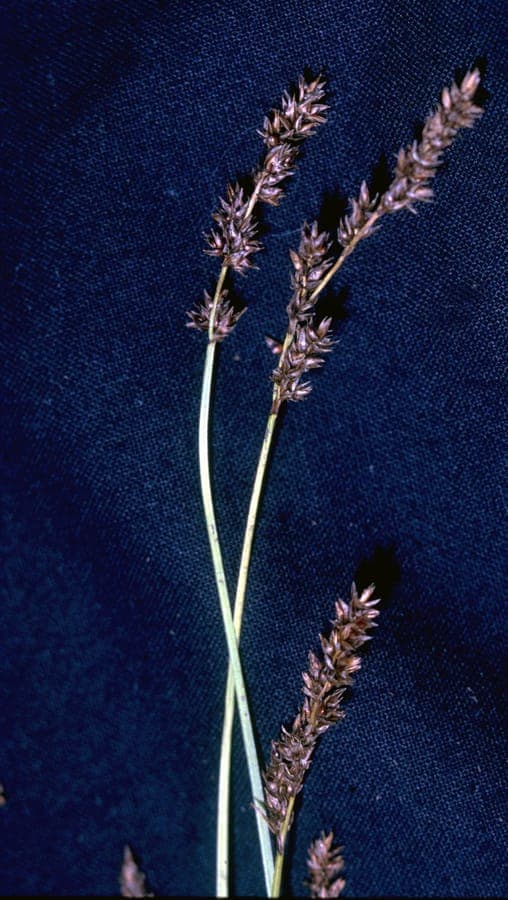
Robert H. Mohlenbrock. USDA NRCS, 1992, Western wetland flora: Field office guide to plant species. Provided by USDA NRCS Wetland Science Institute (WSI), Sacramento / Public domain, via Wikimedia Commons
Lesser tussock sedge: complete guide
Carex diandra
Want to see Lesser tussock sedge: complete guide in your garden?
1 minute, no credit card
Overview
Carex diandra, commonly known as lesser tussock sedge, is a slender, clump-forming perennial sedge native to wetlands across North America and northern Europe. Found from Alaska to Austria, it thrives in moist to saturated soils and is perfect for wet garden areas where few other plants survive. It's not flashy, but its quiet elegance and ecological value make it a gem for naturalistic planting schemes. This sedge grows 30–60 cm tall with a spread of about 40 cm and performs best in zones 4–8, handling winter lows down to -34°C.
If you're planning a bog garden or damp border, use gardenworld.app to map out moisture zones and pair Carex diandra with compatible plants. It's especially useful for gardeners dealing with soggy corners or seasonal flooding.
Appearance & bloom cycle
Lesser tussock sedge forms loose, open tussocks with narrow, bright green leaves that arch gracefully. The flowering stems rise above the foliage in late spring, between May and June, bearing small, pale yellow to cream-colored spikes. Each spike has two stamens-hence the name 'diandra'-and is held on slender, wiry stalks. The flowers aren't showy, but they add subtle texture and attract pollinators like hoverflies and small bees.
By mid-summer, the seed heads develop a soft, buff color, lasting into autumn. The plant maintains its structure well through the seasons, providing visual interest even when not in bloom. In winter, the foliage may turn tan but rarely collapses completely, offering some cover for overwintering insects.
Ideal location
Plant in full sun to partial shade. In full sun, consistent moisture is essential-dry conditions will scorch leaf tips. The best spots are along pond margins, in rain gardens, or in low-lying areas that collect water. It also works well under open-canopy trees like alder or birch, where light dapples the ground.
Avoid hot, dry borders or south-facing walls. This sedge won't survive drought. Pair it with moisture-loving companions like Iris versicolor, Ligularia, or Astilbe. For help visualizing your layout, gardenworld.app lets you design a planting plan tailored to wet soil conditions.
Soil requirements
It demands consistently moist to wet soil, ideally with a pH between 5.0 and 6.5. Prefers humus-rich, loamy, or silty clay soils that retain water. Avoid fast-draining sandy soils unless irrigated regularly. Amend heavy clay with compost to improve structure and organic content.
This sedge tolerates shallow standing water (up to 5 cm deep) and is excellent for planting in the shallow shelves of ponds. It grows slowly but steadily and won't aggressively spread. No fertiliser needed-overfeeding can lead to weak, floppy growth.
Free design
Want to see Lesser tussock sedge: complete guide in your garden? Make a free design now.
Watering
Keep soil damp year-round. During dry spells in summer, water weekly, especially in the first growing season. Use rainwater when possible-this sedge is sensitive to high calcium levels in tap water. If leaves turn brown or wilt, it's a sign of underwatering. Water at the base to prevent fungal issues.
In a well-designed rain garden or bioswale, Carex diandra can thrive with minimal irrigation. Don't pair it with drought-tolerant species-its needs are too different.
Pruning
Little pruning is required. In early spring (February–March), cut back old, damaged, or dead foliage to about 15 cm above ground. This encourages fresh growth and reduces disease risk. Leave seed heads through winter-they provide food for birds and add winter texture.
Never mow this sedge with a lawn mower. Use hand shears or snip by hand to avoid crushing the base. Cut too low, and you risk killing the crown.
Maintenance calendar
- Jan: Check for frost damage
- Feb: Start light cleanup
- Mar: Remove old leaves; inspect root zone
- Apr: No action; new growth emerges
- May: Flowers appear; monitor moisture
- Jun: Peak bloom; avoid cutting
- Jul: Maintain moisture; watch for pests
- Aug: Seeds mature; reduce watering
- Sep: Let plant rest; no feeding
- Oct: Leave seed heads; stop pruning
- Nov: Mulch lightly if in exposed sites
- Dec: Dormant; check for drying
Winter hardiness
Hardy in USDA zones 4–8. Foliage may brown in cold winters but the plant resprouts reliably in spring. In exposed gardens, a light mulch of leaves or straw can help protect the crown. No special winter care needed in most temperate climates.
Companion plants
Great with other bog and marginal plants like Carex vulpinoidea, Lobelia cardinalis, Eutrochium maculatum, and Caltha palustris. Also pairs well with ferns like Matteuccia or grasses like Molinia. Avoid xeric species like Russian sage or sedum.
Closing
Carex diandra is a quiet workhorse for wet areas-low maintenance, wildlife-friendly, and dependable. It won't stop traffic, but it stabilizes soil, supports biodiversity, and adds year-round structure. Buy from local garden centres or trusted suppliers; look for 1–2 litre pots. With consistent moisture and a little spring tidy-up, this sedge will serve your garden for years. Plant it where nothing else grows, and let it do its quiet, essential work.
Want to see Lesser tussock sedge: complete guide in your garden? Make a free design now.
Upload a photo, pick a style, and get a photorealistic design with plant list in under a minute.
No credit card required


Similar plants
Flat-stemmed club-rush: complete guide
Bolboschoenus planiculmis
Everything about Bolboschoenus planiculmis: growing conditions, watering, care, and use as a pond margin or wetland plant in garden design.
Great Plains flatsedge: complete guide
Cyperus lupulinus
Everything about Great Plains flatsedge (Cyperus lupulinus): growing conditions, care, garden uses, and ecological value. Tips for pond margins and dry sandy soils.
Golden beak sedge: complete guide
Rhynchospora corymbosa
Everything about golden beak sedge (Rhynchospora corymbosa): a dramatic tropical marginal for pond edges, bog gardens, and wet habitats.