
HermannSchachner / CC0, via Wikimedia Commons
Davall's sedge: complete guide
Carex davalliana
Want to see Davall's sedge: complete guide in your garden?
1 minute, no credit card
Overview
Carex davalliana, commonly known as Davall's sedge, is a graceful, creeping sedge native to forested and wetland areas across central and southern Europe, including Germany, France, and the Balkans. It thrives in moist, calcareous soils and is perfect for gardeners looking for a low-growing, spreading ground cover that handles partial shade. Reaching only 10–15 cm in height but spreading up to 30 cm wide via rhizomes, this member of the Cyperaceae family brings subtle texture and year-round interest. On gardenworld.app, you can design a shaded border layout that highlights the soft, flowing habit of Davall's sedge, especially near water features or under deciduous trees.
Appearance & bloom cycle
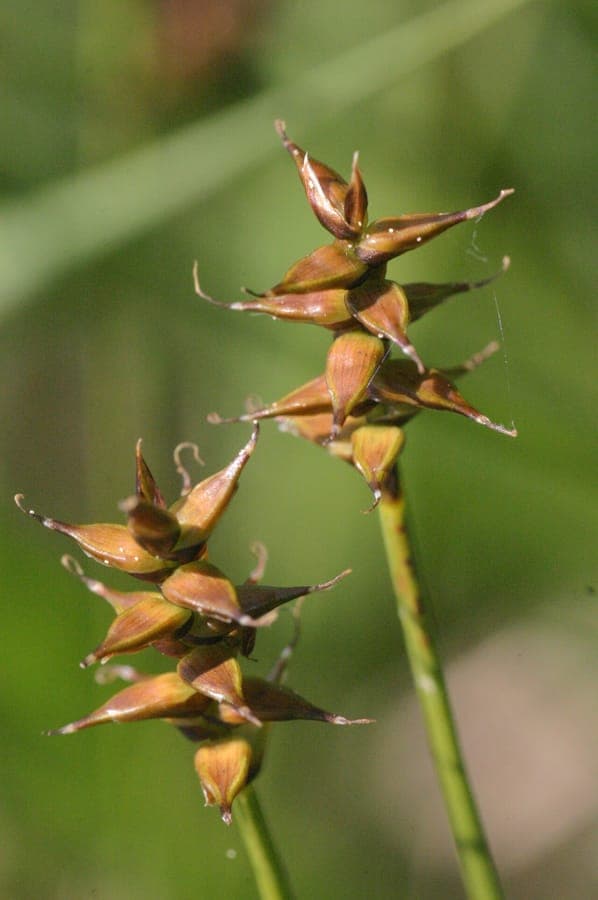
Davall's sedge forms dense, fine-textured clumps of narrow, bright green leaves, each about 2–3 mm wide. From May to August, it produces delicate, brown, feathery flower spikes that rise on slender stems up to 20 cm tall. These inflorescences add quiet structure to the garden and persist well into autumn. The plant spreads slowly by underground runners, creating natural-looking mats over time. For best visual impact, plant in groups of five or more, spaced 20 cm apart, allowing the rhizomes to knit together into a cohesive cover.
Ideal location
This sedge prefers partial shade - aim for 4 to 6 hours of dappled or morning sunlight daily. A light rating of 8 means it needs bright conditions but cannot tolerate hot afternoon sun. Ideal spots include the north side of buildings, under light-canopy trees like birch or alder, or along stream banks. In warmer USDA zones (7–8), provide extra shade during summer. Full sun will scorch the foliage and dry the soil too quickly. Use gardenworld.app to simulate seasonal light patterns and find the perfect microclimate for this moisture-dependent plant.
Soil requirements
Carex davalliana thrives in well-drained but consistently moist, calcareous soil with a pH of 7.5 to 8.0. It prefers loamy or sandy loam soils enriched with organic matter like leaf mould or well-rotted compost. Avoid acidic soils; if your soil is too acidic, amend with garden lime. The key is moisture retention without waterlogging - add grit or perlite if drainage is too slow. A top-dressing of compost each spring helps maintain fertility and moisture.
Watering
Keep the soil evenly moist, especially during the growing season (April–September). In dry spells, water deeply once or twice a week. Young plants are more vulnerable and need consistent moisture to establish. Rainwater is preferred over tap water, as high chlorine or low mineral content can stress the plant over time. A 5 cm layer of organic mulch (e.g., leaf litter or bark chips) helps reduce evaporation and protects shallow roots.
Free design
Want to see Davall's sedge: complete guide in your garden? Make a free design now.
Pruning
Minimal pruning is required. In early spring (March), cut back old, tattered foliage to make way for fresh growth. Use sharp shears and trim to about 5 cm above ground level. This also reduces the risk of fungal diseases. The spent flower spikes can be left through winter for texture or trimmed back in late winter if preferred.
Maintenance calendar
- Jan: Check for winter damage; leave old growth for insulation
- Feb: Prepare tools, monitor for early growth
- Mar: Cut back old leaves, apply light compost
- Apr: Begin regular watering, check soil moisture
- May: Flowers emerge; maintain even soil moisture
- Jun: Peak bloom; watch for dry patches
- Jul: Continue watering; inspect for pests
- Aug: Flowering tapers off; monitor spread
- Sep: Reduce watering gradually
- Oct: Remove diseased leaves; mulch lightly
- Nov: No action needed; plant goes dormant
- Dec: Protect exposed clumps with leaf litter in cold areas
Winter hardiness
Davall's sedge is hardy in USDA zones 5 to 8 (-20°C to -10°C). It remains semi-evergreen in milder winters, with foliage turning bronze or brown but regrowing from rhizomes in spring. In colder zones, a light mulch helps prevent frost heave. Avoid heavy mulching, which can encourage rot. The plant naturalizes well and becomes more resilient with age.
Companion plants
Pair Davall's sedge with other moisture-loving, shade-tolerant perennials like Astilbe, Tellima grandiflora, Lysimachia nummularia, or Carex elata 'Aurea'. It contrasts beautifully with bold-leaved plants like Rodgersia or Darmera peltata. Ferns such as Dryopteris filix-mas add depth and texture. Avoid invasive spreaders like Gunnera or overly aggressive ground covers. For woodland edges, combine with Epimedium or Pulmonaria for early spring interest.
Closing
Carex davalliana is a quietly striking plant that excels in challenging, damp, shady areas where many others struggle. Its modest flowers, soft texture, and creeping habit make it ideal for naturalistic planting schemes. Once established, it asks for little - just consistent moisture and partial shade. Available at garden centres across the UK and Europe, including local independents and larger chains, look for 9 cm pots in spring. On gardenworld.app, you can preview how this sedge integrates into your existing planting plan, helping you create a balanced, low-effort garden that thrives year after year.
Want to see Davall's sedge: complete guide in your garden? Make a free design now.
Upload a photo, pick a style, and get a photorealistic design with plant list in under a minute.
No credit card required


Similar plants
Flat-stemmed club-rush: complete guide
Bolboschoenus planiculmis
Everything about Bolboschoenus planiculmis: growing conditions, watering, care, and use as a pond margin or wetland plant in garden design.
Great Plains flatsedge: complete guide
Cyperus lupulinus
Everything about Great Plains flatsedge (Cyperus lupulinus): growing conditions, care, garden uses, and ecological value. Tips for pond margins and dry sandy soils.
Golden beak sedge: complete guide
Rhynchospora corymbosa
Everything about golden beak sedge (Rhynchospora corymbosa): a dramatic tropical marginal for pond edges, bog gardens, and wet habitats.