
HermannSchachner / CC0, via Wikimedia Commons
Alpine sedge: complete guide
Carex curvula
Want to see Alpine sedge: complete guide in your garden?
1 minute, no credit card
Overview
Carex curvula, commonly known as Alpine sedge, is a tough, creeping perennial native to high-altitude regions of the Alps and Carpathians. Unlike flashy ornamental grasses, this sedge thrives on subtlety - forming tight, cushion-like mats that slowly spread over rock faces and dry slopes. It's not showy, but it's persistent. Once established, it can live for decades, stabilising soil and suppressing weeds without demanding attention.
On gardenworld.app, you can design a garden layout that matches the quiet resilience of Carex curvula. Think rock gardens, gravel beds, or steep banks where few plants survive. Its ability to cling to thin, rocky soil makes it a go-to for erosion control in alpine designs.
Appearance & bloom cycle
This sedge grows 5–10 cm tall and spreads up to 30 cm wide over several years. The foliage is fine-textured, arching, and evergreen to semi-evergreen, with a soft green hue that turns golden-brown in winter. The leaves are narrow, no more than 2 mm wide, and densely packed, forming a velvety, moss-like surface.
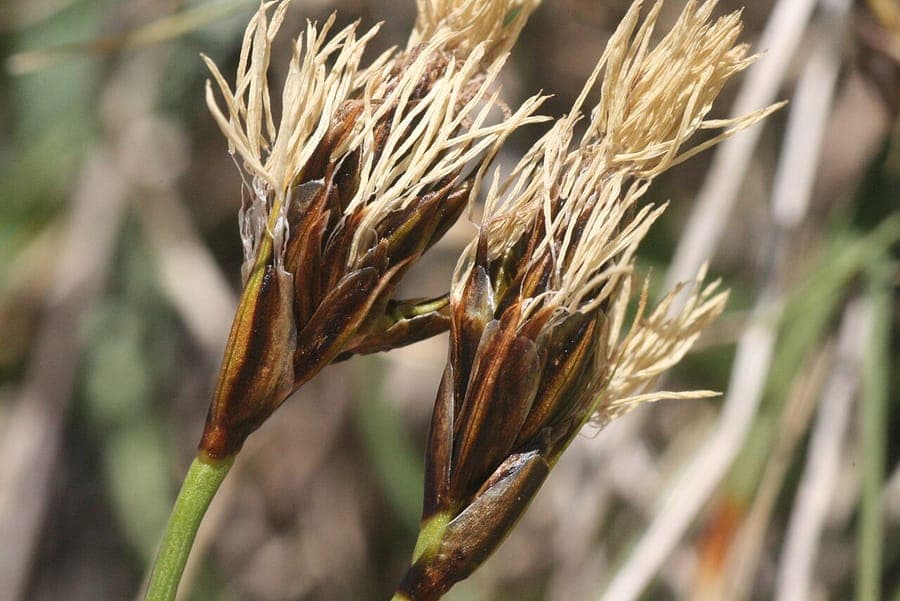
No eye-catching flowers here. The bloom cycle runs from June to August, with inconspicuous brownish spikelets barely rising above the leaf blades. The real value is in texture and form, not bloom. It's a plant for gardeners who appreciate structure over flash.
Ideal location
Full sun is non-negotiable. In its native range, Carex curvula grows above 1500 m, often at 2000–2500 m, where sunlight is intense and the air is dry. In lowland gardens, it needs the same: a south-facing slope, rock crevice, or raised bed with full exposure. Partial shade leads to weak growth and fungal issues.
Use it as a groundcover in alpine troughs, stone walls, or gravel gardens. Avoid shaded borders or damp lawns - this plant won't survive. If you're gardening in USDA zones 4–7, you're in luck. Zone 8 is risky unless summers are dry.
Soil requirements
This sedge demands lean, fast-draining soil. Think sandy or gravelly mixes with low organic content. Ideal pH: 5.5 to 7.0. Heavy clay? Amend it with 40% coarse sand, 30% grit, and 30% leaf mould. Never use rich compost - it encourages rot and weak growth.
It grows naturally on limestone scree, so it tolerates mild alkalinity. But avoid heavy liming - too much calcium can lock nutrients. A gritty mix with some decomposed granite works best. In containers, use 2 parts loam, 1 part perlite, 1 part grit.
Free design
Want to see Alpine sedge: complete guide in your garden? Make a free design now.
Watering
Once rooted, Carex curvula needs almost no watering. During establishment (first 6 weeks), water lightly every 2–3 days. After that, rely on rainfall. Only irrigate during prolonged droughts (3+ weeks without rain). Overhead watering in humid summers increases fungal risk - water at soil level if needed.
Let the soil dry completely between waterings. Soggy roots = dead plant. In containers, ensure drainage holes and add a 2 cm layer of gravel at the base.
Pruning
No pruning required. In late winter or early spring (February–March), gently rake out old, dead foliage with a hand fork or soft brush. Don't cut live leaves - growth is slow, and recovery takes time. Leave spent flower spikes; they add winter texture and support microfauna.
Never mulch with organic matter - it holds moisture and promotes rot. Skip the compost top-up.
Maintenance calendar
- Jan: Check for waterlogging, no action
- Feb: Remove old foliage, light grooming
- Mar: Final winter check, no pruning
- Apr: Watch for new growth, no feeding
- May: Monitor for weeds - remove by hand
- Jun: Bloom begins, no intervention
- Jul: Peak bloom, keep dry
- Aug: Flowering ends, no trimming
- Sep: Check for drought stress after summer
- Oct: Leave standing, no cutting
- Nov: Protect from heavy wet spells if in pots
- Dec: Winter dormancy, no care needed
Winter hardiness
Hardy in USDA zones 4–7. Tolerates winter lows down to -30°C. The danger isn't cold - it's wetness. In regions with freeze-thaw cycles and heavy winter rain, root rot is common. Plant on a slope for drainage, and avoid mulching with bark or compost.
In zone 8, it survives only with sharp drainage and dry summers. In coastal areas with mild, wet winters, it often fails. Use crushed rock mulch in December to shed moisture, but remove it by March.
Companion plants
Pair with other alpine specialists: Sesleria heufleriana for upright contrast, Arabis caucasica for spring bloom, Thymus pseudolanuginosus for silver foliage, and Helianthemum nummularium for sunny groundcover. Avoid vigorous spreaders like Ajuga or ivy - they'll smother Carex curvula.
On gardenworld.app, use the 'alpine filter' to find plants that thrive in the same conditions. Build a planting scheme that mimics natural scree slopes, with staggered textures and minimal competition.
Closing
Carex curvula isn't for gardeners who want drama. It's for those who value endurance, texture, and quiet beauty. It works best when left alone - plant it, walk away, and let it settle. Available at garden centres specialising in alpines, or sometimes at mainstream outlets like OBI or Truffaut. Check labels carefully - it's often confused with Carex flacca, which prefers damper soils. Give it sun, grit, and space, and it'll reward you with decades of low-key elegance.
Want to see Alpine sedge: complete guide in your garden? Make a free design now.
Upload a photo, pick a style, and get a photorealistic design with plant list in under a minute.
No credit card required


Similar plants
Flat-stemmed club-rush: complete guide
Bolboschoenus planiculmis
Everything about Bolboschoenus planiculmis: growing conditions, watering, care, and use as a pond margin or wetland plant in garden design.
Great Plains flatsedge: complete guide
Cyperus lupulinus
Everything about Great Plains flatsedge (Cyperus lupulinus): growing conditions, care, garden uses, and ecological value. Tips for pond margins and dry sandy soils.
Golden beak sedge: complete guide
Rhynchospora corymbosa
Everything about golden beak sedge (Rhynchospora corymbosa): a dramatic tropical marginal for pond edges, bog gardens, and wet habitats.