
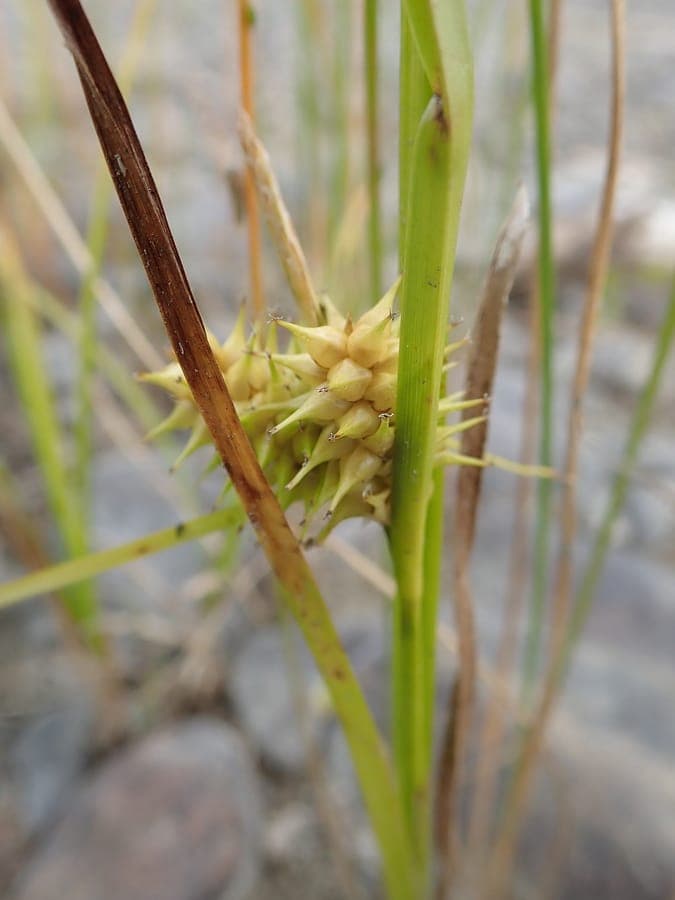
(c) Rob Foster, some rights reserved (CC BY) / CC BY 4.0, via Wikimedia Commons
Northeastern Sedge: complete guide
Carex cryptolepis
Want to see Northeastern Sedge: complete guide in your garden?
1 minute, no credit card
Northeastern sedge (Carex cryptolepis), also called hidden-scale sedge, small yellow sedge, or yellow sedge, is a subtle yet robust perennial plant native to eastern Canada and the northeastern United States. With its fine texture and elegant appearance, it provides value in wet, marshy, or wildlife garden settings.
Recognition and Appearance: This sedge grows as a compact, upright grass with slender, linear leaves in bright green to yellow-green color. The plant typically reaches 12-24 inches tall and forms dense tufts. The flowers and fruits are small, inconspicuous structures characteristic of sedges, but the primary attraction is the elegant foliage.
Habitat and Growing Conditions: Northeastern sedge is a moisture to wet-loving plant, ideal for marshes, pond edges, and wet meadows. It grows well in partial shade, though it prefers full sun somewhat. This is an extremely hardy plant suitable for cold climates.
Soil and Moisture Management: This is the right plant for difficult, wet soils where many others fail. It desires nutrient-rich, moisture-holding to wet soil. Drainage can be minimal; indeed, overly dry conditions can lead to weak growth.
Care: Northeastern sedge is very low-maintenance once planted. It requires little feeding or extra care. In early spring, old leaf stems can be cut to ground level to make room for new growth. Water is usually not a concern in these habitats, but ensure the plant doesn't dry out in dry periods.
Ecological Value: This is a native North American plant with high ecological value. It provides food and habitat for waterfowl, insects, and other wildlife.
Winter Hardiness: Northeastern sedge is exceptionally hardy, suitable for USDA zones 2-8. It withstands the harshest winters without any protection.
Blooming Period: Blooming occurs in late spring to early summer, though the flowers are small and inconspicuous. The foliage remains interesting throughout the growing season.
Availability: In English-speaking regions, this sedge is sometimes difficult to find but available through specialized garden centres focused on water plants and wetlands. Online native plant suppliers often carry it.
Companion Plants: Combine with other water-lovers such as Astilbe, Filipendula (meadowsweet), and Iris sibirica. These create interesting, composite plantings in wet garden zones.
Garden Uses: Perfect for wet garden zones, pond edges, rainwater collection areas, and marshy grounds. Also suitable for rain gardens and bioengineered versatile systems.
Closing Remarks: Northeastern sedge is a modest but valuable addition to wet-condition gardens. With its native status and ecological benefits, it's a responsible choice for sustainable gardening. For more advice visit gardenworld.app.
Want to see Northeastern Sedge: complete guide in your garden? Make a free design now.
Upload a photo, pick a style, and get a photorealistic design with plant list in under a minute.
No credit card required


Similar plants
Flat-stemmed club-rush: complete guide
Bolboschoenus planiculmis
Everything about Bolboschoenus planiculmis: growing conditions, watering, care, and use as a pond margin or wetland plant in garden design.
Great Plains flatsedge: complete guide
Cyperus lupulinus
Everything about Great Plains flatsedge (Cyperus lupulinus): growing conditions, care, garden uses, and ecological value. Tips for pond margins and dry sandy soils.
Golden beak sedge: complete guide
Rhynchospora corymbosa
Everything about golden beak sedge (Rhynchospora corymbosa): a dramatic tropical marginal for pond edges, bog gardens, and wet habitats.