
Hugo.arg / CC BY-SA 3.0, via Wikimedia Commons
Spring sedge: complete guide
Carex caryophyllea
Want to see Spring sedge: complete guide in your garden?
1 minute, no credit card
Overview
Spring sedge (Carex caryophyllea) isn't the kind of plant that shouts for attention, but that's exactly why it earns its place in thoughtful garden design. Native to central and eastern Europe, this grass-like perennial thrives in quiet corners where flashier plants might struggle. It's a cool-season grower with a neat, tufted habit, reaching 20–30 cm in height and spreading slowly to about 35 cm wide. Unlike more aggressive sedges, it stays put, making it ideal for structured yet natural-looking beds.
As a member of the Cyperaceae family, it shares characteristics with grasses and rushes but brings its own refined texture. The foliage is fine, linear, and soft green, forming dense mounds that stay presentable year-round. It's not commonly found in mainstream garden centres, but specialist growers and online nurseries often carry it. For gardeners planning a layered, woodland-style planting, Spring sedge is a quiet hero. On gardenworld.app, you can visualise how this plant fits into shaded borders, using seasonal previews and height mapping.
Appearance & bloom cycle
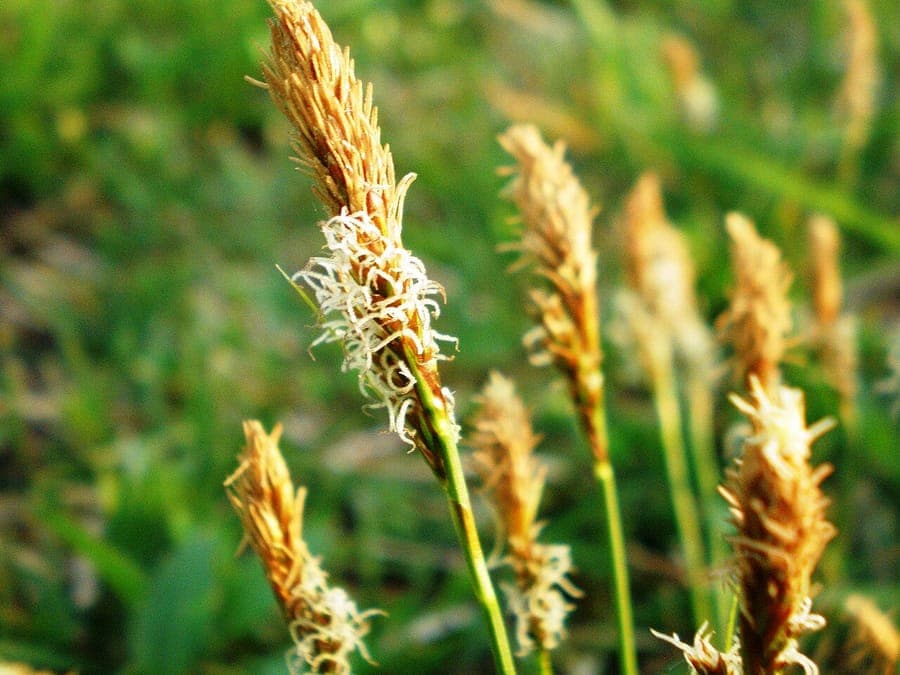
The appeal of Carex caryophyllea lies in its subtlety. From March through July, slender brown flower spikes rise just above the foliage, adding quiet structure to the spring garden. These aren't showy blooms, but their warm, russet tones contrast gently with the fresh green blades. The flowering period is prolonged, with different plants in a group often blooming at staggered times, extending visual interest.
Foliage remains evergreen in milder climates (USDA zones 5–8), turning a soft golden-brown in winter rather than dying back completely. In colder zones, it may flatten slightly under snow but rebounds quickly in spring. The plant's texture is especially effective when backlit by low morning or evening sun, creating a soft shimmer across the garden floor.
Ideal location
Spring sedge prefers partial to full shade. It performs best under deciduous trees, along north-facing walls, or in woodland edges where it receives dappled light. In full sun, it requires consistently moist soil - a condition that's hard to maintain without irrigation in most UK and northern European gardens. Avoid hot, south-facing spots unless you can guarantee moisture retention.
It thrives in areas with good air circulation but dislikes drying winds. Sheltered spots under shrubs like Viburnum or Cornus work well. When designing your planting scheme, consider using gardenworld.app to simulate light patterns across your garden throughout the year, helping you place Spring sedge exactly where it will flourish.
Soil requirements
This sedge likes fertile, humus-rich soil that's well-draining yet moisture-retentive. A mix of loam and leaf mould is ideal. The pH should be slightly acidic to neutral (5.5–7.0). Avoid chalky or highly alkaline soils - Spring sedge struggles in high calcium conditions.
Heavy clay soils can be improved with compost and grit to enhance drainage. Sandy soils need generous organic matter (like well-rotted manure or composted bark) to increase water-holding capacity. A 4–5 cm mulch layer in spring helps maintain moisture and suppress weeds without smothering the crown.
Free design
Want to see Spring sedge: complete guide in your garden? Make a free design now.
Watering
Keep the soil evenly moist, especially during the first growing season. Young plants need weekly watering in dry spells. Once established, they're moderately drought-tolerant but perform best with consistent moisture. During prolonged summer dry periods, supplemental watering prevents stress and leaf browning.
Use rainwater when possible - Spring sedge is sensitive to lime and chlorine in tap water. If using mains water, let it sit for 24 hours before applying. Drip irrigation or soaker hoses are efficient for group plantings, delivering water directly to roots while keeping foliage dry and reducing fungal risk.
Pruning
Minimal pruning is needed. In late winter or early spring (February–March), lightly trim back any tattered or discoloured leaves with sharp scissors. Avoid cutting into the crown - new growth emerges early, and damage can set the plant back.
There's no need to deadhead flowers; they fade naturally and add winter texture. In formal settings, you can remove spent spikes in mid-summer for a tidier look. Division is rarely needed and should only be done every 5–6 years if clumps become overcrowded.
Maintenance calendar
- Jan: Check for winter damage; top up mulch if needed
- Feb: Light trim of old foliage; inspect for pests
- Mar: Apply thin compost layer; monitor new growth
- Apr: Ensure consistent moisture, especially in sunnier spots
- May: Peak flowering; no intervention required
- Jun: Remove spent spikes if desired
- Jul: Water during dry spells; avoid fertilising
- Aug: Let plant rest; watch for slugs on new shoots
- Sep: Improve airflow; reduce mulch if overly damp
- Oct: Leave foliage intact for winter protection
- Nov: Apply fresh mulch in exposed areas
- Dec: Minimal care; plant enters dormancy
Winter hardiness
Hardy to USDA zone 5 (–20°C). In zones 6–8, foliage typically remains green or bronze all winter. In colder regions, it may collapse under snow but resprouts vigorously in spring. No protective covering is needed in the ground, though container-grown plants benefit from being moved to a sheltered spot or wrapped with hessian.
Companion plants
Pair Spring sedge with shade-loving perennials like Epimedium, Brunnera, or Tellima. It contrasts beautifully with broader-leaved plants such as Hosta or Ligularia. Combine with ferns (Dryopteris, Athyrium) for a woodland feel, or with early bulbs like Chionodoxa for spring interest. Avoid vigorous spreaders that could overwhelm it.
Closing
Spring sedge is a quiet achiever - unobtrusive but essential for gardeners seeking texture, year-round presence, and low upkeep. It's not flashy, but it brings cohesion to shaded areas where other plants falter. Available at select garden centres and online nurseries, though sometimes requiring a special order. Plant it in the right spot - cool, moist, and shaded - and it will reward you with decades of quiet reliability. For design inspiration and planting simulations, visit gardenworld.app.
Want to see Spring sedge: complete guide in your garden? Make a free design now.
Upload a photo, pick a style, and get a photorealistic design with plant list in under a minute.
No credit card required


Similar plants
Flat-stemmed club-rush: complete guide
Bolboschoenus planiculmis
Everything about Bolboschoenus planiculmis: growing conditions, watering, care, and use as a pond margin or wetland plant in garden design.
Great Plains flatsedge: complete guide
Cyperus lupulinus
Everything about Great Plains flatsedge (Cyperus lupulinus): growing conditions, care, garden uses, and ecological value. Tips for pond margins and dry sandy soils.
Golden beak sedge: complete guide
Rhynchospora corymbosa
Everything about golden beak sedge (Rhynchospora corymbosa): a dramatic tropical marginal for pond edges, bog gardens, and wet habitats.