
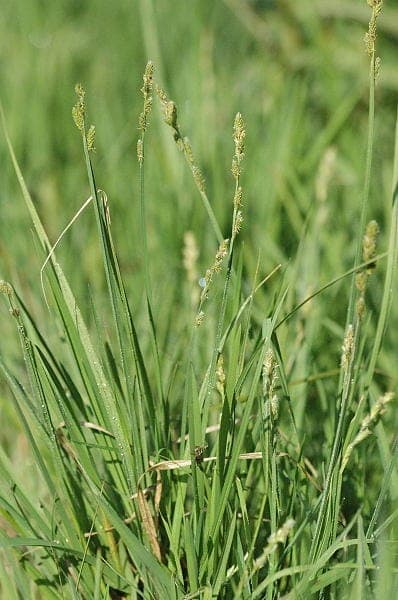
James K. Lindsey / CC BY-SA 3.0, via Wikimedia Commons
Silvery sedge: complete guide
Carex canescens
Want to see Silvery sedge: complete guide in your garden?
1 minute, no credit card
Overview
Carex canescens, commonly known as silvery sedge, is a resilient perennial sedge from the Cyperaceae family that thrives in consistently moist to wet environments. Native to regions from Alaska across northern Europe to the Baltic States and parts of South America, it naturally colonises peat bogs, marshy woodlands, and damp ditches. In garden settings, it's increasingly used in rain gardens, pond edges, and naturalistic planting schemes where water retention is high. This clump-forming sedge reaches 30 to 60 cm in height and adds vertical texture with its soft, silvery-green foliage.
On gardenworld.app, you can design a layout that highlights how silvery sedge integrates seamlessly into wetland-inspired gardens.
Appearance & bloom cycle
Silvery sedge forms dense tussocks of narrow, linear leaves, 2–4 mm wide, with a distinctive greyish-green to silvery sheen, especially noticeable in spring growth. From late May to June, slender, triangular flower spikes emerge, reaching 5–10 cm above the foliage. The flowers are inconspicuous - typical wind-pollinated sedges - with pale brown to olive-green perigynia that mature into dark achenes by late summer.
Unlike showy perennials, its appeal lies in texture and form rather than bloom colour. The plant retains its structure well into winter, with dried flower heads persisting and providing visual interest during colder months. It spreads slowly via short rhizomes but remains well-behaved and non-invasive.
Ideal location
Silvery sedge prefers full sun to partial shade. In full sun, it requires consistently wet soil; in partial shade, it tolerates slightly less constant moisture. It performs best along pond margins, in shallow water (up to 5 cm deep), or in low-lying areas that collect rainwater. Avoid planting in dry, sandy, or heavily alkaline zones.
Ideal companion spots include under willows, birches, or alders where dappled shade and damp soil combine. It's also excellent for rain gardens, bioswales, or damp corners behind downspouts. In naturalistic designs, it works well as a mid-layer grass between taller moisture lovers like Iris versicolor and shorter bog dwellers like Eriophorum angustifolium.
Soil requirements
This sedge demands acidic to neutral soils (pH 4.5–6.5) rich in organic matter. Ideal substrates include peat, leaf mould, or ericaceous compost. On sandy or loamy soils, amend with at least 20–30 cm of organic matter to improve moisture retention and acidity. Avoid chalky or lime-rich substrates - silvery sedge is sensitive to high pH and may yellow or stunt.
For pond planting, use a mix of aquatic soil and peat in containers, submerging the crown just below the surface. Do not use standard garden soil, as it may float or leach nutrients.
Watering
Consistent moisture is non-negotiable. The root zone must never dry out, especially during the growing season (April to September). During dry spells in July and August, supplement with rainwater - tap water, especially if hard, can raise pH and harm long-term health.
Young plants need frequent watering until established. Once mature, they tolerate brief floods and even short-term submersion. In containers, ensure saucers remain filled during summer. Rain gardens naturally support its needs, but monitor in extended droughts.
Free design
Want to see Silvery sedge: complete guide in your garden? Make a free design now.
Pruning
Minimal pruning is required. In late winter (February to early March), cut back old foliage and spent flower stems to make way for fresh growth. Use sharp shears and trim to about 10 cm above ground. Avoid cutting into the crown - it can damage emerging shoots.
Every 3–4 years, divide congested clumps in early spring. Lift the plant, split with a spade or knife, and replant sections 30–40 cm apart. This rejuvenates growth and prevents central dieback.
Maintenance calendar
- January: Check for frost heave; ensure soil remains damp
- February: Cut back old growth; tidy around clumps
- March: Divide if needed; top-dress with ericaceous compost
- April: Monitor soil moisture; watch for slug damage on new shoots
- May: New growth emerges; check for overcrowding
- June: Flower spikes appear; ensure consistent water levels
- July: Peak growth; increase watering during dry spells
- August: Seeds mature; light mulch with pine needles to retain moisture
- September: Growth slows; leave seed heads for winter texture
- October: Reduce watering; prepare for dormancy
- November: Inspect for fungal issues in wet conditions
- December: Minimal care; protect from drying winds
Winter hardiness
Silvery sedge is extremely hardy, thriving in USDA zones 3 to 8 (-40°C to -12°C). Foliage often remains semi-evergreen in milder zones, turning bronze or tan. In colder areas, it dies back but re-sprouts vigorously in spring. No winter protection is needed, though mulching with leaf litter in zone 3 helps prevent frost heaving.
Avoid winter drought - even when dormant, roots require moist soil. In areas with frozen ground and no snow cover, occasional watering on thaw days can prevent desiccation.
Companion plants
Pair silvery sedge with moisture-loving companions: Carex vulpinoidea, Molinia caerulea, Eutrochium maculatum, and Iris laevigata. For contrast, use bold-leaved plants like Ligularia or golden sedges like Carex elata 'Aurea'. In bog gardens, combine with carnivorous plants such as Drosera or Sarracenia.
Plant in groups of 3–5 for impact. Use along stream banks, in wet meadows, or as edging for damp paths. Its soft texture contrasts beautifully with spiky foliage or bright blooms.
Find inspiration on gardenworld.app, where wetland planting schemes showcase silvery sedge in dynamic, ecological combinations.
Closing
Carex canescens is a quiet achiever in the moist garden. It doesn't shout with colour, but its texture, resilience, and ecological value make it indispensable. Once established, it asks for little - just consistent moisture and acidic soil. Whether you're restoring a bog, designing a rain garden, or simply tackling a soggy patch, silvery sedge delivers year-round structure with minimal fuss. Give it the right spot, and it will thrive for years. Try it along your pond edge or in a shaded wet corner - it might just become your go-to sedge.
Want to see Silvery sedge: complete guide in your garden? Make a free design now.
Upload a photo, pick a style, and get a photorealistic design with plant list in under a minute.
No credit card required


Similar plants
Flat-stemmed club-rush: complete guide
Bolboschoenus planiculmis
Everything about Bolboschoenus planiculmis: growing conditions, watering, care, and use as a pond margin or wetland plant in garden design.
Great Plains flatsedge: complete guide
Cyperus lupulinus
Everything about Great Plains flatsedge (Cyperus lupulinus): growing conditions, care, garden uses, and ecological value. Tips for pond margins and dry sandy soils.
Golden beak sedge: complete guide
Rhynchospora corymbosa
Everything about golden beak sedge (Rhynchospora corymbosa): a dramatic tropical marginal for pond edges, bog gardens, and wet habitats.