
Kenraiz / CC BY-SA 4.0, via Wikimedia Commons
Club sedge: complete guide
Carex buxbaumii
Want to see Club sedge: complete guide in your garden?
1 minute, no credit card
Overview
Carex buxbaumii, commonly known as club sedge, is a graceful, grass-like perennial in the Cyperaceae family. Native to regions stretching from Alaska to Austria, it thrives in wet meadows, marsh edges, and damp woodlands. In cultivation, it's an excellent choice for rain gardens, pond margins, or any consistently moist area where few other ornamentals succeed. With its upright, clump-forming habit and subtle seasonal interest, club sedge adds texture and movement without dominating the garden.
It typically grows 30–60 cm tall, depending on soil moisture and light. The plant is winter hardy to USDA zone 4 (-34°C), making it suitable for most temperate climates, including the UK and northern US. While not yet a staple in mainstream garden centres, it's increasingly available through specialist nurseries and select retailers.
Using gardenworld.app, you can generate a garden layout that integrates club sedge into wet zones, ensuring it's placed where moisture and light align perfectly.
Appearance & bloom cycle
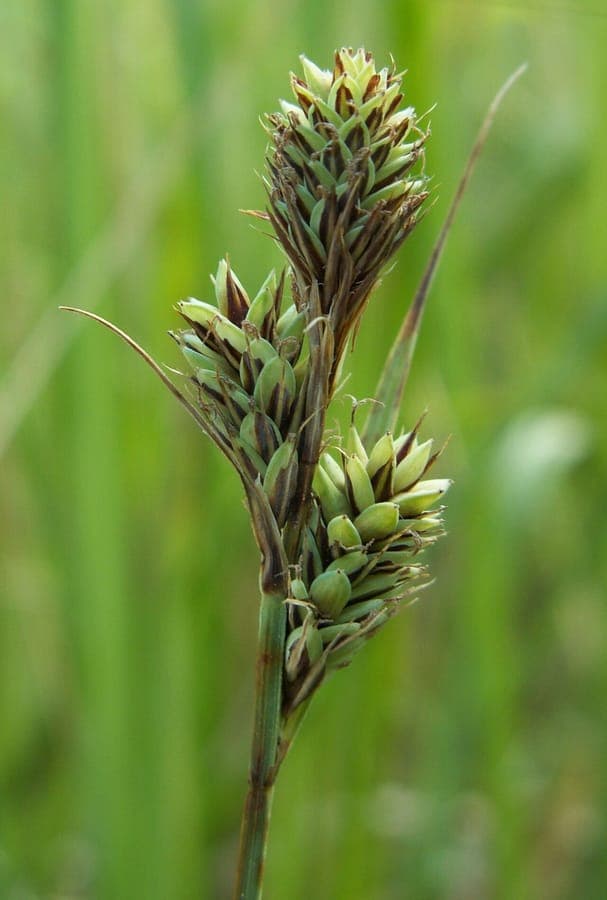
Club sedge features narrow, dark green leaves about 2–4 mm wide and 20–40 cm long, forming dense, upright tufts. In May and June, it produces small brown flower spikes on branched stems. These clusters appear knobby or 'clubbed'-hence the common name. The flowers aren't showy like those of flowering perennials, but they add architectural interest and persist into early summer.
After flowering, the seed heads may remain through late summer, offering food for small birds and insects. While it self-seeds occasionally in the wild, it rarely spreads aggressively in the garden, making it well-behaved and easy to manage.
Ideal location
Club sedge thrives in full sun to light shade, requiring a light intensity of about 8/10. It performs best in open, sunny spots with consistent moisture-think pond edges, damp swales, or low-lying garden areas. In deep shade, growth becomes lax and floppy, reducing its ornamental value.
It's ideal for rain gardens or bioswales where water collects temporarily. If your soil dries out in summer, you'll need to supplement with irrigation. To identify the wettest parts of your garden, use gardenworld.app's moisture mapping tools to plan placement accurately.
Soil requirements
This sedge prefers neutral to slightly alkaline soils with a pH between 7.0 and 7.5. It grows well in heavy clay, loam, or mucky soils rich in organic matter. Avoid fast-draining sandy soils unless amended with compost or peat to retain moisture.
When planting, mix in well-rotted compost or leaf mould to improve water retention and nutrient content. For container planting near water features, use aquatic soil in baskets to keep roots moist. Club sedge tolerates occasional submersion but prefers saturated, not flooded, conditions.
Free design
Want to see Club sedge: complete guide in your garden? Make a free design now.
Watering
Consistent moisture is key. During the growing season (April–September), the soil should never dry out completely. Established plants handle short dry spells, but young ones need regular watering-about 1–2 inches per week during droughts.
Use rainwater when possible, as club sedge can be sensitive to high calcium levels in tap water over time. Drip irrigation or soaker hoses work well for maintaining even moisture without overwatering.
Pruning
Minimal pruning is required. In late winter or early spring (February–March), cut back old foliage to about 10 cm above the ground. This removes tattered leaves and encourages fresh, upright growth for the new season.
Leave the flower spikes over winter if you want to support wildlife. They provide shelter and seed for birds and overwintering insects. Cut them back in early spring to keep the garden looking tidy.
Maintenance calendar
- January: Monitor for winter damage; no action needed
- February: Begin pruning old foliage
- March: Finish pruning; check soil moisture as growth resumes
- April: Top-dress with compost; ensure consistent watering
- May: Bloom begins; watch for dry spells
- June: Peak bloom; monitor for weeds
- July: Maintain moisture; water weekly if no rain
- August: Continue watering during dry periods
- September: Reduce watering gradually
- October: Let plant go dormant; leave seed heads
- November: No maintenance required
- December: Fully dormant; tolerate freezing temperatures
Winter hardiness
Club sedge is hardy to USDA zone 4 and survives temperatures down to -34°C. The foliage may turn brown in winter, but the crown remains alive. No mulch or protection is needed, even in harsh climates.
In areas with little snow cover and repeated freeze-thaw cycles, occasional desiccation can occur. However, the plant reliably regrows in spring with proper siting.
Companion plants
Pair club sedge with other moisture-loving perennials like Eutrochium maculatum, Iris versicolor, or Carex vulpinoidea. For contrast, include plants with different textures such as soft rush (Juncus effusus) or creeping Jenny (Lysimachia nummularia).
Near water features, it blends well with marginal aquatics and provides structure without crowding. Use gardenworld.app to preview plant combinations and spacing before planting.
Closing
Carex buxbaumii is a resilient, low-maintenance sedge perfect for wet areas where few plants thrive. With its neat clumping form, winter interest, and wildlife value, it's a smart addition to ecological gardens. Though not yet common in mainstream garden centres, it can be found at specialty growers or through retailers like garden centres carrying native or wetland plants.
Give it sun, keep the soil moist, and prune in early spring. With thoughtful placement-perhaps guided by a garden plan from gardenworld.app-club sedge will deliver years of quiet beauty in your landscape.
Want to see Club sedge: complete guide in your garden? Make a free design now.
Upload a photo, pick a style, and get a photorealistic design with plant list in under a minute.
No credit card required


Similar plants
Flat-stemmed club-rush: complete guide
Bolboschoenus planiculmis
Everything about Bolboschoenus planiculmis: growing conditions, watering, care, and use as a pond margin or wetland plant in garden design.
Great Plains flatsedge: complete guide
Cyperus lupulinus
Everything about Great Plains flatsedge (Cyperus lupulinus): growing conditions, care, garden uses, and ecological value. Tips for pond margins and dry sandy soils.
Golden beak sedge: complete guide
Rhynchospora corymbosa
Everything about golden beak sedge (Rhynchospora corymbosa): a dramatic tropical marginal for pond edges, bog gardens, and wet habitats.