
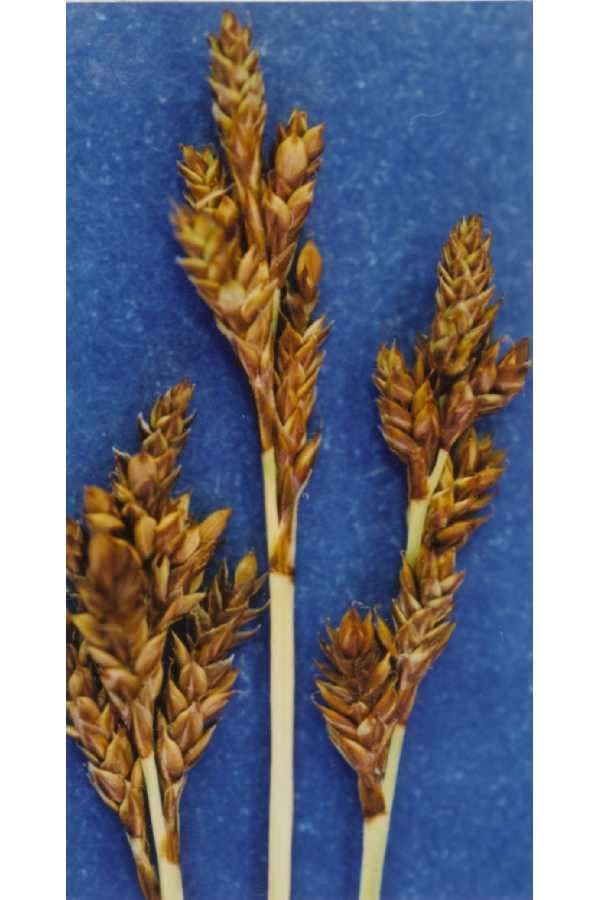
Hurd, E.G., N.L. Shaw, J. Mastrogiuseppe, L.C. Smithman, & S. Goodrich. 1998. Field guide to Intermountain sedges. Gen. Tech. Rep. RMS-GTR-10. USDA FS RMRS, Ogden, UT. Courtesy of USDA FS RMRS Boise Aquatic Sciences Lab. / Public domain, via Wikimedia Commons
Alaska brownish sedge: complete guide
Carex brunnescens
Want to see Alaska brownish sedge: complete guide in your garden?
1 minute, no credit card
Overview
Carex brunnescens, commonly known as Alaska brownish sedge, is a graceful perennial sedge native to cool temperate regions across North America and Europe. Found in wetlands, forest edges, and along stream banks from Alaska to Austria, this hardy plant thrives in consistently moist to wet soils and partial to full shade. In UK and US gardens, it's an excellent choice for damp corners, woodland gardens, or rain gardens where few other plants succeed. Growing 20–40 cm tall, it spreads slowly via rhizomes, forming soft, dense mats that suppress weeds and add fine texture.
This sedge is reliably hardy in USDA zones 4–8 (-34 to -12°C), making it suitable for most temperate climates. On gardenworld.app, you can map out shaded, moist areas in your garden to see where Carex brunnescens would fit best. Its natural, understated charm blends seamlessly into wild-style or formal designs alike.
Appearance & bloom cycle
Carex brunnescens features narrow, arching leaves 20–35 cm long and just 2–4 mm wide, emerging in bright to dark green tufts from the base. In late spring to early summer (May–July), triangular flower stems rise to 40 cm, bearing small, inconspicuous spikelets. These mature to a soft brown or olive-brown hue-hence the name 'brownish sedge'-and persist into winter, adding subtle structure to the dormant garden.
While not showy, the blooms contribute to ecological balance, offering shelter for tiny insects. The plant maintains a neat, mounded form year-round, with older foliage turning straw-colored but not collapsing entirely. This evergreen tendency makes it useful for winter interest in shaded areas.
Ideal location
Plant Carex brunnescens in partial to full shade. It tolerates morning sun if soil moisture is consistent, but avoid hot afternoon exposure, which leads to scorching and drying. Ideal spots include under deciduous trees, along pond margins, or in shaded rain gardens. It also works well in bog gardens or low-lying areas prone to standing water.
If your garden has a north-facing border or a damp woodland edge, this sedge will thrive. Use gardenworld.app to visualise planting zones and test light patterns over the day to find the perfect microclimate.
Soil requirements
This sedge prefers humus-rich, consistently moist to wet soils. It adapts to clay, loam, or peaty substrates as long as drainage is slow and organic matter is high. Ideal pH ranges from slightly acidic to neutral (5.5–7.0). Avoid dry, sandy, or highly alkaline soils unless amended with compost or leaf mould.
Before planting, mix in generous amounts of well-rotted compost to improve water retention and root establishment. Mulching annually with leaf litter or compost helps maintain moisture and reduces competition from weeds.
Free design
Want to see Alaska brownish sedge: complete guide in your garden? Make a free design now.
Watering
High water demand is key. Keep soil moist at all times-never let it dry out completely, especially during the first growing season. In summer, weekly deep watering is essential in all but naturally wet areas. Container-grown specimens need daily checks; pots dry quickly and root desiccation can kill the plant.
Use rainwater when possible, as tap water with high lime content may affect long-term health. Signs of underwatering include browning leaf tips and stunted growth.
Pruning
Pruning is minimal. In early spring (March–April), trim back any dead or damaged foliage to make way for fresh growth. Use sharp, clean secateurs and avoid cutting into the crown. Remove only what's necessary-over-pruning can weaken the plant.
Do not shear the entire clump. Instead, thin selectively to maintain airflow and prevent fungal issues. Old leaves can be composted if disease-free.
Maintenance calendar
- Jan–Feb: Inspect for winter damage; remove loose debris
- Mar–Apr: Cut back old foliage; apply compost mulch
- May–Jul: Peak growth and flowering; ensure consistent moisture
- Aug–Sep: Monitor during dry spells; water deeply if needed
- Oct: Reduce watering; no feeding
- Nov–Dec: Leave foliage intact for winter protection
Winter hardiness
Hardy to USDA zone 4, Carex brunnescens survives harsh winters with minimal care. In zones 5–8, it remains semi-evergreen, retaining much of its foliage. Snow cover provides natural insulation, but in exposed gardens, a light mulch of leaves can help protect shallow roots.
Avoid disturbing the plant in winter. Frost heave in wet soils can lift roots, so ensure good soil contact and avoid walking on frozen beds.
Companion plants
Pair with other moisture-loving perennials such as Tellima grandiflora, Carex vulpinoidea, Matteuccia struthiopteris (ostrich fern), or Ligularia. Hostas and ferns also make excellent companions in shaded, damp borders. For contrast, include plants with bold foliage like Rodgersia or Darmera peltata.
Avoid xeric species like lavender, yarrow, or sedum in the same bed-they'll struggle in the wet conditions this sedge requires.
Closing
Carex brunnescens is a quiet achiever: low-maintenance, ecologically beneficial, and perfectly adapted to challenging damp shade. You'll find it at garden centres across the UK and US, often labelled under 'native sedges' or 'woodland plants'. Look for healthy, green clumps without dry or yellowing tips.
With proper siting and care, it will slowly expand into a lush, weed-suppressing ground cover. And remember: gardenworld.app helps you plan where to place it for maximum impact and compatibility with your existing garden layout.
Want to see Alaska brownish sedge: complete guide in your garden? Make a free design now.
Upload a photo, pick a style, and get a photorealistic design with plant list in under a minute.
No credit card required


Similar plants
Flat-stemmed club-rush: complete guide
Bolboschoenus planiculmis
Everything about Bolboschoenus planiculmis: growing conditions, watering, care, and use as a pond margin or wetland plant in garden design.
Great Plains flatsedge: complete guide
Cyperus lupulinus
Everything about Great Plains flatsedge (Cyperus lupulinus): growing conditions, care, garden uses, and ecological value. Tips for pond margins and dry sandy soils.
Golden beak sedge: complete guide
Rhynchospora corymbosa
Everything about golden beak sedge (Rhynchospora corymbosa): a dramatic tropical marginal for pond edges, bog gardens, and wet habitats.