
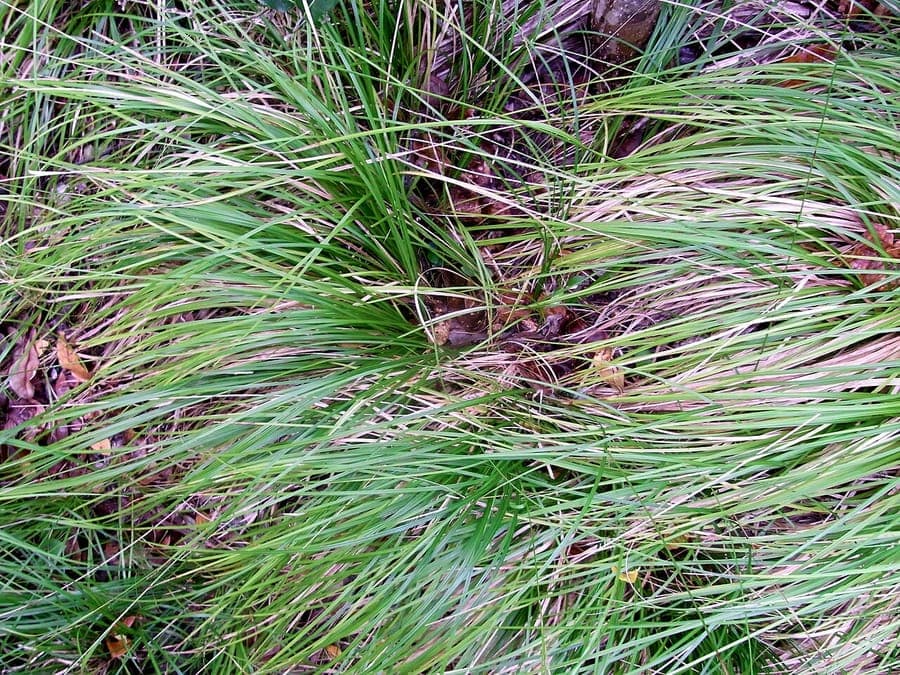
Poyt448, Peter Woodard / CC BY-SA 4.0, via Wikimedia Commons
Greater brown sedge: complete guide
Carex brunnea
Want to see Greater brown sedge: complete guide in your garden?
1 minute, no credit card
Overview
Greater brown sedge, botanically named Carex brunnea, is a distinctive ornamental sedge from the Cyperaceae family. This Asian native plant hails from temperate to subtropical mountainous regions, with natural populations distributed across eastern Asia from China and Japan to the Indian Ocean region, Madagascar and Reunion. It is prized in gardens and landscapes for its fine texture, bronze-tinted foliage, and ability to grow in diverse garden conditions with minimal intervention. The plant forms neat, fountain-like clumps that add year-round structure and subtle color to garden compositions, making it particularly valuable for gardeners seeking low-maintenance ornamental solutions that don't compromise on visual appeal.
Appearance and Bloom
Carex brunnea develops into compact, slowly-growing tufts with thin, ribbon-like leaves measuring just 2-4 mm wide, displaying a soft yellow-brown to olive-green coloration throughout the growing season. The graceful arching foliage typically reaches 20-40 cm in height, creating a delicate fountain effect that softens garden edges and borders. Spring growth initiates small, inconspicuous flowering structures that develop into distinctive seed heads - characteristic knobbed utricles that transition from green-brown to warm reddish-brown as they mature. These seed heads persist well into autumn and winter, providing months of ornamental value and an elegant architectural element to the garden landscape. The blooming period extends from May through August, with seed dispersal occurring gradually throughout late summer and early autumn months.
Ideal Location
Carex brunnea thrives in part-shade to full sun positions, though the plant displays its finest coloration and texture in dappled or half-shade conditions where afternoon sun is filtered. Many experienced gardeners report that plants cultivated under partial shade develop more consistent color and avoid the faded appearance that intense summer heat sometimes produces. This sedge performs beautifully in moisture-rich garden niches, streamside plantings, shaded borders, and even in container cultivation on patios and terraces. In Mediterranean climates, partial afternoon shade becomes increasingly valuable during the hottest months, protecting foliage from scorching while maintaining the plant's bronze-toned appearance. The plant succeeds in breezy locations, demonstrating good wind tolerance and adapting well to exposed garden positions without sustaining significant damage or distortion.
Soil
Greater brown sedge is reasonably adaptable regarding soil composition but performs optimally in well-draining, humus-rich substrates. The plant accepts clay-heavy soils and sandy growing media equally well, provided these are amended generously with decomposed organic matter before planting establishes. A soil pH range of 5.5 to 7.5 proves acceptable, with the plant showing superior performance in slightly acidic conditions. Incorporating quality compost or leaf-mould prior to planting enriches the soil structure and improves moisture retention during establishment. A protective mulch layer around the plant base helps conserve soil moisture and insulates roots during harsh winter months, particularly valuable in cold-winter regions.
Watering
Greater brown sedge prefers consistently moist (not waterlogged) soil conditions, especially during the active growing season from May through August. Young plants benefit from regular supplemental watering to establish deep root systems, while established plants demonstrate considerable drought tolerance and can endure extended periods without supplemental moisture. During the growing season, aim to maintain soil moisture consistent with a damp sponge - saturated enough to support growth but never stagnant. Winter watering requirements diminish substantially, particularly in cold climates where the plant enters dormancy. Container-grown specimens require more frequent watering attention than garden-planted specimens, necessitating daily moisture checks during hot, dry periods. Employ the finger-test method, inserting your finger 5 cm into the soil to assess moisture content before watering.
Free design
Want to see Greater brown sedge: complete guide in your garden? Make a free design now.
Pruning
Carex brunnea demands remarkably little pruning compared to conventional ornamental plants, though strategic maintenance enhances plant appearance and vigor. Remove dead or frost-damaged foliage in early spring, cutting away discolored stems at soil level to reveal vigorous new growth beneath. Many gardeners prefer cutting back the entire clump to 8-10 cm above ground level in March, promoting compact, vigorous regrowth that maintains attractive form throughout the season. Perform this drastic annual cutting precisely once yearly, in early spring before growth accelerates. Dead leaves can be selectively removed throughout the growing season, while decorative seed heads should remain as long as they contribute visual interest and haven't shattered. Regular maintenance pruning (three to four times annually) removes spent foliage, controls plant size and maintains the tidy appearance many gardeners appreciate.
Maintenance Calendar
March-April: Execute annual cutback, reducing foliage to 10 cm above soil. Inspect for winter damage and remove frost-blackened tissue. Refresh the mulch layer and amend soil with fresh compost. May-August: Provide regular supplemental watering during dry periods. Scout for disease symptoms or pest infestation. Enjoy emerging seed heads. August-October: Appreciate decorative seed-head display. Gradually reduce watering frequency as temperature drops. October-March: Minimal maintenance required. Apply additional mulch protection in regions experiencing severe winter temperatures.
Winter Hardiness
Greater brown sedge exhibits hardy character to USDA Zone 6 (temperatures to -23 degrees Celsius), though some populations show sensitivity in regions experiencing extreme temperature fluctuations or prolonged hard freezes. In climates with severe winters, supplementary winter protection through generous mulching proves beneficial, applied in late autumn before frost arrives. Mediterranean and temperate climate gardeners (zones 8-10) experience optimal growth performance throughout the year, with year-round foliage color and structure. In very cold regions (Zone 5 and colder), container cultivation allows seasonal relocating to protected microclimates or cold frames. Wind protection becomes increasingly valuable in harsh winter climates where exposed plants may suffer severe wind damage regardless of cold tolerance.
Companion Planting
Carex brunnea combines beautifully with contrasting sedges and grasses, including Carex oshimensis "Evergold" and Luzula nivea, creating interesting textural layering. Design bold drifts by planting groups of three to five specimens spaced 30 cm apart, allowing room for mature spread without crowding. In mixed borders, this sedge integrates seamlessly with autumn-blooming Asters, winter-flowering Helleborus species, and deciduous shrubs like Cornus alba for winter stem interest. Waterside plantings pair successfully with moisture-loving Rodgersia, Astilbe, and Primula japonica for dramatic foliage and flower combination. Container partnerships with trailing ivy or flowering annuals create dynamic seasonal composition changes.
Conclusion
Greater brown sedge represents an excellent investment for gardeners seeking refined texture, subtle seasonal color variation and architectural structure without demanding maintenance commitment. This plant satisfies contemporary garden design principles, performing exceptionally well in partial shade settings where many competitors struggle. With minimal pruning requirements, moderate water needs and reliable cold hardiness throughout most temperate regions, Carex brunnea delivers uncompromised visual interest and functional reliability. Acquire this versatile sedge from reputable garden centers, specialty nurseries or gardenworld.app today.
Want to see Greater brown sedge: complete guide in your garden? Make a free design now.
Upload a photo, pick a style, and get a photorealistic design with plant list in under a minute.
No credit card required


Similar plants
Flat-stemmed club-rush: complete guide
Bolboschoenus planiculmis
Everything about Bolboschoenus planiculmis: growing conditions, watering, care, and use as a pond margin or wetland plant in garden design.
Great Plains flatsedge: complete guide
Cyperus lupulinus
Everything about Great Plains flatsedge (Cyperus lupulinus): growing conditions, care, garden uses, and ecological value. Tips for pond margins and dry sandy soils.
Golden beak sedge: complete guide
Rhynchospora corymbosa
Everything about golden beak sedge (Rhynchospora corymbosa): a dramatic tropical marginal for pond edges, bog gardens, and wet habitats.