
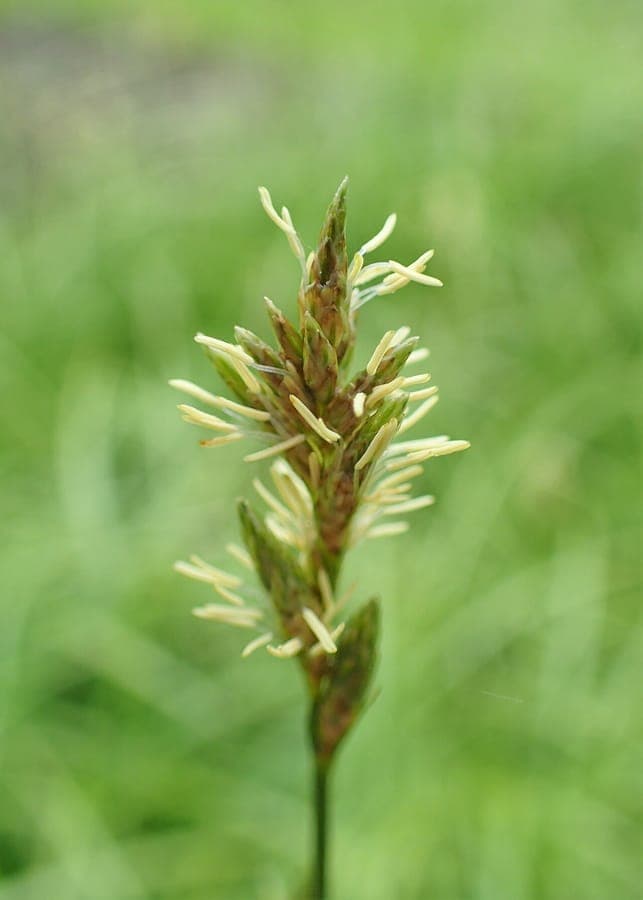
Krzysztof Ziarnek, Kenraiz / CC BY-SA 4.0, via Wikimedia Commons
Alpine-grass: complete guide
Carex brizoides
Want to see Alpine-grass: complete guide in your garden?
1 minute, no credit card
Overview
Carex brizoides, commonly known as Alpine-grass, is a graceful sedge that brings subtle movement and texture to shaded garden areas. Native to forested slopes and damp clearings in central and southern Europe - including Austria, Italy, and parts of France - this perennial thrives in cool, moist conditions where many other ornamental grasses struggle. It's not the flashiest plant in the border, but its quiet elegance and resilience make it a gardener's favourite for naturalistic planting schemes. You won't find it in every garden centre, but larger outlets like garden centres across the UK often stock it in spring, especially those that specialise in woodland or shade plants.
On gardenworld.app, you can visualise how Alpine-grass fits into your garden layout. Use the platform to plan drifts under deciduous trees or along a damp border where its arching foliage will catch the light just right.
Appearance & bloom cycle
Alpine-grass forms neat tufts of narrow, glossy green leaves that grow 30 to 50 cm tall. In late spring, delicate flower spikes emerge, reaching up to 60 cm. These inflorescences are light, airy, and slightly nodding, resembling tiny bristle-like clusters - hence the name 'brizoides', which means bristle-like. They bloom from May to June and remain attractive well into autumn, slowly turning golden-brown as they mature.
The plant spreads slowly by short rhizomes but doesn't become invasive. Even in winter, it retains much of its form, especially in milder climates. In harsh winters, the tips may brown, but the crown usually survives. Its persistent structure provides visual interest during the dormant season, making it a valuable plant for year-round gardens.
Ideal location
Plant Alpine-grass in partial shade, ideally under open-canopy trees like birch or hazel. It performs poorly in full sun, particularly on south-facing slopes where soil dries out quickly. East- or north-facing spots with 3 to 5 hours of dappled light per day are ideal. Too much shade, however, leads to floppy growth and reduced flowering.
Avoid hot, dry corners. This sedge thrives on cool roots and consistent moisture. If you're unsure about light levels in your garden, use gardenworld.app to generate a sun map - it'll help you place Alpine-grass exactly where it will thrive.
Soil requirements
Alpine-grass prefers moist, humus-rich soil that drains well but doesn't dry out. The ideal pH range is slightly acidic to neutral (5.5 to 7.0). Avoid sandy soils without amendment, as they drain too quickly. Mix in compost or leaf mould to improve water retention. Heavy clay soils should be loosened with coarse sand or grit to prevent waterlogging.
In autumn, apply a thin layer of compost or decayed leaf litter. This boosts soil fertility and insulates the roots. Never use high-nitrogen fertilisers - this plant grows slowly by nature and doesn't need forcing.
Free design
Want to see Alpine-grass: complete guide in your garden? Make a free design now.
Watering
Keep the soil consistently moist, especially during dry spells in summer. Water deeply once a week in July and August if there's no rain. Use rainwater when possible, as Carex brizoides is sensitive to lime and chlorine in tap water. If your area has hard water, a water butt is a worthwhile investment.
In winter, watering is rarely needed unless the season is unusually dry and frost-free. Then, a light soak every few weeks can prevent root desiccation.
Pruning
Prune in March or early April before new growth emerges. Remove only dead or damaged foliage - don't cut back hard like you would with pampas grass. Alpine-grass doesn't die back completely, so aggressive pruning can damage new shoots. Use sharp, clean secateurs and work carefully.
If the clump becomes congested, thin out older leaves at the base to improve air circulation and reduce fungal risk. This also encourages fresh, upright growth.
Maintenance calendar
- Jan: Check for frost damage; maintain mulch layer
- Feb: Prepare tools for spring cleanup
- Mar: Remove old foliage; inspect for new growth
- Apr: Monitor soil moisture; no feeding needed
- May: Flower spikes appear; watch for slugs
- Jun: Peak bloom; avoid disturbing stems
- Jul: Water weekly in dry weather
- Aug: Continue monitoring moisture; no fertiliser
- Sep: Leave seed heads for winter interest
- Oct: Add compost or leaf mulch
- Nov: Leave plant intact for structure
- Dec: Minimal care; check for extreme frost damage
Winter hardiness
Alpine-grass is hardy to USDA zone 5 (-20°C). It survives most UK and European winters without protection. In areas with fluctuating temperatures, a light mulch of leaf mould or bark chips helps protect the crown. Avoid plastic covers - they trap moisture and encourage rot.
In containers, root freezing is a risk. Wrap pots in hessian, move them against a wall, or elevate them on feet to improve drainage and insulation.
Companion plants
Pair Alpine-grass with other shade lovers like Hosta, Athyrium ferns, Omphalodes, and Pulmonaria. These plants create a cohesive woodland feel. Add late-summer asters for contrast in bloom time. Avoid vigorous spreaders like mint or Lysimachia, which can overwhelm its delicate form.
It also works well with other sedges like Carex elata 'Aurea' or moisture-loving perennials such as Filipendula ulmaria. This combination offers textural variation without clashing colours.
Closing
Alpine-grass is an underrated but reliable sedge for the low-maintenance, natural garden. It asks for little, delivers texture and movement, and supports winter interest. Its subtle beauty lies in its simplicity - the way light plays across its arching spikes, the soft rustle in a breeze.
For planting ideas and seasonal reminders, visit gardenworld.app. You'll find design templates with Alpine-grass and practical tips to keep your garden thriving year after year.
Want to see Alpine-grass: complete guide in your garden? Make a free design now.
Upload a photo, pick a style, and get a photorealistic design with plant list in under a minute.
No credit card required


Similar plants
Flat-stemmed club-rush: complete guide
Bolboschoenus planiculmis
Everything about Bolboschoenus planiculmis: growing conditions, watering, care, and use as a pond margin or wetland plant in garden design.
Great Plains flatsedge: complete guide
Cyperus lupulinus
Everything about Great Plains flatsedge (Cyperus lupulinus): growing conditions, care, garden uses, and ecological value. Tips for pond margins and dry sandy soils.
Golden beak sedge: complete guide
Rhynchospora corymbosa
Everything about golden beak sedge (Rhynchospora corymbosa): a dramatic tropical marginal for pond edges, bog gardens, and wet habitats.