
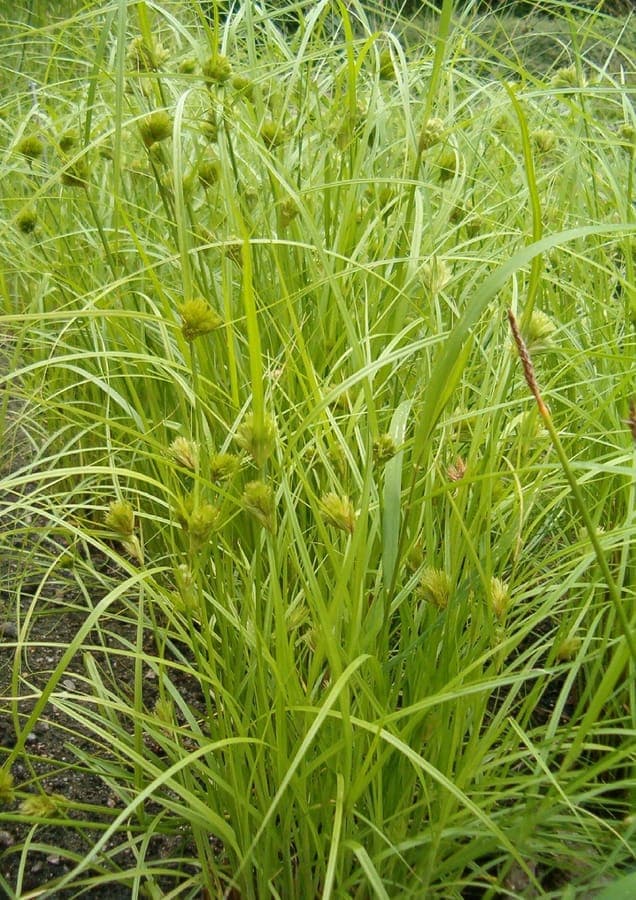
User:BotBln / CC BY-SA 3.0, via Wikimedia Commons
Bohemian sedge: complete guide
Carex bohemica
Want to see Bohemian sedge: complete guide in your garden?
1 minute, no credit card
Overview
Bohemian sedge, or Carex bohemica, is a graceful, clump-forming perennial that thrives in damp or poorly drained areas where many other plants struggle. Native to parts of Central and Eastern Europe – including Austria, Belarus and Finland – it naturally grows along stream banks, wet meadows and forest margins. In the garden, it's ideal for wet borders, rain gardens or the edges of ponds. It's not flashy, but its subtle beauty and resilience make it a smart choice for naturalistic planting schemes.
On gardenworld.app you can create a planting plan that highlights how Bohemian sedge fits into your garden's moisture zones and light conditions.
Appearance & bloom cycle
Bohemian sedge forms loose, arching clumps of fine green foliage, reaching 30–40 cm in height and spread. The leaves are narrow, about 2–4 mm wide, with a soft, grass-like texture. From June to September, it produces slender green flower spikes that rise slightly above the foliage. These aren't showy, but they add delicate structure and movement through the summer months.
The blooms start green and gradually turn pale brown by late summer, but they remain on the plant well into autumn, offering visual interest when many other perennials have faded. The plant doesn't die back completely in winter, retaining some evergreen or semi-evergreen character in milder climates.
Ideal location
This sedge prefers a light level of 8 out of 10 – so partial shade to dappled sunlight. Full sun is acceptable only if the soil stays consistently moist. In dry, hot sun, the plant will scorch and thin out. Deep shade, on the other hand, leads to weak growth and sparse clumps.
Best locations include the edge of a woodland garden, beneath open-canopied shrubs, or in a damp corner of a border. It's also excellent beside a stream or pond, where humidity and moisture are naturally high. Avoid exposed, windy spots as they dry out the foliage too quickly.
Soil requirements
Carex bohemica thrives in humus-rich, moisture-retentive soil with a pH between 6.5 and 7. It handles clay and silt soils well but struggles in sandy or fast-draining substrates unless irrigated regularly. If your soil is too dry, amend it with compost, leaf mould or well-rotted manure to improve water retention.
A light mulch of organic material in spring helps suppress weeds and conserve moisture. Avoid thick wood chips, which can compact and hinder new growth. Instead, use leaf litter or straw for a natural finish.
Free design
Want to see Bohemian sedge: complete guide in your garden? Make a free design now.
Watering
Consistent moisture is critical. Never let the soil dry out completely, especially during the first two growing seasons. In periods of drought lasting more than 10 days, water deeply once a week. A bucket of water per plant is sufficient for small groupings. Established clumps are more resilient, but still appreciate supplemental watering in dry summers.
If planted near a pond or in a rain garden, natural runoff usually provides enough moisture. In borders, monitor closely – clay soils retain water better than sandy ones.
Pruning
Pruning is minimal. In late winter or early spring (February to March), trim back old, tattered foliage to about 5–10 cm above ground level. Use sharp shears and avoid cutting into new growth, which often emerges early. Leave the summer flower spikes intact over winter – they add texture and provide shelter for overwintering insects.
Cutting back too hard or too late can delay spring growth, so time it right. Never prune during active growth in summer.
Maintenance calendar
- Jan: Check for winter damage
- Feb: Cut back old foliage
- Mar: Apply light compost; inspect for new growth
- Apr: Monitor soil moisture; control weeds
- May: Water if dry; no feeding required
- Jun-Sep: Bloom period; enjoy natural texture
- Oct: Leave plants standing for winter interest
- Nov: Check for pests; no action needed
- Dec: Leave intact; protect young plants with straw if needed
Winter hardiness
Bohemian sedge is hardy in USDA zones 5–9, tolerating temperatures down to -20°C. It generally overwinters well in the UK, Ireland and most of the US and Canada. In colder zones, a light mulch of straw or leaves can protect young or newly planted specimens from freeze-thaw cycles.
Mature plants are self-sufficient and don't need covering. Leaving foliage in place helps trap snow, which acts as insulation. The plant may look messy in winter, but that's part of its ecological value.
Companion plants
Pair Bohemian sedge with other moisture-loving plants like Ligularia, Iris versicolor, or Carex vulpinoidea. Ferns such as Matteuccia struthiopteris work well for contrast. For colour, add Trollius or moisture-tolerant astilbes. In larger gardens, Gunnera manicata creates a bold backdrop.
Avoid drought-tolerant species like Sedum or Lavender – they demand different conditions. On gardenworld.app you can explore companion planting tools to design combinations that thrive together.
Closing
Bohemian sedge is a quiet achiever in the damp garden. It's low maintenance, supports wildlife, and adds year-round texture. Buy young plants in spring from garden centres like those in the UK or independent nurseries. Plant in groups of three or more for impact, and give them consistent moisture in the first season. Once established, they'll return reliably year after year.
Want to see Bohemian sedge: complete guide in your garden? Make a free design now.
Upload a photo, pick a style, and get a photorealistic design with plant list in under a minute.
No credit card required


Similar plants
Flat-stemmed club-rush: complete guide
Bolboschoenus planiculmis
Everything about Bolboschoenus planiculmis: growing conditions, watering, care, and use as a pond margin or wetland plant in garden design.
Great Plains flatsedge: complete guide
Cyperus lupulinus
Everything about Great Plains flatsedge (Cyperus lupulinus): growing conditions, care, garden uses, and ecological value. Tips for pond margins and dry sandy soils.
Golden beak sedge: complete guide
Rhynchospora corymbosa
Everything about golden beak sedge (Rhynchospora corymbosa): a dramatic tropical marginal for pond edges, bog gardens, and wet habitats.