
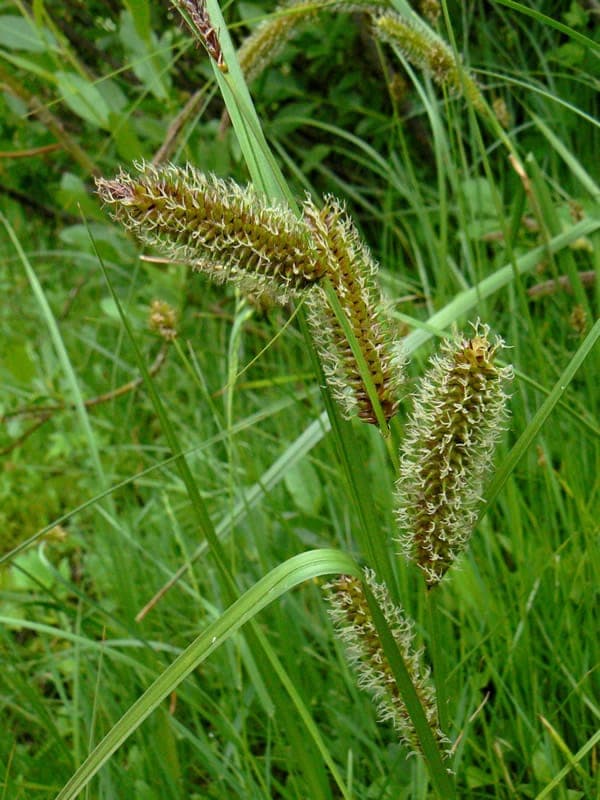
Teresa Prendusi, USFS botanist per [1] / Public domain, via Wikimedia Commons
Leafy tussock sedge: complete guide
Carex aquatilis
Want to see Leafy tussock sedge: complete guide in your garden?
1 minute, no credit card
Overview
Carex aquatilis, commonly known as leafy tussock sedge, is a clump-forming perennial sedge native to wetlands across Alaska, Canada, northern Europe, and parts of the western United States. Belonging to the Cyperaceae family, this plant thrives in consistently moist to saturated soils, making it a top choice for rain gardens, stream banks, and shallow water zones around ponds. It's particularly valued for its ability to stabilise soil and provide habitat in naturalistic landscapes.
On gardenworld.app you can design a planting scheme that integrates leafy tussock sedge into wetland areas, ensuring proper spacing and companion choices for long-term success. Hardy in USDA zones 3 through 8, it handles cold winters and stays semi-evergreen in milder climates.
Appearance & bloom cycle
Leafy tussock sedge forms dense, upright clumps of bright green, grass-like foliage that reaches 60–90 cm in height and spreads 30–45 cm wide. The leaves are long, flat, and slightly rough to the touch, creating a soft yet structured texture in the garden. In late spring to early summer (May–June), slender, triangular flower spikes emerge, rising slightly above the foliage. These are greenish-brown and not particularly showy, but they add subtle seasonal interest.
The plant spreads slowly via rhizomes, forming tight tussocks over time. While it doesn't produce colourful flowers, its architectural form and resilience make it a staple in ecological planting designs. Seed heads mature by midsummer and may self-sow lightly in ideal conditions.
Ideal location
Plant Carex aquatilis in full sun to partial shade. In southern regions, afternoon shade helps prevent leaf scorch, while in cooler zones, full sun maximises growth and density. The best sites are along pond margins (up to 15 cm of standing water), in bog gardens, or in low-lying areas that collect rainwater.
Avoid hot, dry spots - this sedge will quickly decline if the soil dries out. If planting in a rain garden, ensure the depression holds moisture for several days after rainfall. On gardenworld.app, you can simulate water retention patterns to determine if your garden layout suits moisture-loving plants like this sedge.
Soil requirements
This sedge is adaptable but demands consistently moist to wet soil. It grows well in sandy loam, clay-loam, or peaty soils with a pH between 5.0 and 7.5. It tolerates mildly acidic conditions and performs especially well in organic-rich, humusy substrates. Avoid dry, sandy, or heavily amended potting mixes that drain too quickly.
When planting in water, use a heavy garden soil or aquatic compost in a mesh basket to prevent washout. Do not use high-nitrogen fertilisers - they can promote algae growth in aquatic settings.
Free design
Want to see Leafy tussock sedge: complete guide in your garden? Make a free design now.
Watering
Keep the soil constantly moist. In bog gardens, maintain a water table within 5–10 cm of the surface. For pond plantings, submerge the root zone up to 15 cm deep. During dry spells, especially in the first growing season, water deeply 2–3 times per week to prevent stress.
Once established, leafy tussock sedge is more resilient but still requires regular moisture. Never let the root ball dry out completely. In containers, use a saucer to maintain humidity, but ensure drainage holes prevent stagnation.
Pruning
Pruning is minimal. In late winter or early spring (February–March), cut back old, tattered foliage to 10–15 cm above the crown using sharp, clean shears. This encourages fresh growth and reduces fungal issues in dense clumps. Avoid cutting into the crown, as this can damage emerging shoots.
Remove dead or yellowing leaves during the season if they look unsightly, but don't over-prune. The plant recovers well, but excessive cutting in summer can weaken it.
Maintenance calendar
- January: Check for frost damage. No action needed in mild winters.
- February: Begin cutting back old growth if weather permits.
- March: Divide congested clumps. Amend soil with compost.
- April: New growth emerges. Keep soil moist.
- May: Flower spikes appear. No feeding required.
- June: Peak bloom. Monitor for drought stress.
- July: Maintain consistent moisture. Watch for mildew in dense stands.
- August: No pruning. Rhizomes may spread slowly.
- September: Growth slows. Prepare for dormancy.
- October: Leave dead foliage for winter insulation unless diseased.
- November: Mulch lightly with leaf litter in colder zones.
- December: Dormant. Minimal care needed.
Winter hardiness
Leafy tussock sedge is extremely hardy, surviving down to -40°C (USDA zone 3). Foliage may turn brown in freezing temperatures, but the plant reliably re-sprouts in spring. In colder regions, a light mulch helps protect the crown. In pond settings, ensure ice doesn't completely seal the surface - a small opening prevents oxygen depletion.
Avoid disturbing the plant in winter, as frozen soil can damage roots. Established clumps need no extra protection in zones 4–8.
Companion plants
Pair with moisture-loving companions like Iris versicolor, Eutrochium maculatum, Carex vulpinoidea, or Lobelia siphilitica. For contrast, plant alongside dark-leaved Carex comans or golden Hakonechloa macra. In shallow water, combine with water forget-me-not (Myosotis scorpioides) or lizard's tail (Saururus cernuus).
Avoid drought-tolerant species like sedum or yarrow unless planted in a separate, well-drained zone.
Closing
Leafy tussock sedge is a practical, beautiful choice for wet areas in the garden. It's low-maintenance, supports wildlife, and adds year-round texture. Whether you're restoring a natural area or designing a modern rain garden, this sedge delivers reliability and elegance. Find Carex aquatilis at garden centres like B&Q, Wyevale, or local native plant nurseries, typically sold in 1–3 litre pots.
For design inspiration and planting layouts, explore gardenworld.app to visualise how this sedge fits into your garden's ecosystem.
Want to see Leafy tussock sedge: complete guide in your garden? Make a free design now.
Upload a photo, pick a style, and get a photorealistic design with plant list in under a minute.
No credit card required


Similar plants
Flat-stemmed club-rush: complete guide
Bolboschoenus planiculmis
Everything about Bolboschoenus planiculmis: growing conditions, watering, care, and use as a pond margin or wetland plant in garden design.
Great Plains flatsedge: complete guide
Cyperus lupulinus
Everything about Great Plains flatsedge (Cyperus lupulinus): growing conditions, care, garden uses, and ecological value. Tips for pond margins and dry sandy soils.
Golden beak sedge: complete guide
Rhynchospora corymbosa
Everything about golden beak sedge (Rhynchospora corymbosa): a dramatic tropical marginal for pond edges, bog gardens, and wet habitats.